Last updated: September 2026 | 15 min read
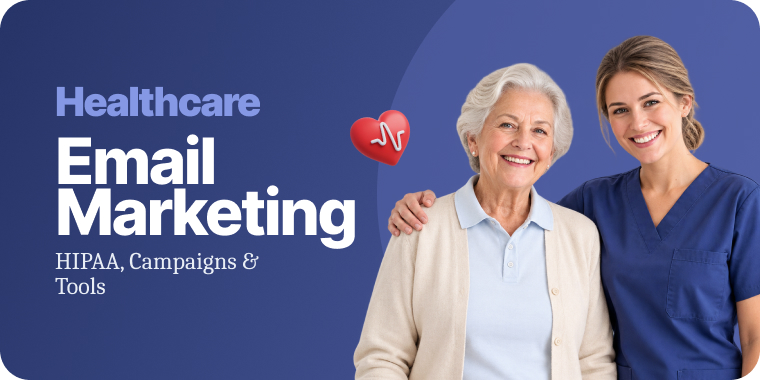
Healthcare organisations have the most engaged email audience of any industry and the strictest rules about what they can send to it. A patient who opens an appointment reminder will open a flu-shot notice, a wellness newsletter, and a new-service announcement, but every one of those messages has to clear HIPAA, CAN-SPAM, and, for many providers, the FTC’s health-data rules before it goes out. Healthcare email marketing in 2026 is the practice of getting that balance right: useful, timely, personal communication that improves outcomes and fills schedules, built on consent and on a hard line between marketing and protected health information.
This guide covers how practices, clinics, hospitals, dental and vision providers, wellness businesses, and healthcare marketers build a compliant email programme: what counts as marketing under HIPAA and what doesn’t, what to send and to whom, segmentation without exposing health data, the platforms that will (and won’t) sign a business associate agreement, and the metrics that matter. It’s vendor-neutral, with one tools section near the end. It is not legal advice; confirm your specific obligations with your compliance officer or counsel.
Quick Answer: Healthcare email marketing is permission-based email from providers and health businesses covering reminders, preventive-care recall, health education, service announcements, seasonal campaigns, and re-engagement — built on a hard line between treatment communications (which carry PHI and go through a BAA-covered system) and marketing (which stays PHI-free on a general platform with separate consent). HIPAA lets providers email their own patients about their own services without authorisation; it does not allow using health data to promote third parties. Segment by location, status, and opted-in interest, never by condition, and measure bookings and recall completion rather than opens.
Table of Contents
What Healthcare Email Marketing Is
Healthcare email marketing is permission-based email from a provider, practice, or health-related business to patients, prospective patients, and the community, covering appointment and preventive-care reminders, health education, service announcements, patient satisfaction and review requests, event invitations, and re-engagement of inactive patients. It sits alongside, but separate from, clinical communication (results, care instructions, portal messages), which is governed by different rules and usually sent through the patient portal or EHR.
The defining constraint is HIPAA. Under the Privacy Rule, using protected health information (PHI) for marketing generally requires the patient’s written authorisation, with exceptions for communications about the patient’s own treatment, care coordination, and the provider’s own health-related products and services. That distinction, treatment communication versus marketing, decides what each email can say and to whom it can go.
Why Email Works in Healthcare
Patients want to hear from their providers. Industry benchmark reports from Mailchimp and Constant Contact have consistently placed healthcare and medical among the sectors with above-average engagement, and appointment reminders, preventive-care notices, and health education are among the most-opened emails any organisation sends.
The business case is direct. Missed appointments cost practices revenue and patients outcomes; reminder emails reduce no-shows. Preventive-care recall (annual physicals, screenings, vaccinations, dental cleanings) fills schedules with visits that would otherwise be missed. New-service announcements to existing patients are far cheaper than acquiring new ones. And for elective, wellness, and cash-pay services (dermatology, dental, vision, physiotherapy, fertility, aesthetics, telehealth), email is the primary channel for education and conversion.
Litmus’s State of Email research puts email’s return at roughly $36 per $1 spent across industries; in healthcare the return shows up as filled schedules, reduced no-shows, and higher patient retention rather than direct sales.
Compliance First: HIPAA, CAN-SPAM, and the FTC
What HIPAA allows without authorisation
HIPAA’s marketing rules apply to covered entities (providers, health plans, clearinghouses) and their business associates. Communications that are not treated as marketing, and therefore don’t need written authorisation, include:
- Messages about the patient’s own treatment, including appointment reminders, refill reminders, and recall notices for preventive care.
- Case management and care coordination.
- Descriptions of the provider’s own health-related products or services, including new services, and general health and wellness information.
Communications that are marketing and need authorisation include promoting a third party’s products or services, and any communication where the provider receives payment from a third party for sending it (with limited exceptions such as refill reminders).
The practical rule: a practice can email its own patients about its own services and general health topics; it cannot use their health information to promote someone else’s, and it cannot sell or share the list.
Keep PHI out of marketing email
Even where a communication is permitted, the content and the data behind it matter. An email that says “as a patient with diabetes, you may be interested in…” discloses a diagnosis to anyone who sees the inbox. Best practice, and often policy, is that marketing email never contains diagnoses, treatments, medications, test results, or appointment details beyond what a reminder needs, and that segmentation for marketing uses non-clinical attributes (location, service line interest expressed by opt-in, patient status) rather than clinical data.
Business associate agreements
If a vendor handles PHI on your behalf, HIPAA requires a business associate agreement (BAA). Whether your email platform needs one depends on what you send through it. A newsletter to opted-in subscribers containing no PHI arguably doesn’t involve PHI; appointment reminders that include names, dates, and provider details do. Many general email platforms will not sign a BAA, and their terms may prohibit PHI. Healthcare-specific platforms and some enterprise tiers do. Decide which emails carry PHI, route those through a BAA-covered system (often the EHR, patient portal, or a healthcare-specific messaging tool), and keep the general marketing platform PHI-free. Do not assume any platform is “HIPAA compliant” without a signed BAA and a review of what data you’ll put in it.
CAN-SPAM, state law, and the FTC
CAN-SPAM applies to healthcare marketing email as to any other: accurate headers, a physical address, a working unsubscribe honoured within ten business days, and no sending to opted-out contacts. State privacy laws (California’s CCPA/CPRA, Washington’s My Health My Data Act, and others) add consent and data-handling obligations, particularly for wellness and consumer-health businesses that aren’t HIPAA covered entities. The FTC’s Health Breach Notification Rule and its enforcement actions against health apps and telehealth companies that shared user data with advertisers make one point clear: if you’re a health business outside HIPAA, consumer-protection law still governs how you collect and use health-related data for marketing. Website tracking pixels on patient-facing pages have drawn regulatory attention; review them.
Consent and preference management
Collect explicit opt-in for marketing email at registration, on the website, and at check-in, separate from consent to receive treatment communications. Offer a preference centre so patients can choose topics (wellness newsletter, service updates, events) and frequency. Honour unsubscribes for marketing without affecting appointment reminders, and make the distinction clear in the footer.
What Healthcare Organisations Should Send
Appointment reminders and confirmations. Treatment communication; usually from the practice-management system or portal, not the marketing platform, because they carry PHI. Reduce no-shows more than any other message.
Preventive-care and recall notices. Annual check-ups, screenings, vaccinations, dental cleanings, eye exams. Permitted as treatment communication; keep content general (“it’s time for your annual visit”) and route through a BAA-covered system if it references specific care.
Welcome and onboarding for new patients. What to expect, how to use the portal, who to contact, office hours and policies. Transactional in nature; sets the tone.
Health education newsletter. Monthly or seasonal: general wellness content, seasonal health topics, one practice update. PHI-free, opt-in, from the general marketing platform. The core of a healthcare email programme.
Service announcements. New providers, new locations, new services (telehealth, extended hours, a new specialty). Permitted as the provider’s own services; segment by location and expressed interest, not by diagnosis.
Patient satisfaction and review requests. After a visit, a survey or a review request. Route through a system that knows the visit happened without exposing details; keep the email content generic.
Seasonal campaigns. Flu season, allergy season, back-to-school physicals, open enrolment, dental benefits expiring at year end. Timely, useful, high-response.
Event and class invitations. Health talks, prenatal classes, diabetes education, community screenings.
Re-engagement of inactive patients. Patients with no visit in 18–24 months: a “we’re here when you need us” message with an easy booking link, permitted as a communication about the provider’s own services.
Elective and cash-pay service education. For dermatology, dental, vision, aesthetics, physiotherapy, and similar: educational sequences for prospects who opted in on the website, moving toward a consultation. Standard marketing rules apply; PHI isn’t involved because the recipient isn’t yet a patient or the data comes from their opt-in, not their record.
Segmenting Without Exposing Health Data
Segment on attributes that don’t reveal clinical information:
- Patient status: prospective, new, active, inactive (by last visit recency, not by condition).
- Location and provider: which clinic or practitioner they see.
- Service line interest expressed through opt-in: a patient who subscribed to dental updates or pediatric content told you so.
- Life stage from registration data: pediatric, adult, senior, where it’s collected as demographic information and used for general content.
- Engagement: clickers, non-openers, preference-centre choices.
- Insurance or payer type: for open-enrolment and benefits messaging, where appropriate.
Clinical segmentation (by diagnosis, medication, procedure) belongs in the EHR or a BAA-covered care-management tool, used for treatment communications, not in the marketing platform.
Healthcare Email Best Practices
- Draw the line between treatment communication and marketing, and document it. Which emails, which systems, which consents.
- Keep the marketing platform PHI-free. No diagnoses, treatments, or appointment specifics in marketing content or segmentation.
- Get a BAA for anything that touches PHI. And confirm the platform’s terms allow it.
- Collect marketing consent separately from treatment communication consent, with a preference centre.
- Lead with health education. Useful, seasonal, general content earns the open that service announcements need.
- Send from the practice, signed by a person. A named physician or practice manager, with a monitored reply-to that routes clinical questions to the right place (and tells patients not to send PHI by reply).
- Use plain, accessible design. Large type, high contrast, mobile-first; healthcare audiences skew older and mobile.
- Automate recall and re-engagement through the system that holds visit dates, with generic content.
- Authenticate your domain. SPF, DKIM, and DMARC prevent spoofing of your practice name, which in healthcare is a patient-safety issue as well as a deliverability one. Our SPF, DKIM and DMARC guide covers it.
- Review tracking pixels and analytics on patient-facing pages and emails against your privacy obligations.
Common Mistakes in Healthcare Email
- Putting PHI in a marketing platform without a BAA. The most common and most serious error.
- Segmenting marketing by condition. “Patients with X” lists in a general email tool.
- One consent for everything. Patients who unsubscribe from the newsletter stop getting appointment reminders, or the reverse.
- Third-party promotions to the patient list. Marketing under HIPAA without authorisation.
- Generic, corporate content. Patients open health information from their own provider; they ignore stock wellness copy.
- Ignoring accessibility. Small type and low contrast lose the patients who need the message most.
- Measuring opens. Unreliable since Apple Mail Privacy Protection; measure clicks, bookings, and recall completion.
Tools and Platforms for Healthcare Email Marketing
Healthcare organisations typically run two systems: a BAA-covered channel for treatment communications (the EHR or practice-management system’s messaging, the patient portal, or a healthcare-specific patient-engagement platform such as Solutionreach, Luma Health, or similar) and a general email platform for the PHI-free marketing programme (newsletters, education, service announcements, events, prospect nurture). The general platform is where most of the marketing value is created, at a fraction of the cost, provided PHI stays out of it.
| Platform | Best For | Free Plan | Starting Price | Why for healthcare |
|---|---|---|---|---|
| Mailercloud#1 Pick | PHI-free marketing for practices & health businesses | ✓ Yes 1,000 contacts | $10/mo | Segmentation, consent forms, roles, Inbox Tracker at low cost |
| Mailchimp | Newsletters, integrations | ✓ Yes 250 contacts | $13/mo | Largest integration library; PHI-free use only (no BAA) |
| Constant Contact | Small practices, events | ✗ Trial Free trial | $12/mo | Health talks and classes; phone support; automation on Premium |
| Brevo | Email + SMS reminders | ✓ Yes 300/day | ~$9/mo | SMS with consent; confirm BAA terms |
| Solutionreach / Luma Health | Treatment communications with PHI | ✗ No Custom | Custom | BAA, EHR integration, reminders, recall, two-way messaging |
Pricing verified September 13–14, 2026 on each platform’s official pricing page, monthly billing unless noted.
Mailercloud
Mailercloud fits practices, clinics, and health businesses that want the PHI-free marketing programme (newsletters, seasonal campaigns, service announcements, prospect education) on a predictable budget: free for 1,000 contacts and 12,000 emails a month, then $10/month for 5,000 contacts with unlimited sends. Segmentation by location, patient status, and opt-in interest; a visual automation builder for welcome sequences and elective-service education; the signup form builder for consent-first capture with topic preferences; user roles so front-desk staff can send approved campaigns without full access; and Inbox Tracker to confirm that seasonal health notices reach the inbox rather than Promotions across Gmail, Outlook, and Yahoo. Limitations: Mailercloud does not market itself as a HIPAA platform, and you should not send PHI through it without confirming BAA availability and terms with the vendor; there are no native EHR or practice-management integrations (Zapier or CSV); and native SMS is still in development.
✅Mailercloud Pros:
- Free for 1,000 contacts; $10/month for 5,000 contacts with unlimited sends — fits a practice budget
- Segmentation by location, patient status, and opted-in interest (PHI-free)
- Visual automation builder for welcome sequences and elective-service education
- Signup form builder for consent-first capture with topic preferences
- User roles so front-desk staff can send approved campaigns without full access
- Inbox Tracker confirms seasonal health notices reach the inbox, not Promotions
- Custom sending domain with guided SPF, DKIM, and DMARC — protects the practice name from spoofing
- 24/7 live chat support
❌Mailercloud Cons:
- Not marketed as a HIPAA platform — confirm BAA availability before any PHI use; keep it PHI-free by default
- No native EHR or practice-management integrations (Zapier or CSV)
- Native SMS still in development
💰Pricing: Free for up to 1,000 contacts. Premium from $10/month (5,000 contacts, unlimited sends).
Mailchimp
Mailchimp is widely used by practices for newsletters and has the largest integration library. Note that Mailchimp’s terms have historically stated it does not sign BAAs and PHI should not be stored in the platform; use it only for PHI-free marketing. Essentials from $13/month at 500 contacts.
Constant Contact
Common among small practices for its simplicity, event tools (health talks, classes), and phone support. No free plan; multi-step automation requires Premium ($80/month). Confirm BAA availability before any PHI use; treat it as PHI-free by default.
Brevo
Brevo bundles email with SMS (useful for reminders where consent and a BAA are in place) and prices by volume with unlimited contacts. Automation on Standard. Confirm BAA terms with the vendor.
Healthcare patient-engagement platforms (Solutionreach, Luma Health, Klara, Weave)
Built for treatment communications: appointment reminders, recall, two-way messaging, reviews, with BAAs and EHR integrations as standard. The right home for anything that carries PHI; marketing newsletter capability is usually secondary and pricing is custom.
Metrics for Healthcare Email
- Appointment bookings from email: through tracked booking links; the primary outcome metric.
- Recall completion rate: visits booked ÷ recall notices sent (measured in the system that sends them).
- No-show rate change: before and after reminder programmes.
- Click-through rate: the engagement signal; opens are unreliable.
- Re-engagement rate: inactive patients who book ÷ re-engagement emails sent.
- Preference-centre adoption and consent rate: opted-in contacts by source.
- Review and survey completion: responses ÷ requests.
- Unsubscribe and complaint rates: under 0.5% and 0.1%; complaints in healthcare usually mean a consent problem.
- Inbox placement: for seasonal notices that must arrive on time.
How to Get Started: A 7-Step Plan
- Map your communications into treatment (PHI, BAA-covered system) and marketing (PHI-free, general platform), with your compliance officer.
- Set up consent capture for marketing separately, with a preference centre.
- Choose the marketing platform and authenticate your domain.
- Build a PHI-free welcome sequence for new marketing subscribers.
- Launch a monthly health-education newsletter segmented by location and interest.
- Schedule seasonal campaigns for the year (flu, allergy, benefits deadlines, back to school).
- Report bookings and recall completion monthly, and review compliance quarterly.
Frequently Asked Questions
Is email marketing allowed under HIPAA?
Yes, email marketing is allowed under HIPAA when it stays within the rules: providers may communicate with their own patients about treatment, appointment and recall reminders, and their own health-related services without written authorisation, but using protected health information to promote third-party products, or receiving payment to send a communication, generally requires patient authorisation, and any vendor handling PHI needs a business associate agreement.
Do I need a BAA with my email marketing platform?
You need a business associate agreement with your email platform if PHI (names combined with health information, appointment details, diagnoses) passes through it; a PHI-free newsletter to opted-in subscribers generally does not require one, which is why most practices keep marketing email PHI-free on a general platform and send treatment communications through a BAA-covered EHR, portal, or patient-engagement system.
What emails can a medical practice send to patients?
A medical practice can send appointment reminders, preventive-care and recall notices, new-patient onboarding, health-education newsletters, announcements of its own new services, providers, and locations, seasonal health campaigns, event invitations, satisfaction surveys, and re-engagement messages to inactive patients, provided marketing content is PHI-free, consent is collected, and treatment communications go through a compliant system.
Can healthcare providers segment email lists by condition?
Healthcare providers should not segment marketing email lists by condition in a general email platform, because doing so stores and potentially discloses PHI; condition-based communications belong in the EHR or a BAA-covered care-management tool as treatment communications, while marketing segmentation should use location, patient status, and interests patients opted into.
What is the best email marketing platform for healthcare?
The best setup for healthcare is two systems: a BAA-covered patient-engagement platform or EHR messaging tool for reminders and recall that carry PHI, and a general platform for PHI-free marketing; Mailercloud suits practices for the marketing side at $10/month with segmentation, automation, consent-first forms, user roles, and Inbox Tracker, while Solutionreach, Luma Health, and similar handle the treatment side.
How often should healthcare organisations email patients?
Healthcare organisations should send a health-education newsletter monthly, seasonal campaigns a few times a year, service announcements as they happen, and reminders and recall on the schedule the patient’s care dictates; frequency should follow the patient’s preference-centre choices, and complaint rates above 0.1% usually signal too much or unconsented email.
Does CAN-SPAM apply to healthcare email?
Yes, CAN-SPAM applies to all commercial email including healthcare marketing, requiring accurate headers and subject lines, a physical address, a working unsubscribe honoured within ten business days, and no sending to opted-out contacts; treatment communications such as appointment reminders are generally transactional and exempt from the unsubscribe requirement, but the marketing newsletter is not.
Summary
Healthcare email marketing rewards the organisations that respect the line between care and marketing. Send treatment communications (reminders, recall) through a BAA-covered system; run the marketing programme (education, announcements, seasonal campaigns, prospect nurture) PHI-free on a general platform with separate consent and a preference centre; segment by location, status, and opted-in interest rather than condition; authenticate your domain; and measure bookings, recall completion, and re-engagement rather than opens. Done that way, email is the most trusted channel a provider has.
Reach patients with email that lands in the inbox
Get started →Free for 1,000 contacts · No credit card

As a Marketing Director, I develop and implement marketing strategies, conduct market research, and manage a team of marketing professionals. With a successful track record of launching campaigns that drive revenue growth, I bring my marketing expertise to blog writing, creating engaging content that promotes the brand and its products/services.