Last updated: October 2026 | Pricing, nonprofit discounts and review ratings checked October 28, 2026 | 12 min read
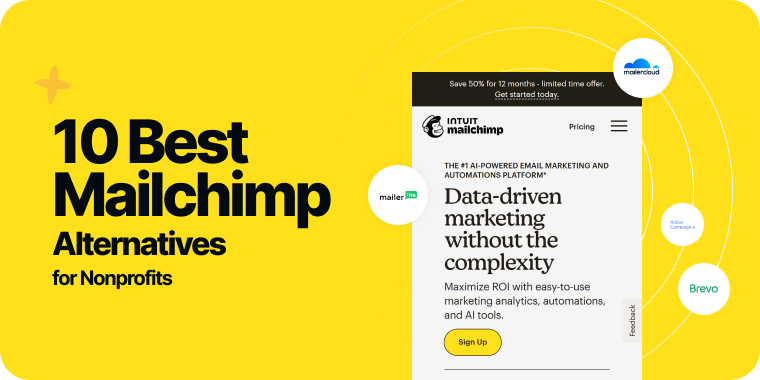
Mailchimp is still the tool many nonprofits start with, but two things push them to look elsewhere. The free plan now covers just 250 contacts and 500 emails a month. And once a donor list grows into the thousands, the paid plans get expensive fast, even with Mailchimp’s 15% nonprofit discount.
We compared ten Mailchimp alternatives on what nonprofits actually need: a usable free plan, a real nonprofit discount, donor segmentation and automation, deliverability, and price as your list grows. Every price and discount below comes from the vendor’s own pricing or nonprofit page, and every rating from G2, Capterra and Trustpilot, all checked on October 28, 2026.
Quick Answer: The best Mailchimp alternative for most nonprofits in 2026 is Mailercloud. It’s free for 1,000 contacts and 12,000 emails a month, then $10/month for 5,000 contacts with unlimited sends. If a formal nonprofit discount matters most, GetResponse (50% off monthly plans), MailerLite (30% off), Constant Contact (up to 30% off with prepayment) and Moosend (25% off) all offer one. Sender has the biggest free plan (2,500 subscribers), and HubSpot suits larger nonprofits that want a donor CRM.
Table of Contents
Why Nonprofits Look for a Mailchimp Alternative
- A small free plan. Mailchimp’s free plan allows 250 contacts and 500 emails a month (250 a day). Most volunteer-run organisations outgrow it after one event.
- Price at donor-list scale. Mailchimp charges by contacts, and its 15% nonprofit discount doesn’t change the shape of that curve. At 5,000 contacts, Essentials costs about $75 a month before the discount.
- Unsubscribed contacts can still count. Contacts stay on your bill until you archive them, so old event lists quietly add cost.
- Automation sits on paid plans. Multi-step donor journeys (welcome, first gift, thank-you, renewal) need Standard or above.
Mailchimp is still a capable tool, and our full Mailchimp review covers where it does well. For a broader list that isn’t nonprofit-specific, see our best Mailchimp alternatives.
What Nonprofits Need From an Email Tool
- A nonprofit discount you can actually get. Check whether it applies to monthly plans, needs prepayment, or only covers enterprise tiers.
- Donor segmentation. Tags or custom fields for gift amount, recency, campaign and event attendance. Our guide to email segmentation shows how to set this up.
- Automation. Welcome series, gift thank-yous, recurring-donor upgrades and lapsed-donor win-backs.
- Deliverability. Donor lists are often older and less engaged. Gmail and Yahoo now require bulk senders to authenticate their domain and keep complaints low (Google’s sender guidelines, Yahoo’s best practices).
- Pricing that stays affordable. A nonprofit emailing 5,000 supporters twice a month shouldn’t pay like a daily sender.
Sidenote: Most nonprofit discounts need proof of status. In the US that’s usually your 501(c)(3) determination; in the UK, your registered charity number. Have it ready before you apply.
Mailchimp Alternatives for Nonprofits at a Glance
| Tool | Best For | Free Plan | Starting Price | Nonprofit Discount |
|---|---|---|---|---|
| Mailercloud#1 Pick | Best overall value | 1,000 contacts / 12K emails | $10/mo (5,000 contacts) | No published discount |
| MailerLite | Simple, clean editor | 250 subs / 2,500 emails | $12/mo (500 subs) | 30% off paid plans |
| GetResponse | Webinars and virtual events | 500 contacts / 2,500 emails | $19/mo | 50% off monthly plans |
| Constant Contact | Events and phone support | 60-day trial | $12/mo | 20% (6-mo) / 30% (12-mo) prepay |
| EmailOctopus | Tiny budgets | 2,500 subs / 10K emails | $9/mo (billed yearly) | 20% lifetime |
| Brevo | Big lists, occasional sends | 300 emails/day | $9/mo (5,000 emails) | 15% (Enterprise only) |
| Sender | Largest free plan | 2,500 subs / 15K emails | From $7/mo | Not published |
| Moosend | Automation on a budget | 30-day trial | Priced by list size | 25% off |
| Zoho Campaigns | Teams on Zoho | 2,000 contacts / 6K emails | Priced by list size | On request |
| HubSpot | Larger nonprofits, donor CRM | Free CRM | $20/seat/mo | 40% off Pro/Enterprise |
Prices are monthly in USD from each vendor’s site on October 28, 2026. Discounts need proof of nonprofit status.
The 10 Best Mailchimp Alternatives for Nonprofits
1. Mailercloud — Best Overall for Nonprofits
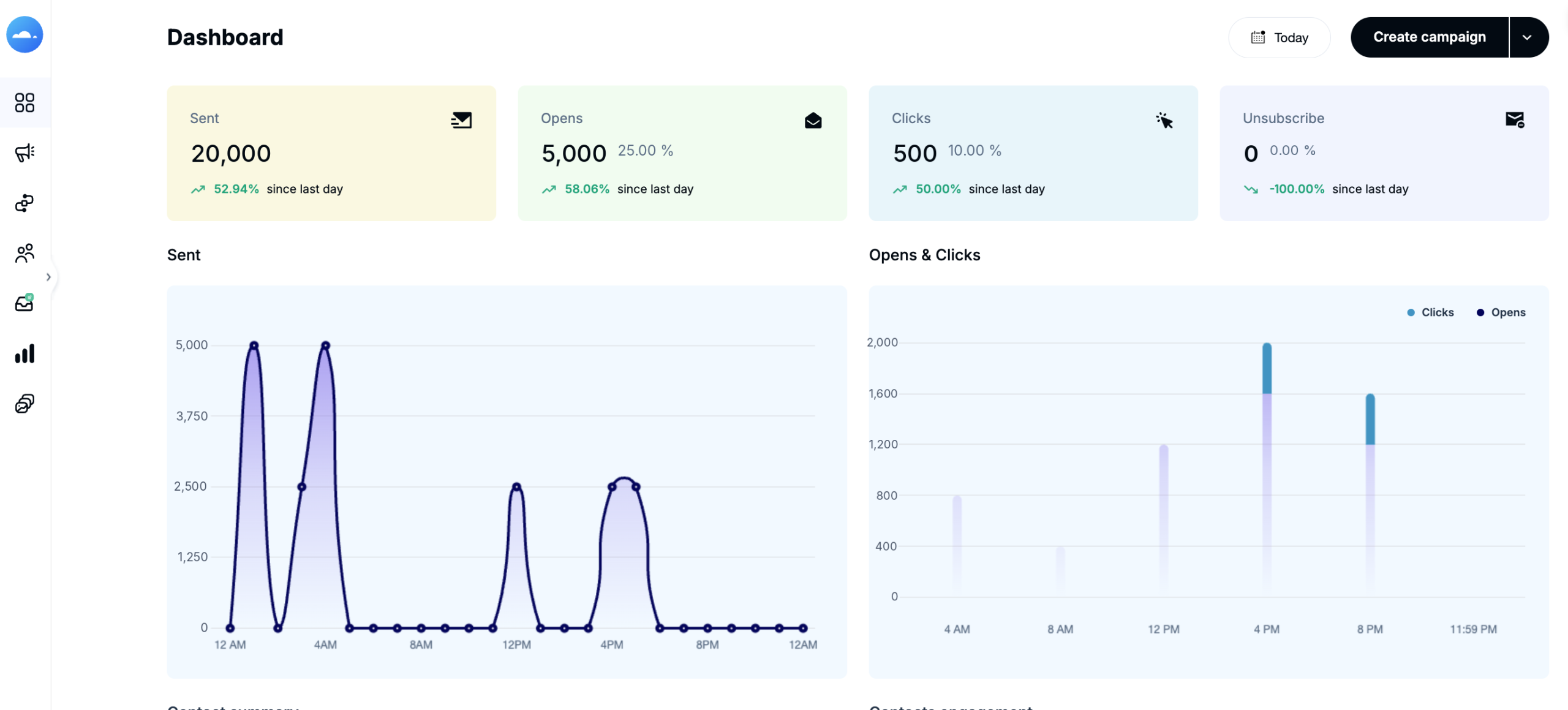
Mailercloud is the best value Mailchimp alternative for most nonprofits. The free plan covers 1,000 contacts and 12,000 emails a month, which is four times Mailchimp’s free contact limit and 24 times its monthly sends. When you outgrow it, Premium costs $10/month for 5,000 contacts with unlimited sends ($50 at 10,000), and annual billing takes 30% off.
That price difference matters at donor-list scale. At 5,000 contacts, Mailchimp Essentials costs about $75 a month, or roughly $64 after its 15% nonprofit discount. Mailercloud Premium is $10. You get a drag-and-drop builder, segmentation by tags and custom fields (gift amount, campaign, event), signup forms and automation: one advanced automation on the free plan and 25 on Premium.
The trade-offs: Mailercloud has no published nonprofit discount, no donation-receipt templates and no event ticketing. Donation platforms and CRMs connect through Zapier, and Inbox Tracker is a paid add-on.
Key features for nonprofits
- Free plan: 1,000 contacts and 12,000 emails a month
- Premium: $10/month for 5,000 contacts with unlimited sends
- Segmentation by tags and custom fields for donor data
- 25 advanced automations, A/B testing and AI subject lines on Premium
- Signup forms and template gallery
- Email API and SMTP for donation receipts from your own systems
✅Mailercloud Pros:
- Free plan four times bigger than Mailchimp’s on contacts
- $10/month for 5,000 contacts with unlimited sends
- Automation and segmentation for donor journeys
- 30% off with annual billing
- Rated 4.5 on G2 and 4.7 on Capterra
❌Mailercloud Cons:
- No published nonprofit discount
- No donation-receipt templates or event ticketing
- Integrations with donation tools and CRMs mostly via Zapier
- Only one advanced automation on the free plan
💰Pricing: Free for 1,000 contacts and 12,000 emails/month. Premium $10/month for 5,000 contacts (unlimited sends), $50 for 10,000; 30% off annually. See pricing.
Best for: Small and mid-sized nonprofits that want low, predictable pricing and room to grow.
Running donor emails on a tight budget? Mailercloud is free for 1,000 contacts, then $10/month for 5,000.
2. MailerLite — Best for a Simple, Clean Editor
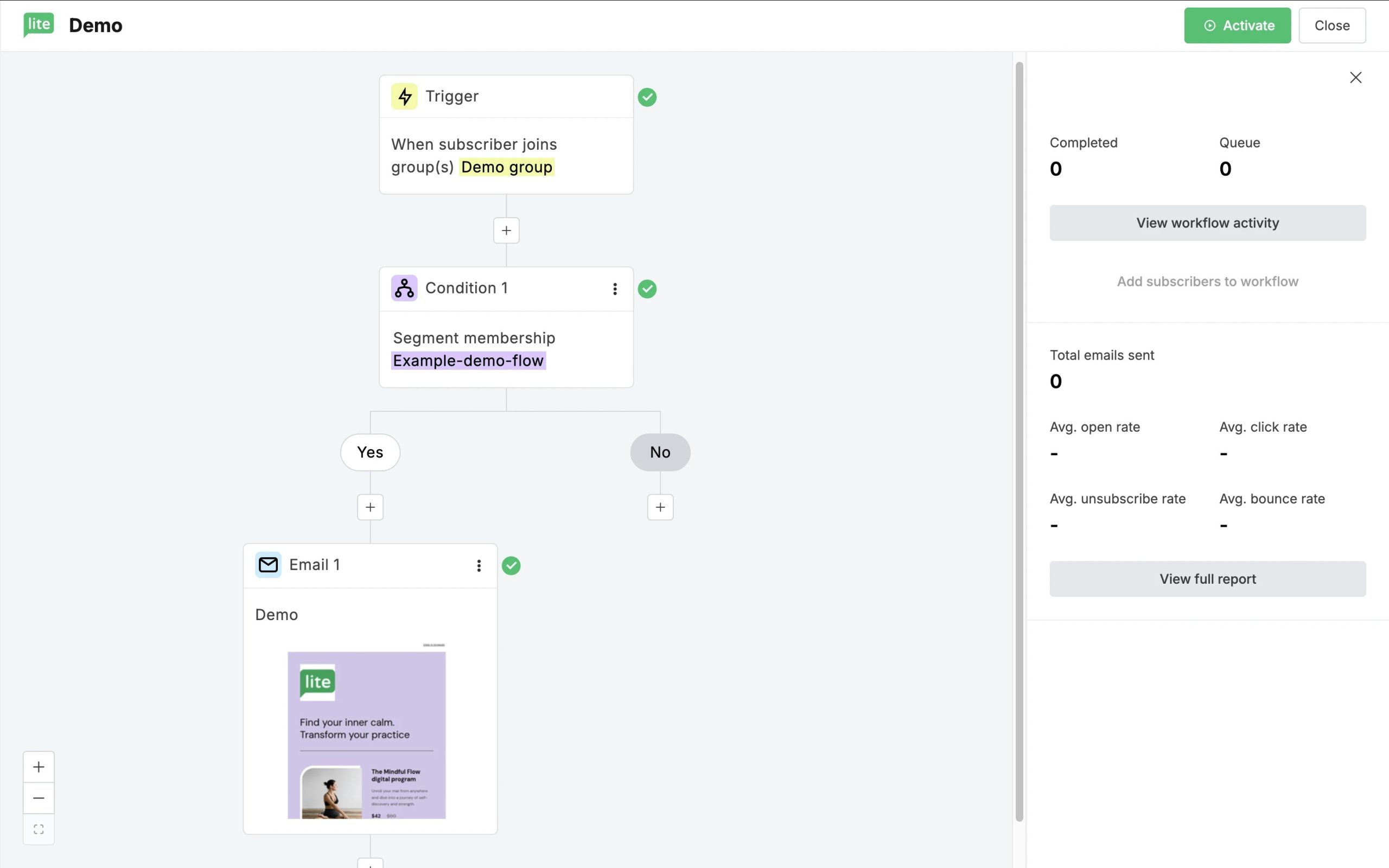
MailerLite is easy to learn, which helps when email duties rotate between volunteers. Its editor, landing pages and forms are among the cleanest in the category, and it offers a 30% discount on paid plans for nonprofits.
Plans have been renamed this year. Growing Business is now Comfort, from $12/month at 500 subscribers and $19 at 1,000. Advanced is now Power ($39 at 1,000). The free plan is now much smaller: 250 subscribers and 2,500 emails a month.
The 30% nonprofit discount doesn’t stack with the annual-billing discount. Compare it head-to-head in MailerLite vs Mailchimp.
Key features for nonprofits
- 30% nonprofit discount on paid plans
- Clean drag-and-drop editor, landing pages and forms
- Automation workflows
- Comfort from $12/month (500 subscribers)
✅MailerLite Pros:
- 30% nonprofit discount
- Very easy for volunteer teams
- Strong editor and landing pages
❌MailerLite Cons:
- Free plan cut to 250 subscribers and 2,500 emails
- Nonprofit discount doesn’t stack with annual billing
- No SMS
💰Pricing: Free for 250 subscribers. Comfort from $12/month (500 subs), $19 at 1,000; Power $39 at 1,000. 30% off for nonprofits.
Best for: Small nonprofits that want a simple tool and a real discount.
3. GetResponse — Best for Webinars and Virtual Events
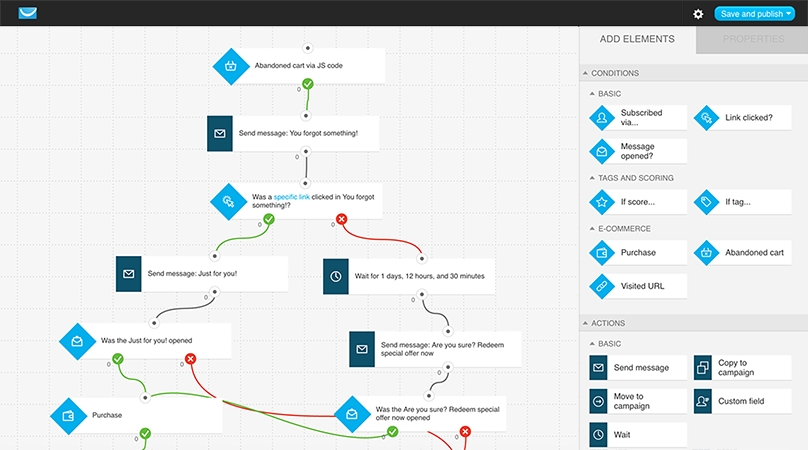
GetResponse offers the biggest discount here: 50% off all monthly plans for charities and NGOs. It also includes webinars on higher plans, which suits virtual fundraisers, donor briefings and annual-report presentations. Our GetResponse review explains the conditions.
The free plan covers 500 contacts and 2,500 emails a month. Starter costs $19/month (or $15.58/month billed annually) before the discount. See GetResponse vs Mailchimp for a full comparison.
Key features for nonprofits
- 50% off monthly plans for charities and NGOs
- Webinars on higher plans
- Automation workflows and landing pages
- Free plan: 500 contacts, 2,500 emails
✅GetResponse Pros:
- Largest nonprofit discount on this list
- Webinars built in for virtual events
- Free plan for small lists
❌GetResponse Cons:
- Webinars need a higher plan
- Interface feels busy for email-only teams
💰Pricing: Free for 500 contacts. Starter $19/month ($15.58 annually); 50% off monthly plans for nonprofits.
Best for: Nonprofits that run regular virtual events or webinars.
4. Constant Contact — Best for Events and Phone Support
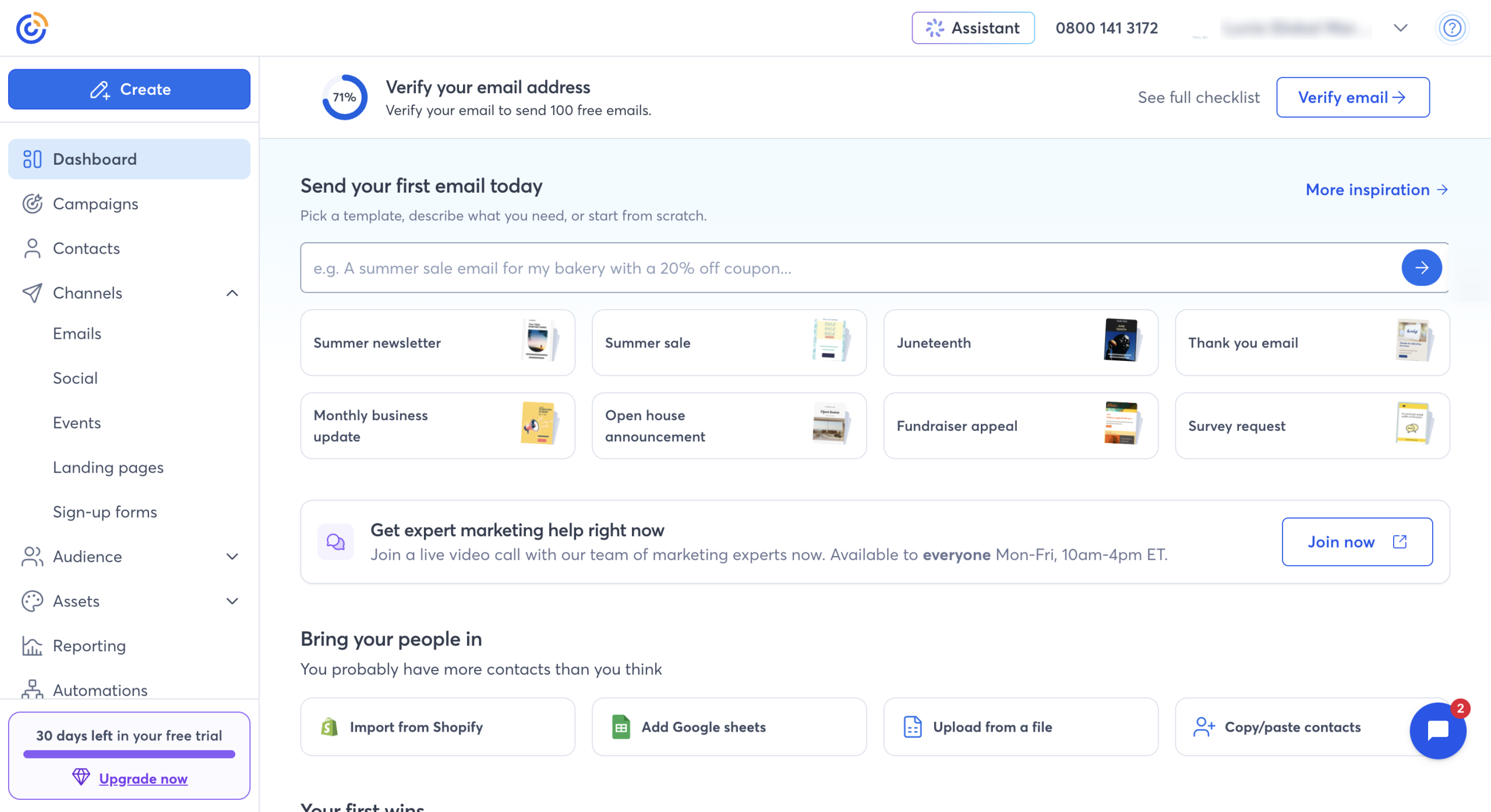
Constant Contact has long marketed itself to small nonprofits. It includes event registration and phone support, and offers verified nonprofits 20% off with six months’ prepayment or 30% off with twelve months’ prepayment.
Lite starts at $12/month, Standard at $35 and Premium at $80. There’s no free plan, only a 60-day trial. Read our Constant Contact review or the Constant Contact vs Mailchimp comparison.
Key features for nonprofits
- 20% off (6-month prepay) or 30% off (12-month prepay) for nonprofits
- Event registration and management
- Phone support
- Lite $12, Standard $35, Premium $80 per month
✅Constant Contact Pros:
- Established nonprofit programme
- Built-in event tools
- Phone support
❌Constant Contact Cons:
- No free plan
- Discount needs prepayment
- Costs climb quickly as contacts grow
💰Pricing: Lite from $12/month, Standard $35, Premium $80. 20–30% off for nonprofits with prepayment.
Best for: Nonprofits that run in-person events and value phone support.
5. EmailOctopus — Best for Tiny Budgets
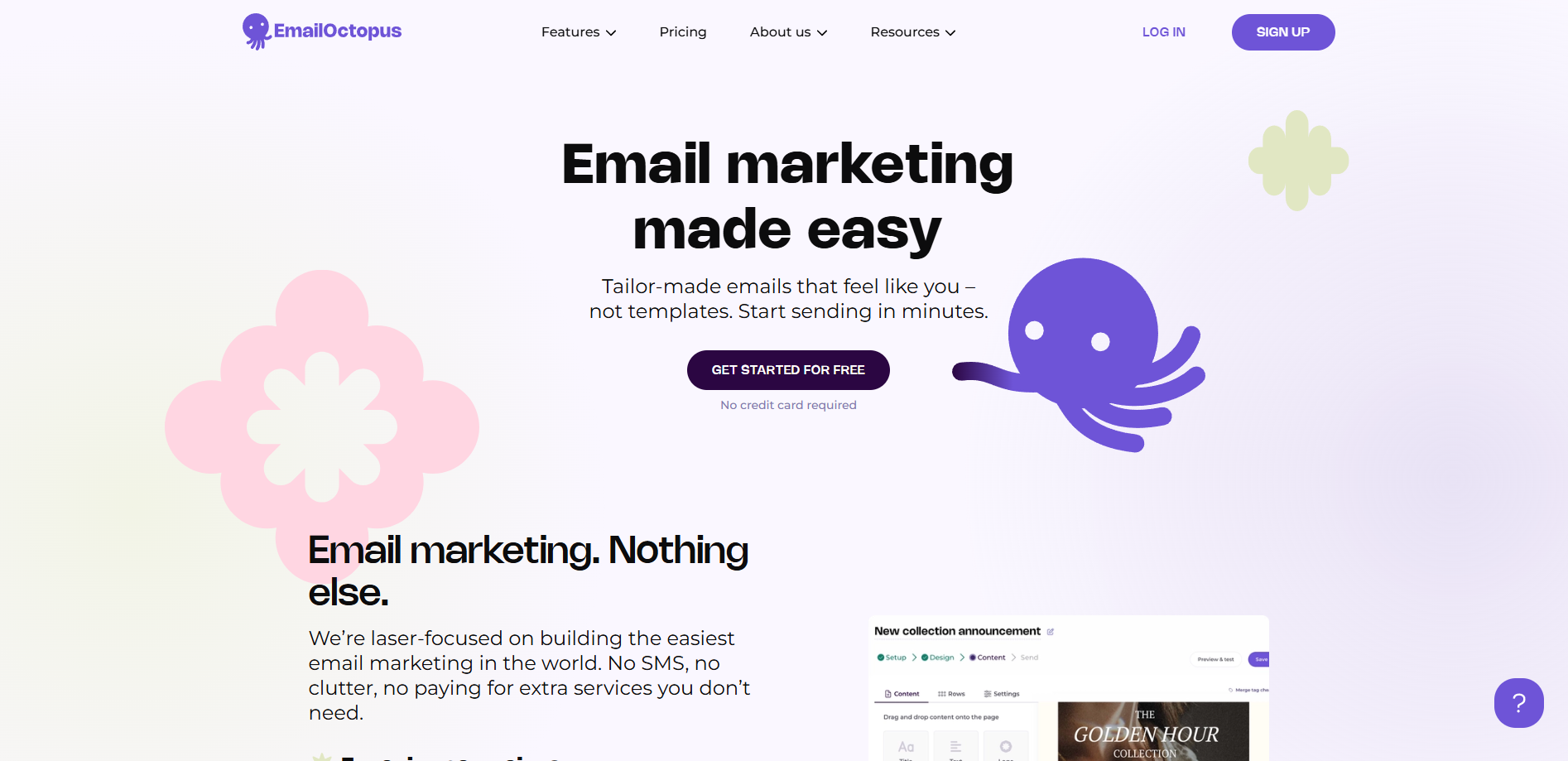
EmailOctopus keeps things simple and cheap. Its free plan covers 2,500 subscribers and 10,000 emails a month, and Pro starts at $9/month billed yearly. Nonprofits get a 20% lifetime discount.
It covers campaigns, forms, landing pages and basic automations. It doesn’t do advanced branching or native donation features, so it suits small organisations with simple needs.
Key features for nonprofits
- Free plan: 2,500 subscribers, 10,000 emails
- 20% lifetime nonprofit discount
- Forms, landing pages and simple automations
✅EmailOctopus Pros:
- Generous free plan
- 20% lifetime nonprofit discount
- Very easy to use
❌EmailOctopus Cons:
- Basic automation
- Fewer integrations than larger platforms
💰Pricing: Free for 2,500 subscribers. Pro from $9/month billed yearly; 20% off for nonprofits.
Best for: Very small nonprofits that need the basics at the lowest cost.
6. Brevo — Best for Big Lists With Occasional Sends
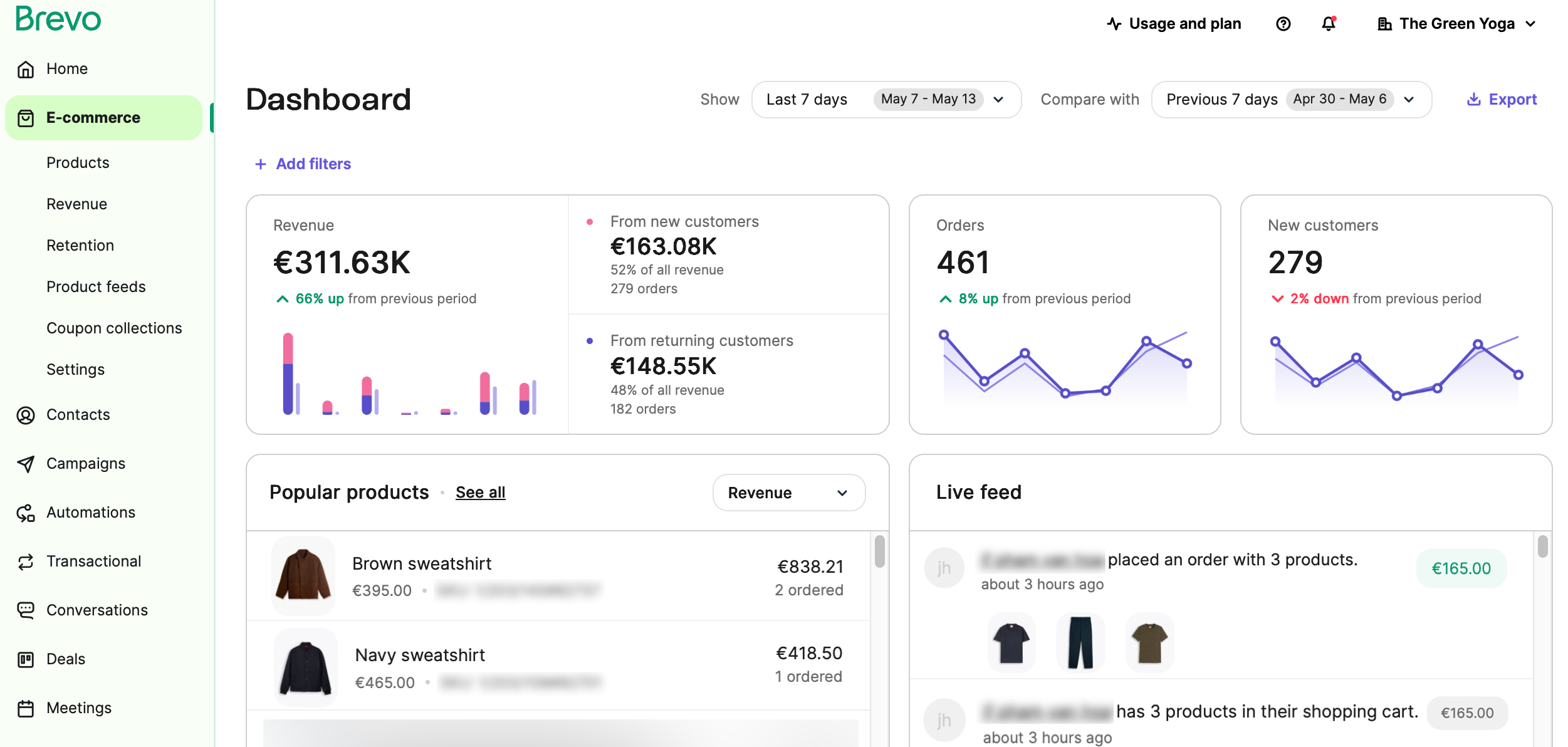
Brevo charges by emails sent, not contacts, which suits nonprofits with large lists that email infrequently. The free plan sends up to 300 emails a day, and Starter costs $9/month for 5,000 emails. SMS and WhatsApp are available for event reminders.
Brevo’s nonprofit offer is 15% off Enterprise plans only, so most small nonprofits won’t get a discount. See our Brevo alternatives or Brevo vs Mailchimp.
Key features for nonprofits
- Pricing by emails sent
- Free plan: 300 emails a day
- SMS and WhatsApp
- CRM and automation
✅Brevo Pros:
- Large lists don’t raise the price
- Email, SMS and WhatsApp in one tool
- Starter from $9/month
❌Brevo Cons:
- 300-a-day cap on the free plan
- Nonprofit discount only on Enterprise
💰Pricing: Free for 300 emails/day. Starter from $9/month (5,000 emails). 15% off Enterprise for NGOs.
Best for: Nonprofits with large lists that email a few times a month.
7. Sender — Best Free Plan
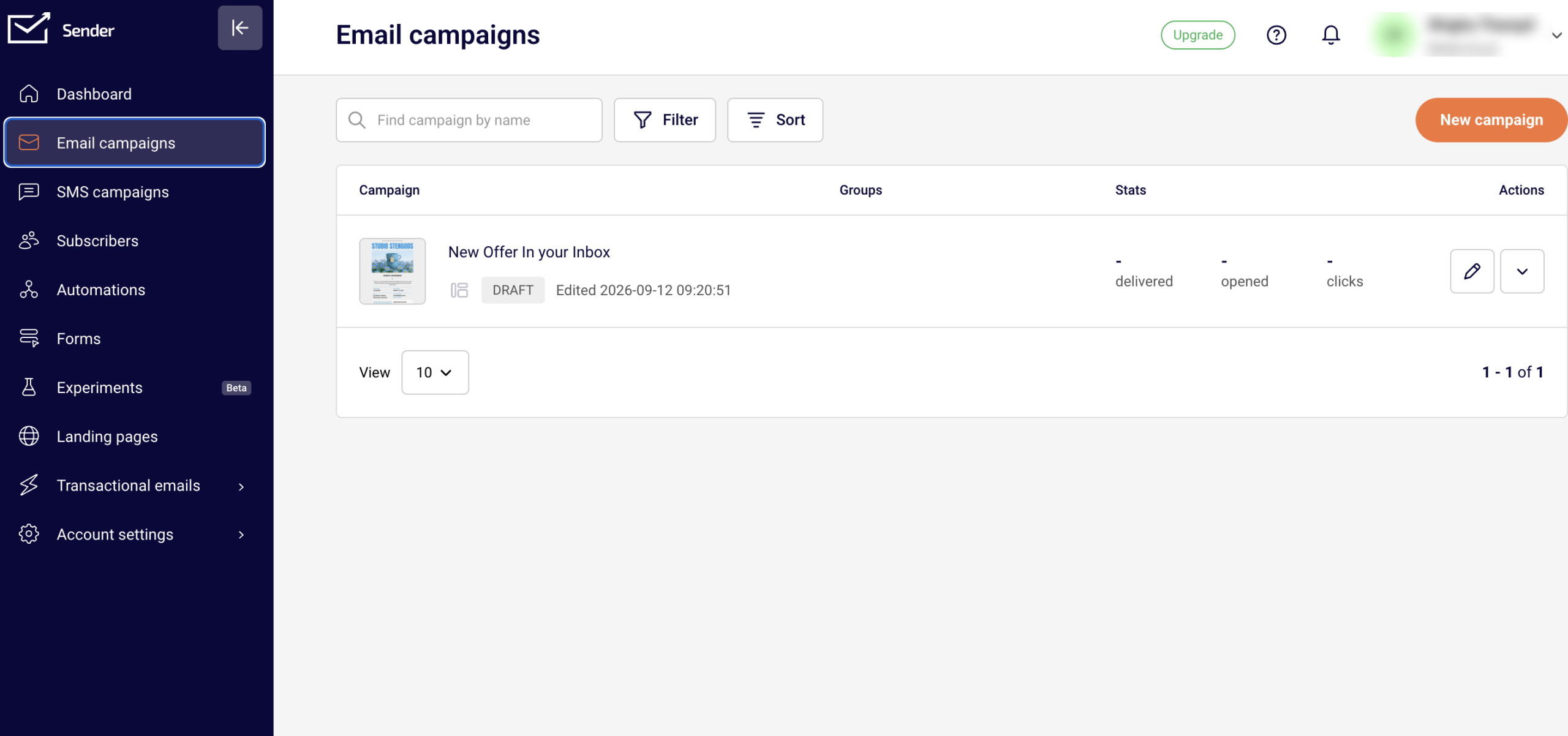
Sender has the biggest free plan here: 2,500 subscribers and 15,000 emails a month, with automation, popups and forms. The Standard plan starts at $7/month.
There’s no published nonprofit discount, but for a nonprofit under 2,500 subscribers the free plan may be all you need.
Key features for nonprofits
- Free plan: 2,500 subscribers, 15,000 emails
- Automation, popups and forms
- SMS on paid plans
✅Sender Pros:
- Largest free plan on this list
- Low paid prices
- Easy for volunteers
❌Sender Cons:
- No published nonprofit discount
- Fewer advanced features than bigger platforms
💰Pricing: Free for 2,500 subscribers and 15,000 emails/month. Standard from $7/month.
Best for: Small nonprofits that want to stay on a free plan.
8. Moosend — Best Automation on a Budget
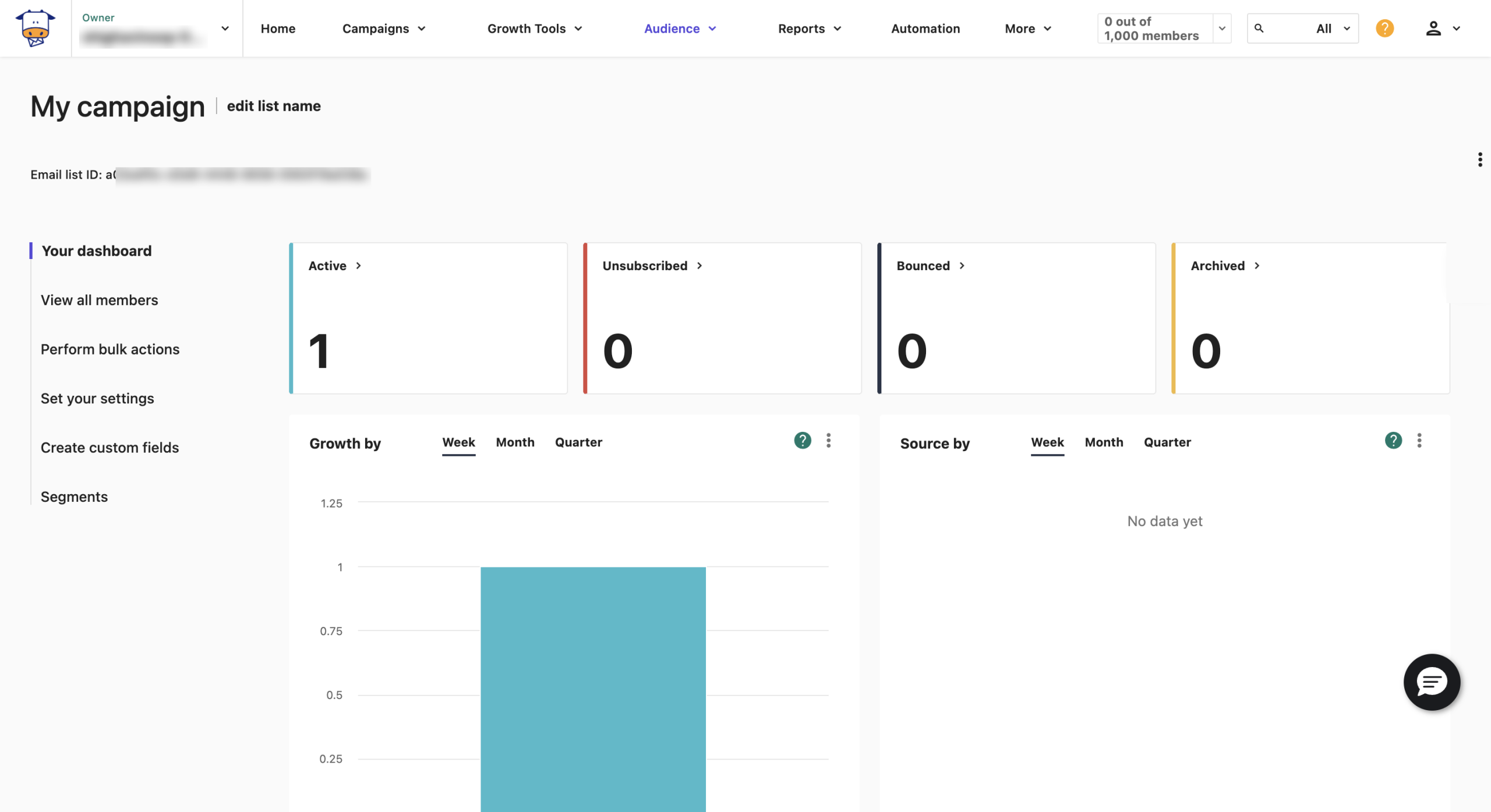
Moosend has a strong visual automation builder and offers nonprofits 25% off, which stacks with its 20% annual-billing discount.
There’s no free plan, but a 30-day trial includes unlimited sends for up to 1,000 contacts. Pro is priced by list size from 500 contacts. See our Moosend alternatives for more options.
Key features for nonprofits
- 25% nonprofit discount (stacks with 20% annual discount)
- Visual automation builder
- Landing pages and forms
- 30-day free trial
✅Moosend Pros:
- Discounts stack for the lowest effective price
- Strong automation
- Unlimited sends on Pro
❌Moosend Cons:
- No free plan
- Smaller support team than larger platforms
💰Pricing: Pro priced by contacts from 500; 30-day free trial. 25% off for nonprofits plus 20% off annual billing.
Best for: Nonprofits with a staff member who will build donor journeys.
9. Zoho Campaigns — Best for Teams Already on Zoho
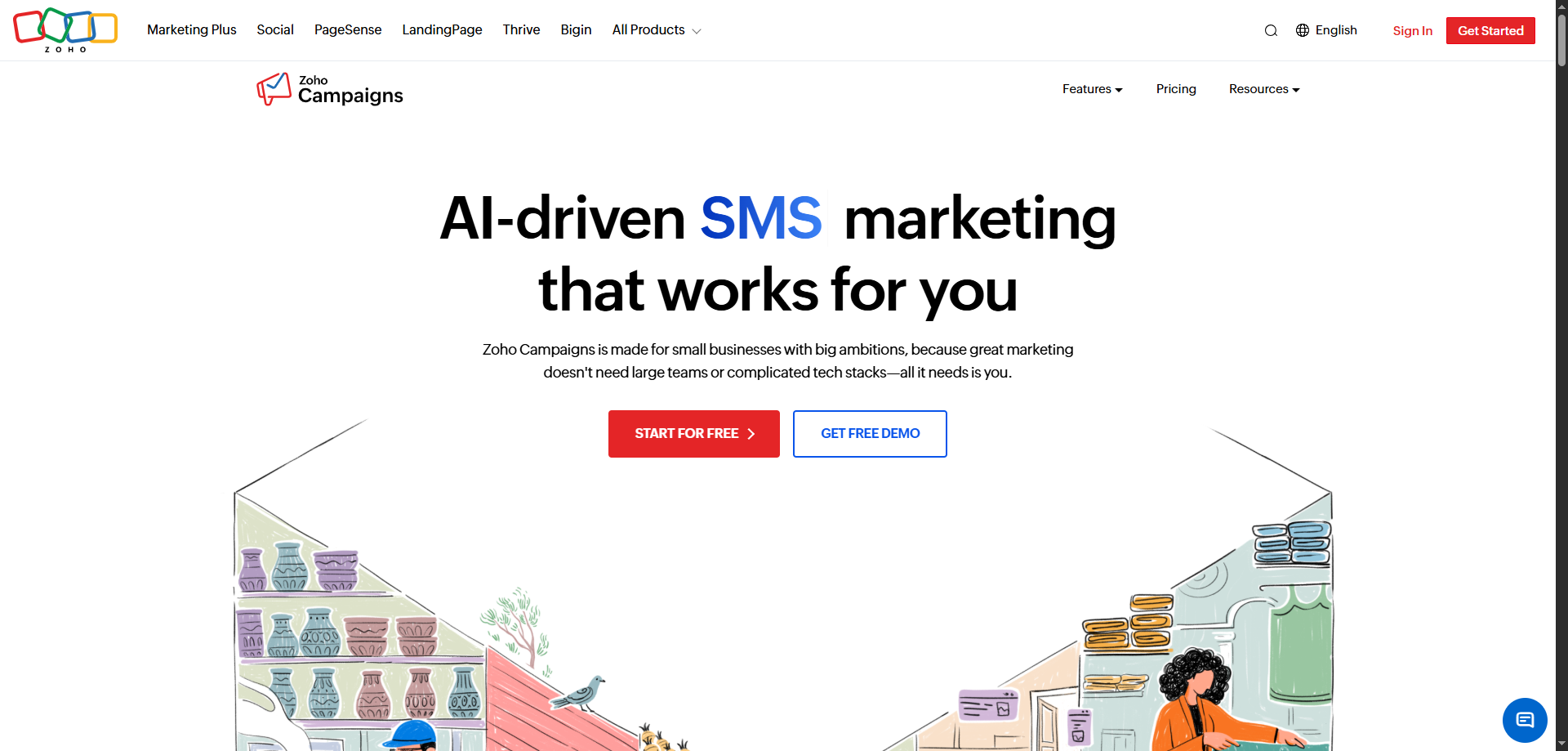
Zoho Campaigns makes most sense if you already use Zoho CRM for donors. The free plan covers 2,000 contacts and 6,000 emails a month, and paid plans start at 500 contacts, with 25% off for yearly billing. Our Zoho Campaigns review covers each plan in detail.
Zoho says nonprofit discounts are available on request but doesn’t publish a percentage, so ask its sales team.
Key features for nonprofits
- Free plan: 2,000 contacts, 6,000 emails
- Deep Zoho CRM integration
- Workflows and A/B testing
✅Zoho Campaigns Pros:
- Good free plan
- Works natively with Zoho CRM
- 25% off yearly billing
❌Zoho Campaigns Cons:
- Nonprofit discount not published
- Less polished than mainstream tools
💰Pricing: Free for 2,000 contacts and 6,000 emails/month. Standard and Professional priced by contacts from 500; 25% off yearly.
Best for: Nonprofits that already run on Zoho.
10. HubSpot — Best for Larger Nonprofits Needing a Donor CRM
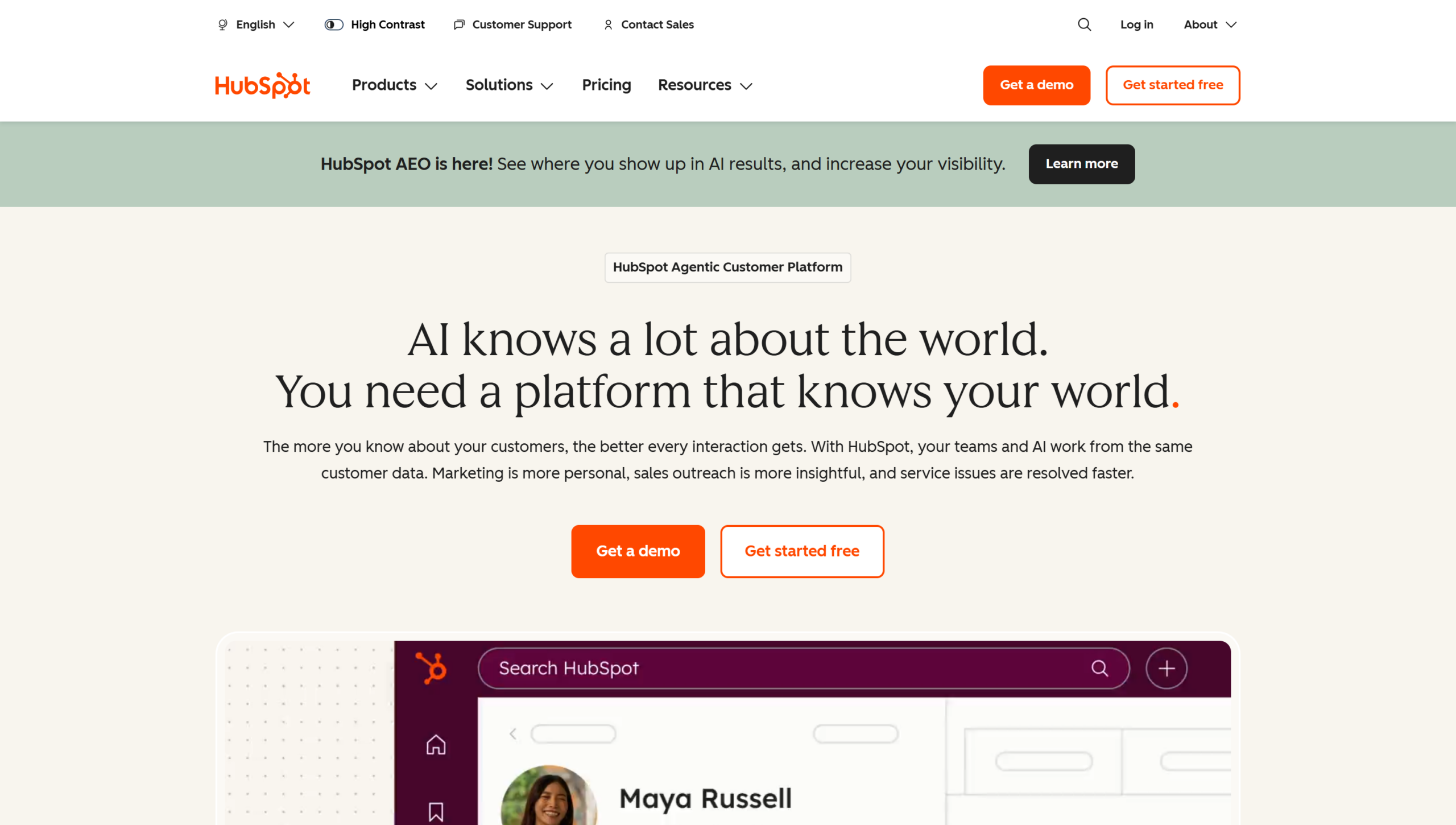
HubSpot’s free CRM works well as a donor database. Its nonprofit programme gives 40% off new Professional and Enterprise plans, but not Starter. It requires an annual contract and is currently limited to North America, Australia and New Zealand.
Marketing Hub Starter costs $20 per seat per month. Professional is far more expensive, so HubSpot suits larger nonprofits with dedicated staff. See HubSpot vs Mailchimp and our HubSpot alternatives.
Key features for nonprofits
- Free CRM for donor records
- 40% off Professional and Enterprise for nonprofits
- Marketing Hub Starter from $20/seat/month
✅HubSpot Pros:
- Free CRM is genuinely useful
- Large integration ecosystem
- 40% nonprofit discount on higher tiers
❌HubSpot Cons:
- Discount excludes Starter
- Professional is expensive even with the discount
- Steep learning curve
💰Pricing: Free CRM. Marketing Hub Starter $20/seat/month; 40% off Professional/Enterprise for eligible nonprofits.
Best for: Larger nonprofits with development staff and a CRM-first approach.
Free Plans Compared
| Tool | Free Contacts | Free Emails per Month |
|---|---|---|
| Mailercloud#1 Pick | 1,000 | 12,000 |
| Sender | 2,500 | 15,000 |
| EmailOctopus | 2,500 | 10,000 |
| Zoho Campaigns | 2,000 | 6,000 |
| GetResponse | 500 | 2,500 |
| Brevo | Not capped | 300 a day |
| MailerLite | 250 | 2,500 |
| Mailchimp (for reference) | 250 | 500 |
How to Choose
- Lowest cost as your list grows: Mailercloud ($10/month for 5,000 contacts)
- Biggest nonprofit discount: GetResponse (50% off monthly plans)
- Simple tool with a discount: MailerLite (30% off)
- In-person events and phone support: Constant Contact
- Free for as long as possible: Sender or EmailOctopus (2,500 subscribers)
- Large list, occasional sends: Brevo
- Donor CRM for a larger team: HubSpot
The Mailercloud View: Five Rules for Nonprofit Email
- Get consent right. Use clear opt-in at donation and event signup. EU and UK supporters need consent under GDPR, and the ICO applies the same direct-marketing rules to charities. Our guide to GDPR consent explains how, and double opt-in keeps your list clean.
- Authenticate your domain. Set up SPF, DKIM and DMARC before your first appeal. See our summary of the Gmail and Yahoo sender requirements.
- Segment by donor stage. First-time, recurring, lapsed and major-gift donors need different messages.
- Automate the thank-you. A welcome series and a gift thank-you are the two automations every nonprofit should run. See our roundup of email marketing automation software.
- Follow the law on every send. US emails need a physical address and a working unsubscribe under the CAN-SPAM Act.
Frequently Asked Questions
What is the best Mailchimp alternative for nonprofits?
Mailercloud is the best Mailchimp alternative for most nonprofits in 2026. It’s free for 1,000 contacts and 12,000 emails a month, then $10/month for 5,000 contacts. For the biggest formal discount, choose GetResponse (50% off monthly plans) or MailerLite (30% off).
Does Mailchimp offer a nonprofit discount?
Yes, Mailchimp offers nonprofits 15% off. Its free plan is limited to 250 contacts and 500 emails a month.
Which email platform has the biggest nonprofit discount?
GetResponse offers 50% off monthly plans for charities and NGOs, followed by HubSpot (40% off Professional and Enterprise), MailerLite (30%), Constant Contact (up to 30% with 12-month prepayment) and Moosend (25%).
What is the best free email marketing tool for nonprofits?
Sender has the largest free plan (2,500 subscribers, 15,000 emails a month), followed by EmailOctopus (2,500 subscribers, 10,000 emails) and Mailercloud (1,000 contacts, 12,000 emails).
Does Mailercloud have a nonprofit discount?
Mailercloud doesn’t publish a nonprofit discount. Its free plan covers 1,000 contacts, Premium is $10/month for 5,000 contacts, and annual billing saves 30%.
How do I move from Mailchimp to another tool?
Export your audience as a CSV, including tags and consent status, then import it into the new tool. Recreate your signup forms and key automations, and authenticate your sending domain before your first send.
Final Verdict
For most nonprofits, Mailercloud gives the best value: a free plan four times larger than Mailchimp’s on contacts, then $10/month for 5,000 contacts with unlimited sends. If a formal discount is a must, GetResponse (50%) and MailerLite (30%) are the strongest options, Constant Contact suits event-heavy organisations, and HubSpot fits larger teams that want a donor CRM.
Spend less on email, & more on your mission
★★★★★ 4.5 on G2 · 4.7 on Capterra · 4.4 on Trustpilot · Trusted by 35,000+ businesses
Free for 1,000 contacts · No credit card · $10/month for 5,000

An SEO expert with a focus on on-page optimization, technical SEO, and keyword research. Dedicated to helping businesses improve search rankings and grow their online presence through data-driven strategies.