
Last updated: September 2026 | Pricing verified on September 8, 2026 | 17 min read
Since HubSpot moved to a seat-based pricing model, its costs have shifted — its free CRM is still generous, but real marketing automation now sits on Marketing Hub Professional at $890/month, plus a one-time onboarding fee, a jump that has sent many teams looking for a better deal.
HubSpot has earned its place as a leading CRM and marketing platform — but it’s not the right fit for everyone. Whether you’re frustrated by its pricing jumps, the steep climb from Starter to Professional, a feature set that’s more than you need, or you’re simply looking for a more affordable email marketing platform, you’re not alone.
Searches for ‘HubSpot alternatives’ have climbed steadily, and the options available in 2026 are better than ever. We’ve compared 12 top HubSpot alternatives so you can make a fast, informed decision — without reading 20 separate reviews.
Quick Answer: The best overall HubSpot alternative in 2026 is Mailercloud — an all-in-one email marketing platform from $7/month (with a free plan) that includes Inbox Tracker and AMP emails HubSpot doesn’t offer. For an all-in-one CRM + marketing suite on a budget, choose Brevo or EngageBay; for advanced automation, ActiveCampaign; for the Zoho ecosystem, Zoho Campaigns; and for ecommerce, Omnisend or Klaviyo. Almost every option here is dramatically cheaper than HubSpot’s $890/month Marketing Hub Professional plan.
Table of Contents
Why People Are Leaving HubSpot in 2026
HubSpot is a capable platform, so why do so many businesses search for a replacement? After analyzing real user reviews, these are the recurring pain points:
- The price cliff: The free CRM and $15/seat Starter tier are fair value, but real marketing automation lives on Marketing Hub Professional at $890/month (3 seats, 2,000 contacts) — a roughly 44× jump.
- Mandatory onboarding fees: Professional and Enterprise plans carry a one-time onboarding fee of $3,000–$10,000 that is separate from your subscription and rarely negotiable.
- Cost stacks in layers: Seats, marketing-contact tiers, and add-ons all bill at once. Extra Professional seats run ~$45/month each, and passing your contact allowance adds $50/month per 1,000 contacts.
- You pay for scope you may not use: Paying enterprise money for a full suite when you mostly need email and automation is common — and avoidable.
- Complexity: The breadth of Hubs, seats, and settings is a real learning curve for small teams.
- No inbox placement tracking: HubSpot won’t show you whether emails land in the inbox, spam, or the promotions tab.
- No AMP email support: Interactive, real-time AMP emails aren’t part of HubSpot.
For context: HubSpot’s Marketing Hub Professional starts at $890/month before overages. Most of the alternatives below start under $20/month, and many include a free plan — which is what makes them worth a closer look.
Quick Comparison: 12 Best HubSpot Alternatives at a Glance
Use this table to compare the top HubSpot alternatives before diving into the full reviews below.
| Tool | Best for | Free plan | Starting price | Standout feature |
|---|---|---|---|---|
| Mailercloud | Affordable all-in-one email | Yes (1,000 contacts) | $7/mo | Inbox Tracker + AMP Emails |
| Brevo | All-in-one CRM + email on a budget | Yes (unlimited contacts) | $9/mo | Pay per email, not per contact |
| ActiveCampaign | Advanced automation + sales CRM | 14-day trial | $15/mo | Deep branching automation |
| EngageBay | Affordable all-in-one (closest to HubSpot) | Yes (250 contacts) | $14.99/mo | CRM + marketing + service + helpdesk |
| Zoho Campaigns | Teams in the Zoho ecosystem | Yes (2,000 contacts) | ~$4/mo | Native Zoho CRM sync |
| GetResponse | Webinars & sales funnels | Yes (500 contacts) | $19/mo | Built-in webinar hosting |
| Mailchimp | Beginners & familiar UI | Yes (500 contacts) | $13/mo | 500+ integrations |
| Omnisend | Ecommerce stores | Yes (250 contacts) | $16/mo | Email + SMS + web push |
| Klaviyo | Scaling ecommerce brands | Yes (250 contacts) | $20/mo | Predictive analytics + Shopify |
| Kit (ConvertKit) | Creators & newsletters | Yes (10,000 subs) | $29/mo | Creator Network + monetization |
| MailerLite | Simplicity & small budgets | Yes (250 subs) | $12/mo | Easiest editor + websites |
| Moosend | Unlimited sends on a budget | 30-day trial | $7/mo | Unlimited email sends |
Pricing verified September 2026 from public pricing pages. Entry paid tiers shown; confirm current rates before purchase.
1. Mailercloud—Best for Affordable Email Marketing
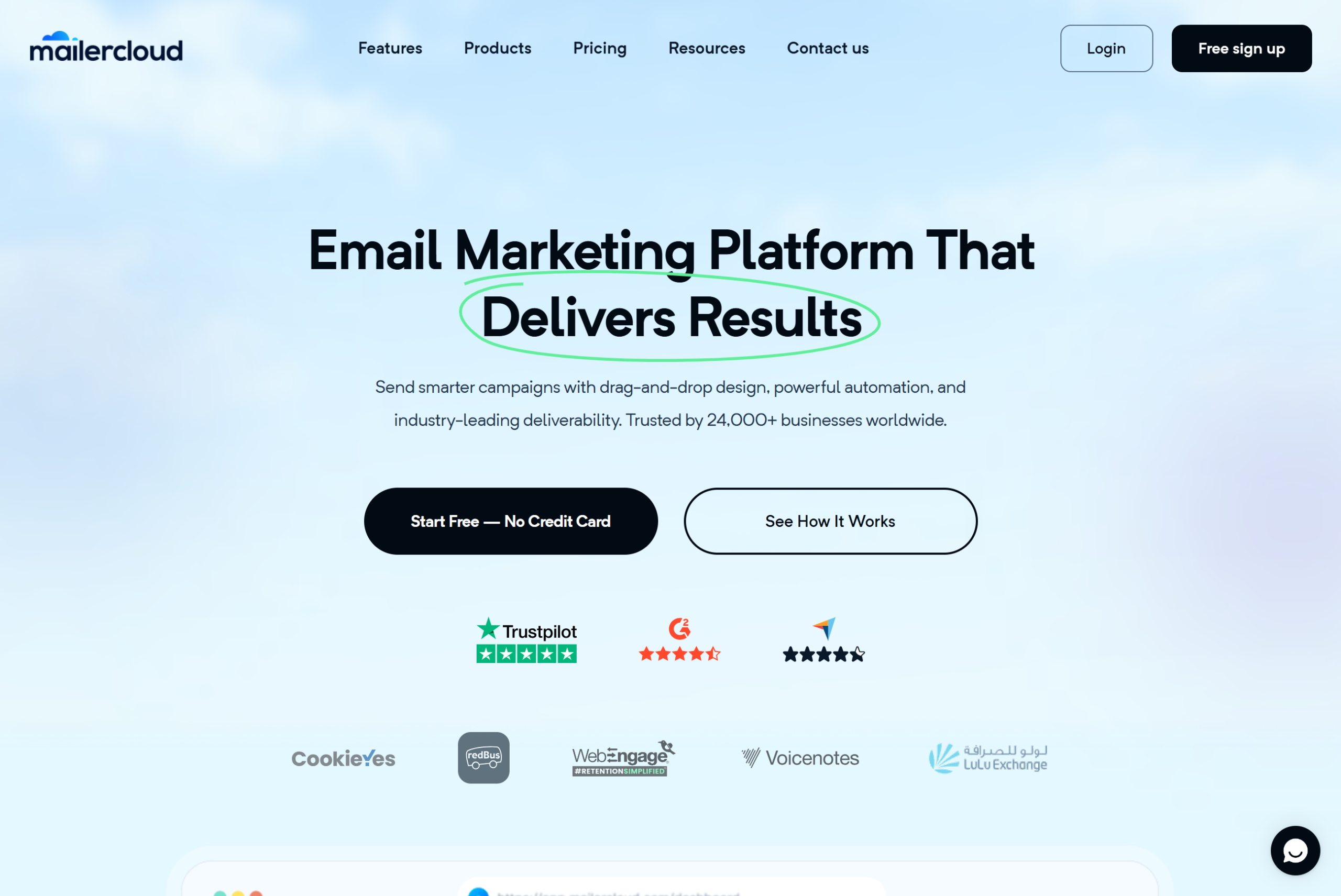
Mailercloud is a fit if you’re leaving HubSpot mainly for cost and want straightforward email marketing rather than a full CRM suite. Campaigns, automation, segmentation, drip automation, and reporting are available from the entry tier, and there’s a free plan and a short learning curve.
Two features stand out because HubSpot doesn’t offer them: Inbox Tracker, which shows whether emails land in the inbox, spam, or promotions tab, and AMP emails for interactive content. The trade-off is that Mailercloud has no built-in CRM, so it suits teams that either don’t need one or already run a separate CRM alongside it.
Mailercloud vs. HubSpot — Pros and Cons
| PROS — Why choose Mailercloud | CONS — Where HubSpot wins |
|---|---|
| + From $7/month — versus $890/month for HubSpot’s Marketing Hub Professional | − HubSpot is a full CRM + sales + service + CMS platform, not just email |
| + Free forever plan; no onboarding fee | − HubSpot has a mature CRM with deal pipelines and lead scoring |
| + Inbox Tracker shows inbox/spam/promotions placement | − HubSpot offers built-in calling, live chat, and ticketing |
| + AMP Emails for interactive inbox experiences | − HubSpot’s Breeze AI spans content, lead scoring, and social |
| + Easy to learn; fast, accessible support | − HubSpot has a far larger integrations marketplace |
| + Transparent pricing that stays affordable as you grow | − HubSpot suits large teams needing one system for GTM |
Mailercloud’s free plan covers 1,000 contacts and 12,000 emails a month with no card required — see plans and try it.
2. Brevo—Best All-in-One on a Budget
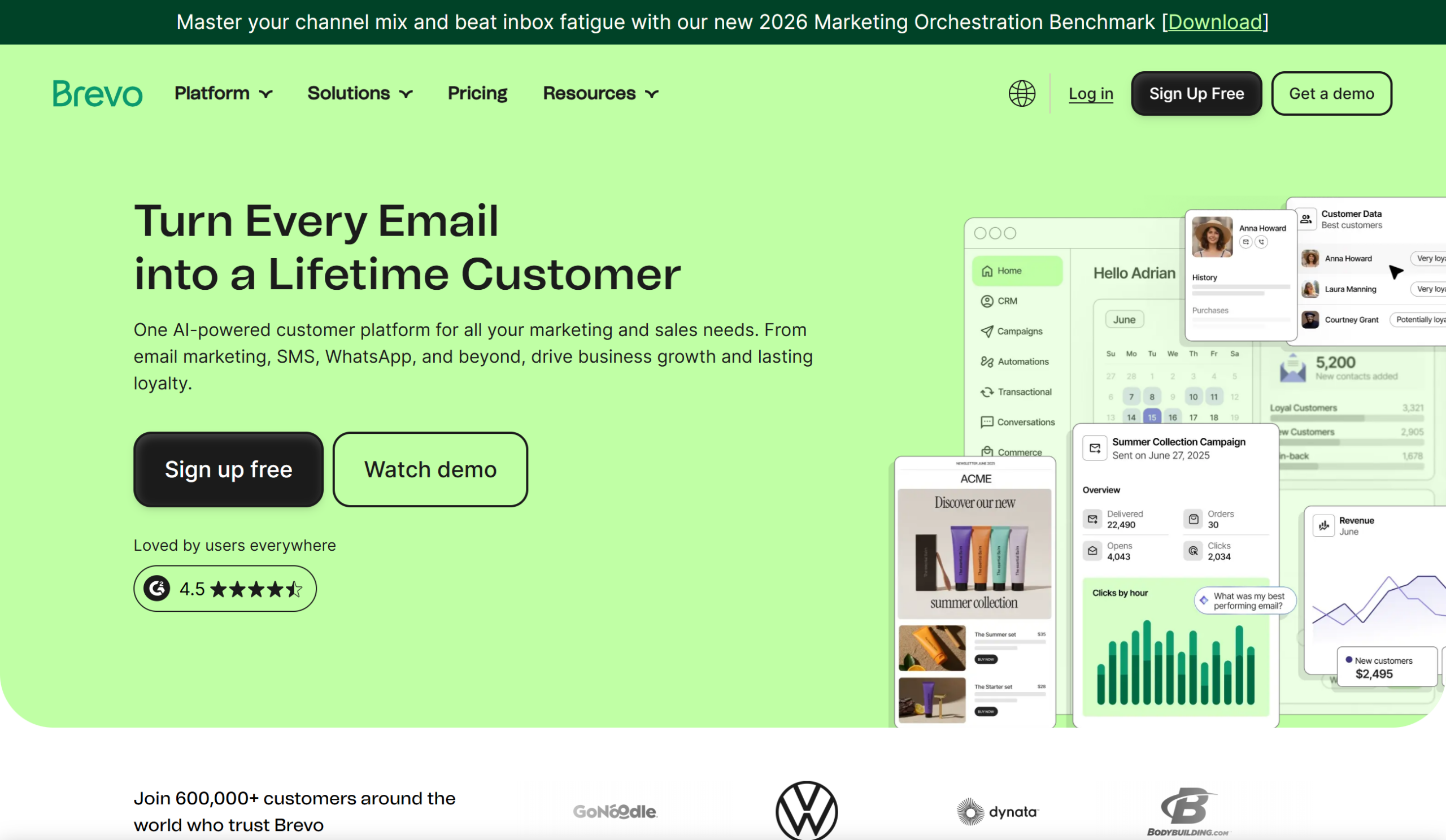
Brevo is one of the most popular HubSpot alternatives for businesses that want CRM, email, SMS, and automation in one place without the HubSpot bill. Its standout advantage is pricing: unlimited contacts on every plan, including free — you pay only for the emails you send. For a growing database, that model can save thousands versus HubSpot’s marketing-contact tiers. Brevo also bundles a built-in CRM, transactional email, WhatsApp, and live chat. For a side-by-side look, see our Brevo vs Mailchimp comparison.
| PROS — Why choose Brevo | CONS — Where HubSpot wins |
|---|---|
| + Unlimited contacts on all plans, including free | − HubSpot’s CRM is deeper, with richer reporting and pipelines |
| + Pay per email sent, not per contact | − HubSpot has a larger integrations and app ecosystem |
| + Built-in CRM, SMS, WhatsApp, and live chat | − Free plan has a 300 emails/day limit |
| + GDPR-compliant, EU-based | − HubSpot’s automation and AI (Breeze) are more advanced |
| + Transactional email included | − Reporting is less comprehensive than HubSpot |
| + Starts at $9/month | − Interface can feel cluttered on complex campaigns |
3. ActiveCampaign — Best for Advanced Automation
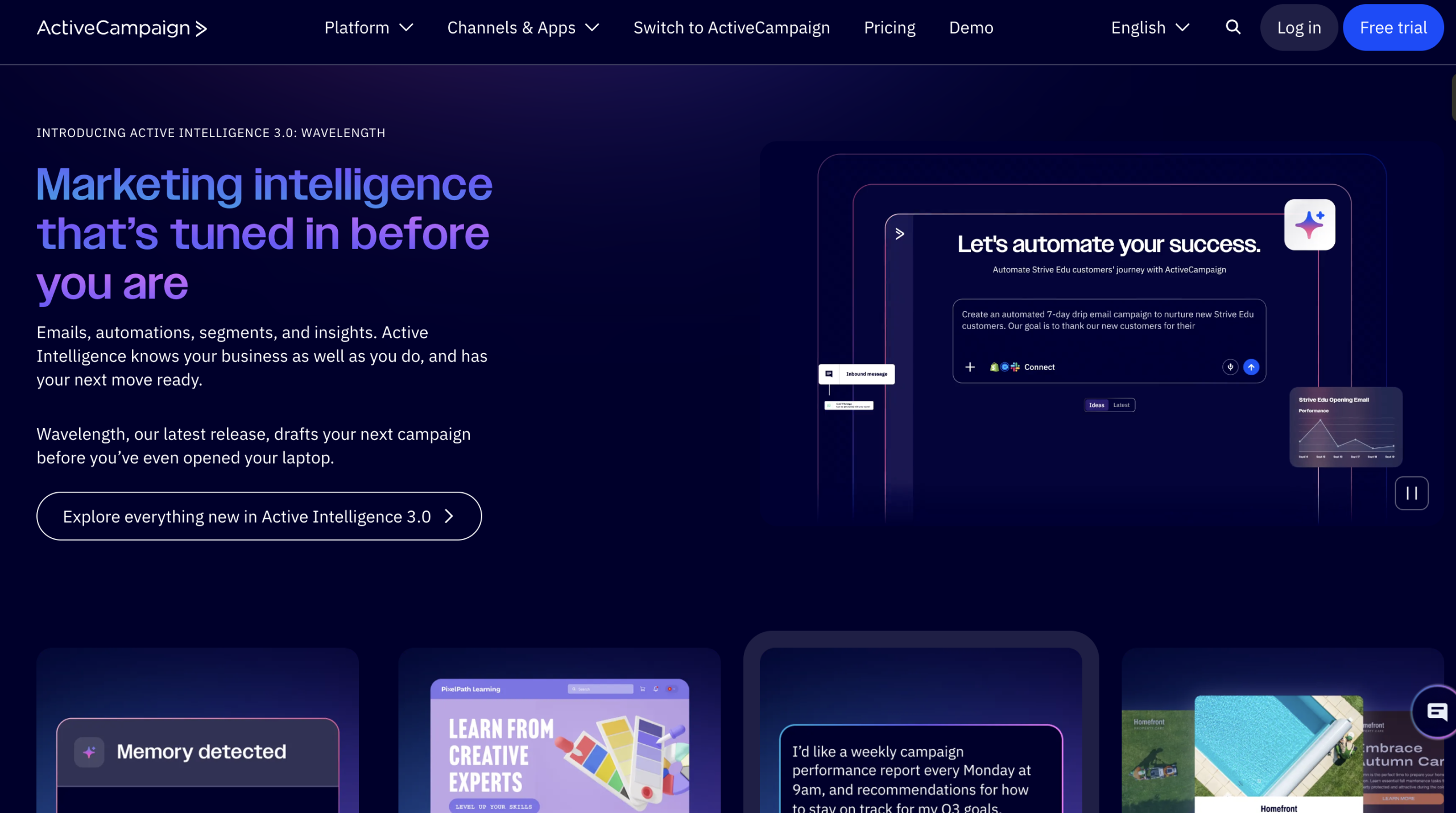
ActiveCampaign is the closest match to HubSpot’s automation power without the enterprise price tag. Its branching, behavior-triggered workflows are among the best in the industry, and it pairs them with a built-in sales CRM, lead scoring, and 900+ integrations. There’s no free plan (14-day trial only), and it can get pricey as your list grows — but for automation-heavy teams that find HubSpot overkill, it’s a strong middle ground. See our full ActiveCampaign vs HubSpot comparison.
| PROS — Why choose ActiveCampaign | CONS — Where HubSpot wins |
|---|---|
| + Best-in-class branching automation | − HubSpot bundles service, CMS, and calling too |
| + Built-in sales CRM with lead scoring | − No free plan — 14-day trial only |
| + 900+ integrations | − Pricing rises steeply with list size |
| + Predictive sending and A/B testing | − HubSpot’s onboarding and support resources are broader |
| + Cheaper entry point than HubSpot Marketing Pro | − Steeper learning curve than simpler tools |
| + SMS marketing on higher plans | − Reporting dashboards less polished than HubSpot |
4. EngageBay — Best Affordable All-in-One
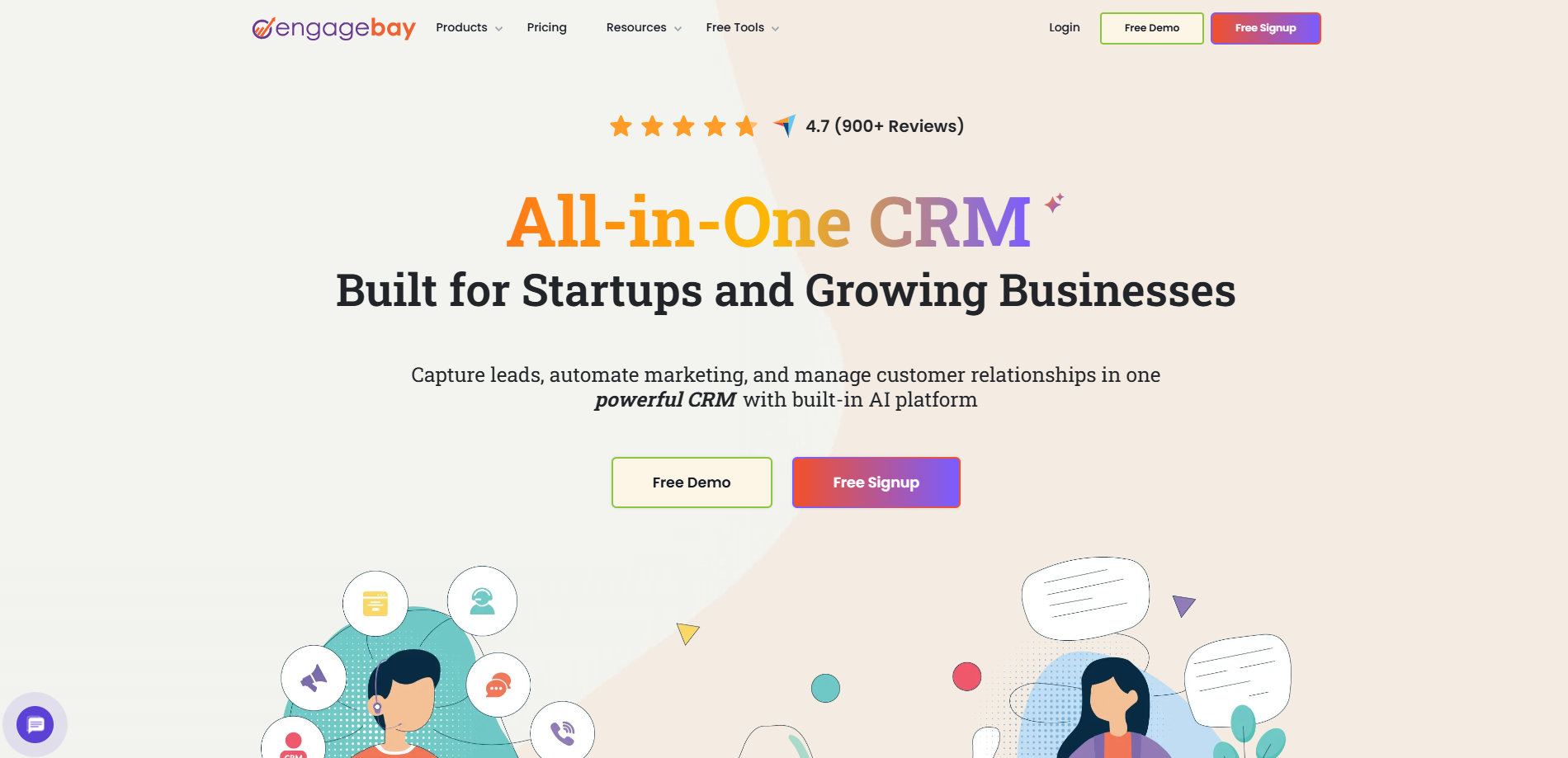
If you love HubSpot’s all-in-one concept but not the price, EngageBay is the closest like-for-like alternative. It combines CRM, email marketing, live chat, a helpdesk/ticketing system, landing pages, and appointment scheduling — much of it available on a genuinely useful free plan. Where HubSpot’s all-in-one bundle runs into four figures per month, EngageBay’s equivalent is a fraction of the cost, which makes it a favorite for small teams that need everything in one dashboard.
| PROS — Why choose EngageBay | CONS — Where HubSpot wins |
|---|---|
| + CRM + email + live chat + helpdesk in one tool | − HubSpot’s platform is far deeper at enterprise scale |
| + Free plan includes CRM and marketing basics | − Free plan limited to 250 contacts |
| + All-in-one plans cost a fraction of HubSpot’s | − Fewer third-party integrations |
| + Lead scoring, landing pages, and pop-ups | − No native mobile app for some modules |
| + Clean, approachable interface | − Smaller community and learning library |
| + Appointment scheduling and calling built in | − Deliverability less independently documented |
5. Zoho Campaigns — Best for the Zoho Ecosystem
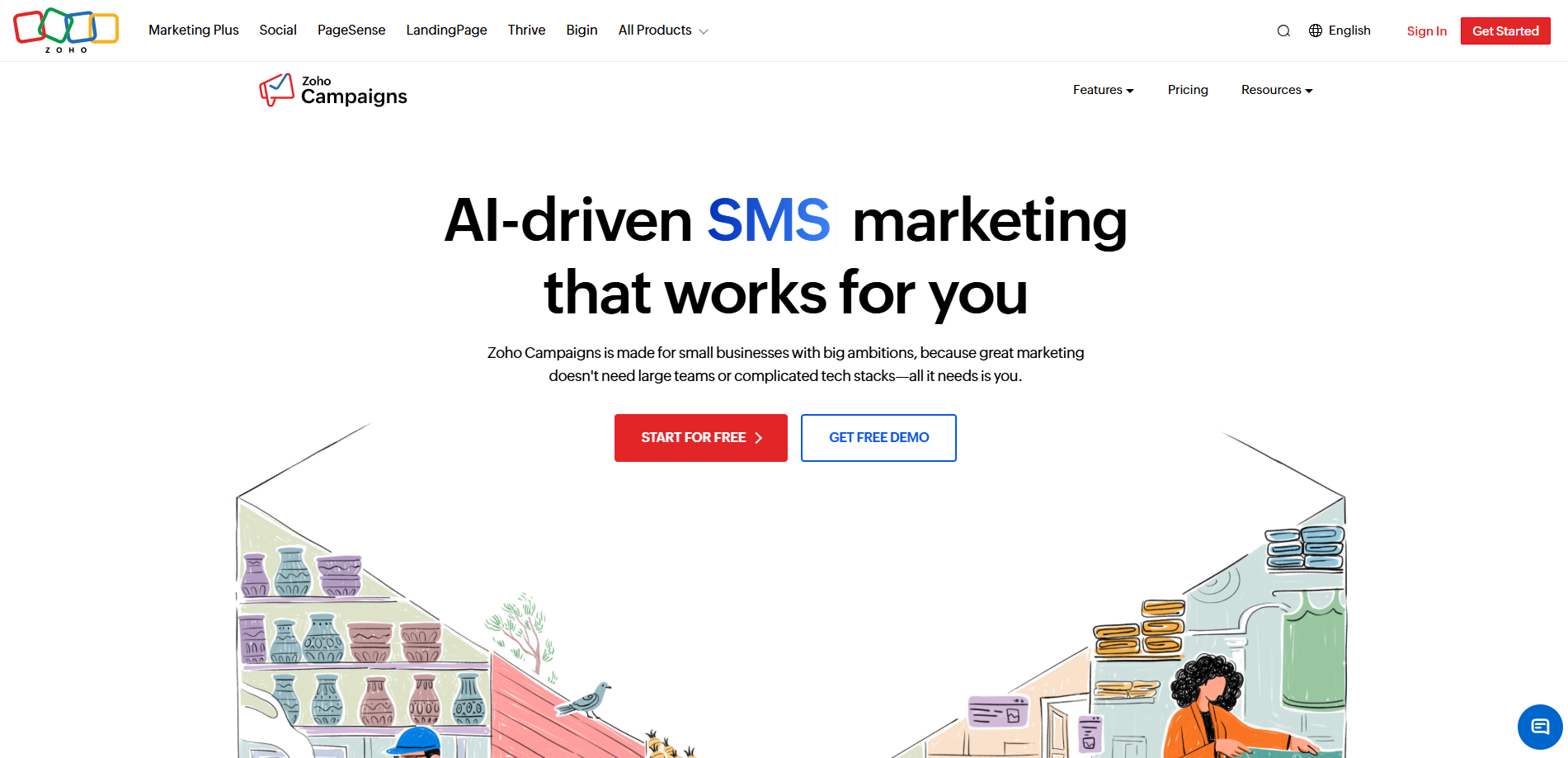
If your business already runs on Zoho CRM, Books, or Forms, Zoho Campaigns is the obvious HubSpot alternative. It offers a forever-free plan for up to 2,000 contacts and 6,000 emails/month, affordable paid tiers, and — its biggest draw — native two-way sync with Zoho CRM. For teams invested in the Zoho suite, the ecosystem leverage and low price are hard to beat; standalone, it’s a capable if less flashy email platform. Read our Zoho Campaigns review for a closer look.
| PROS — Why choose Zoho Campaigns | CONS — Where HubSpot wins |
|---|---|
| + Native Zoho CRM integration and suite sync | − HubSpot is stronger as a standalone all-in-one |
| + Forever-free plan (2,000 contacts, 6,000 emails) | − Pricing can get confusing as lists grow |
| + Very affordable paid tiers | − Deliverability can be inconsistent per user reports |
| + Pay-as-you-go email credits available | − Automation less advanced than HubSpot Pro |
| + Strong value inside Zoho One | − Best value only if you’re already in the Zoho ecosystem |
| + GDPR compliant | − Fewer premium templates and design options |
6. GetResponse — Best for Webinars & Funnels
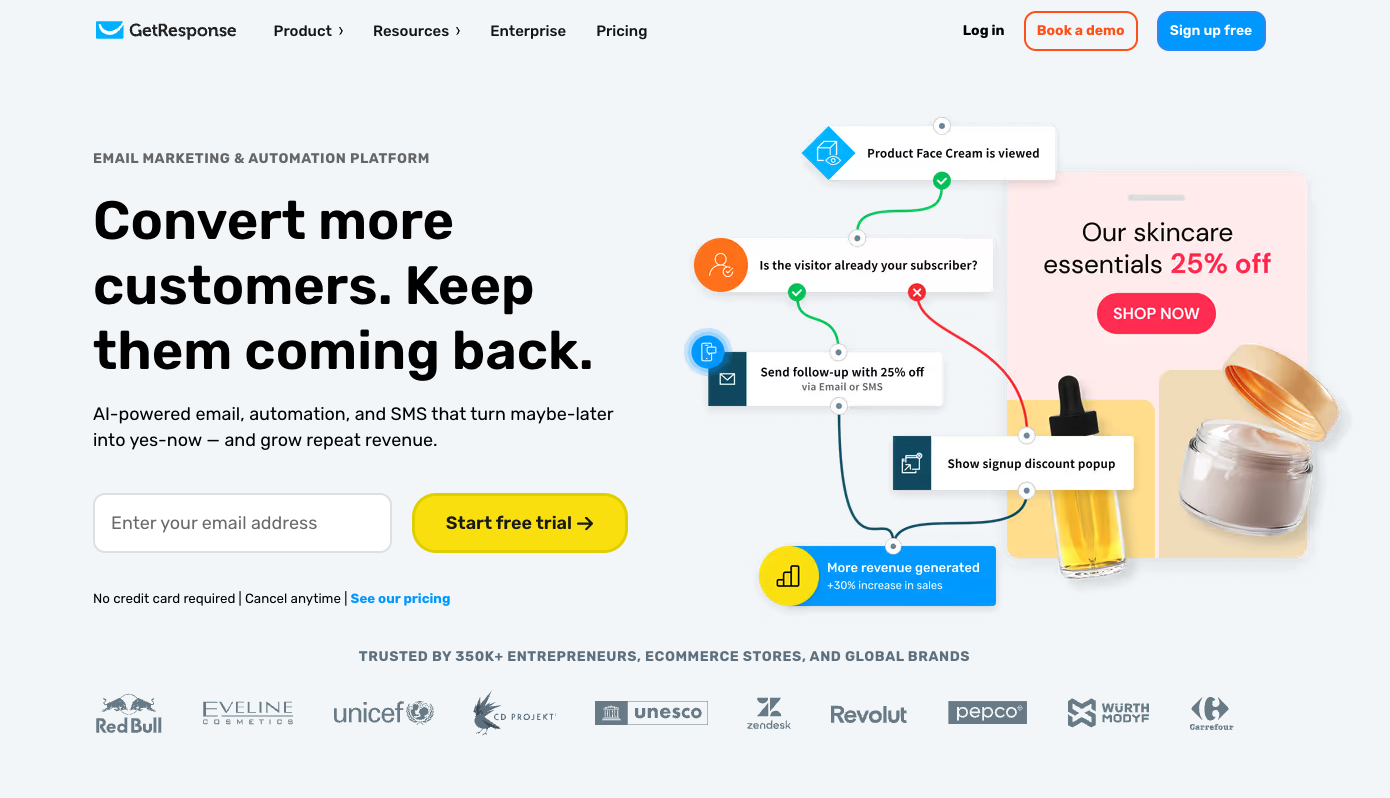
GetResponse has been around for two decades and is one of the most feature-rich HubSpot alternatives — especially for businesses that make money through online events and courses. Its built-in webinar hosting is genuinely rare among email platforms, and it pairs email marketing with conversion funnels, an AI campaign generator, and an AI course creator. A free forever plan gets you started. See our GetResponse review for current pricing.
| PROS — Why choose GetResponse | CONS — Where HubSpot wins |
|---|---|
| + Built-in webinar hosting — rare at this price | − CRM is basic — no deal pipelines on base plans |
| + Free forever plan available | − Deliverability scores lower in some independent tests |
| + Conversion funnel builder included | − Ecommerce features sit on pricier plans |
| + AI campaign and course creation tools | − SMS only on the top Max plan |
| + Paid plans from $19/month | − Learning curve for funnels and courses |
| + Landing pages and automation included | − Pricing has risen over recent years |
7. Mailchimp — Best for Beginners
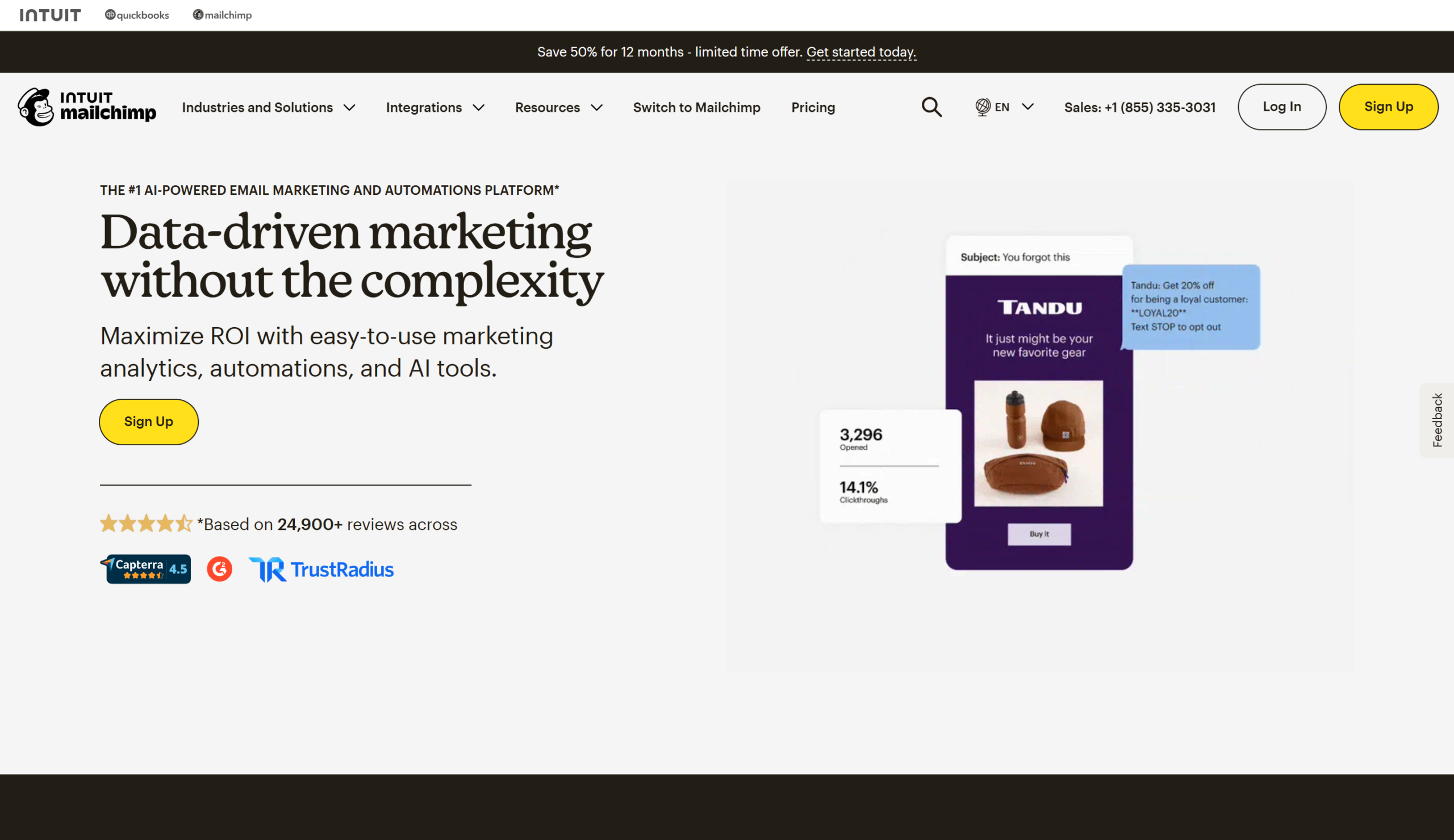
Mailchimp is the world’s most recognized email marketing platform, and its beginner-friendly interface plus 500+ integrations make it a natural HubSpot alternative for teams that want familiarity over complexity. It has grown into a broader marketing hub, but email remains its strongest suit. Note that its Premium plan is expensive, and advanced automation is gated behind higher tiers.
| PROS — Why choose Mailchimp | CONS — Where HubSpot wins |
|---|---|
| + Extremely beginner-friendly with inline guidance | − HubSpot’s CRM and sales tools are far deeper |
| + Free plan (500 contacts, 1,000 emails/month) | − Premium plan is costly at $350/month |
| + 500+ integrations with popular apps | − Multi-step automation only on Standard and up |
| + Solid deliverability in independent tests | − Limited support on the free plan |
| + Website and landing page builder | − No conditional content on lower tiers |
| + Familiar, widely documented platform | − Costs scale quickly with contacts |
8. Omnisend — Best for Ecommerce
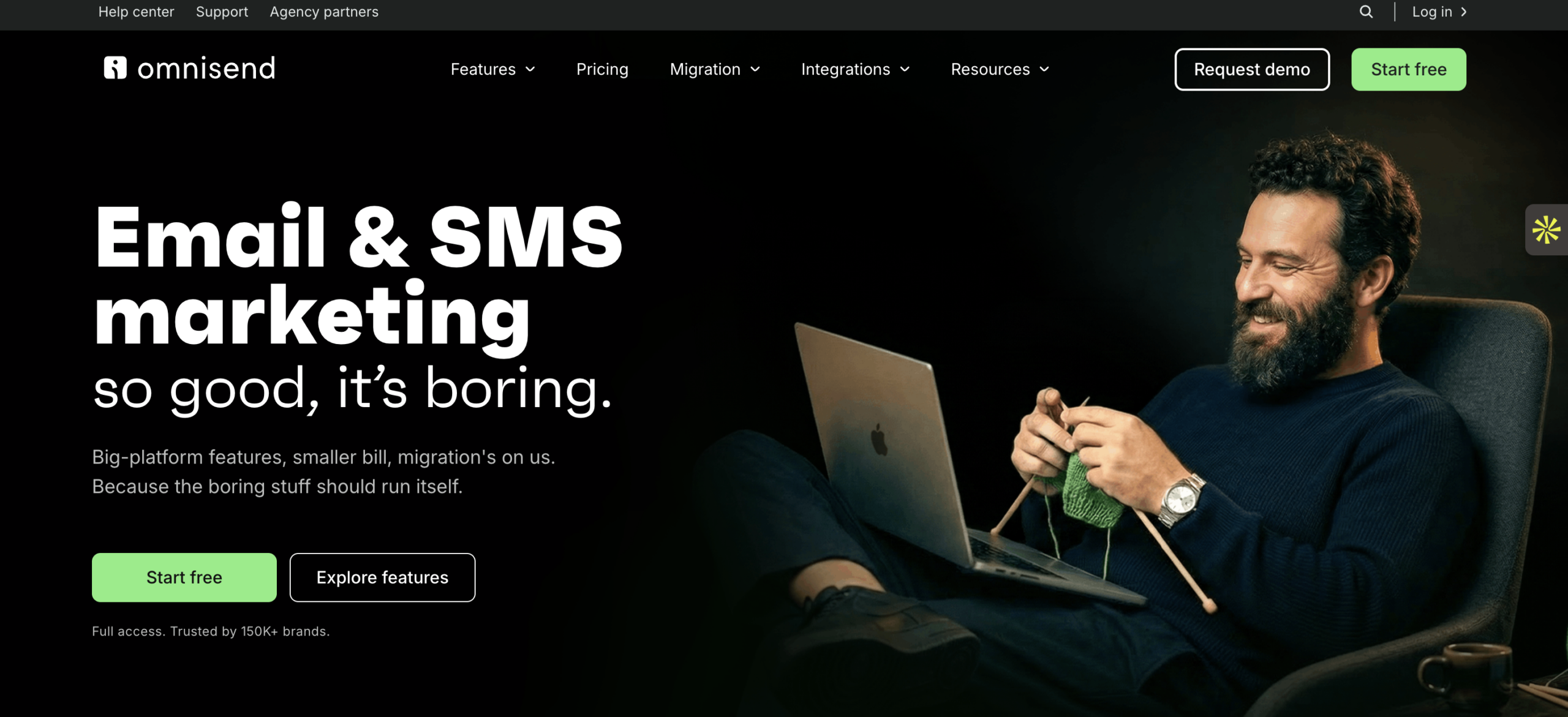
Omnisend was built for online stores, and it’s a far better fit than HubSpot for ecommerce-first teams. It combines email, SMS, and web push with pre-built cart-abandonment and win-back flows, shoppable content, and unique capture tools like the Wheel of Fortune. If your goal is revenue per send rather than a full GTM platform, Omnisend focuses squarely on that.
| PROS — Why choose Omnisend | CONS — Where HubSpot wins |
|---|---|
| + Purpose-built for ecommerce revenue | − Not designed for B2B or service businesses |
| + Email + SMS + web push in one platform | − SMS costs extra on most plans |
| + Pre-built cart abandonment and win-back flows | − No full CRM for sales teams |
| + Ecommerce templates and shoppable blocks | − Free plan limited to 250 contacts |
| + Campaign Booster auto-resends to non-openers | − Pricing scales steeply with list growth |
| + Deep Shopify, BigCommerce, WooCommerce sync | − Fewer non-ecommerce use cases |
9. Klaviyo — Best for Scaling Ecommerce
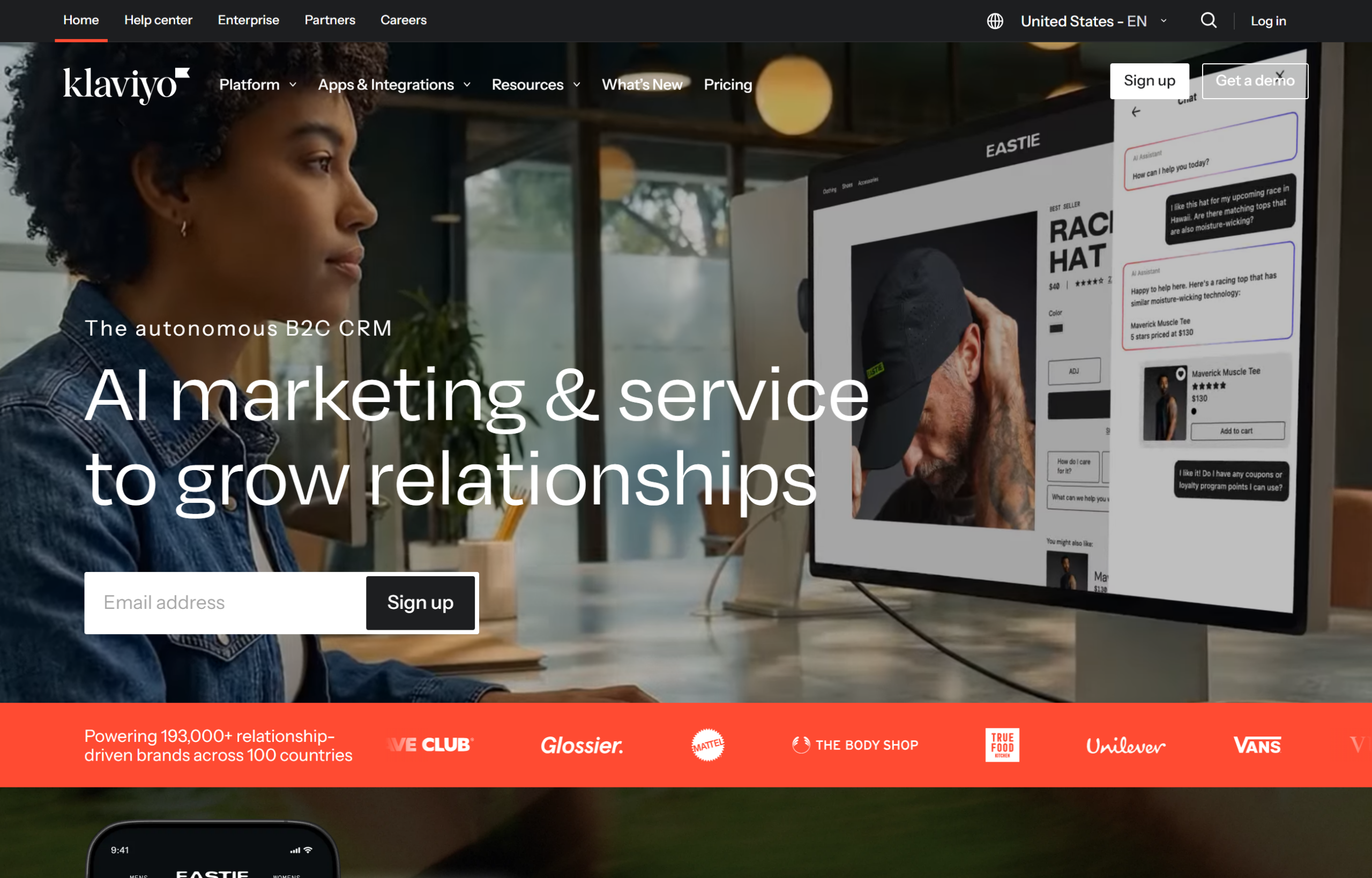
Klaviyo is the gold standard for data-driven ecommerce marketing. Its predictive analytics can forecast customer lifetime value, churn risk, and next-purchase timing, and its Shopify integration is second to none. It’s priced by active profiles from $20/month for 500 contacts (free up to 250), and it climbs steeply as your list grows — but for scaling brands that live and die by data, many find it earns the cost.
| PROS — Why choose Klaviyo | CONS — Where HubSpot wins |
|---|---|
| + Predictive analytics (CLV, churn, next order) | − Much pricier at scale |
| + Dynamic, per-customer product recommendations | − Not suited to B2B or service businesses |
| + Deep Shopify and ecommerce integrations | − Fewer CRM/sales features than HubSpot |
| + All features on every plan — no tier lock | − No built-in landing page builder |
| + Industry benchmark reporting | − Segment building can be complex |
| + Free plan available | − Steeper analytics learning curve |
10. Kit (formerly ConvertKit) — Best for Creators
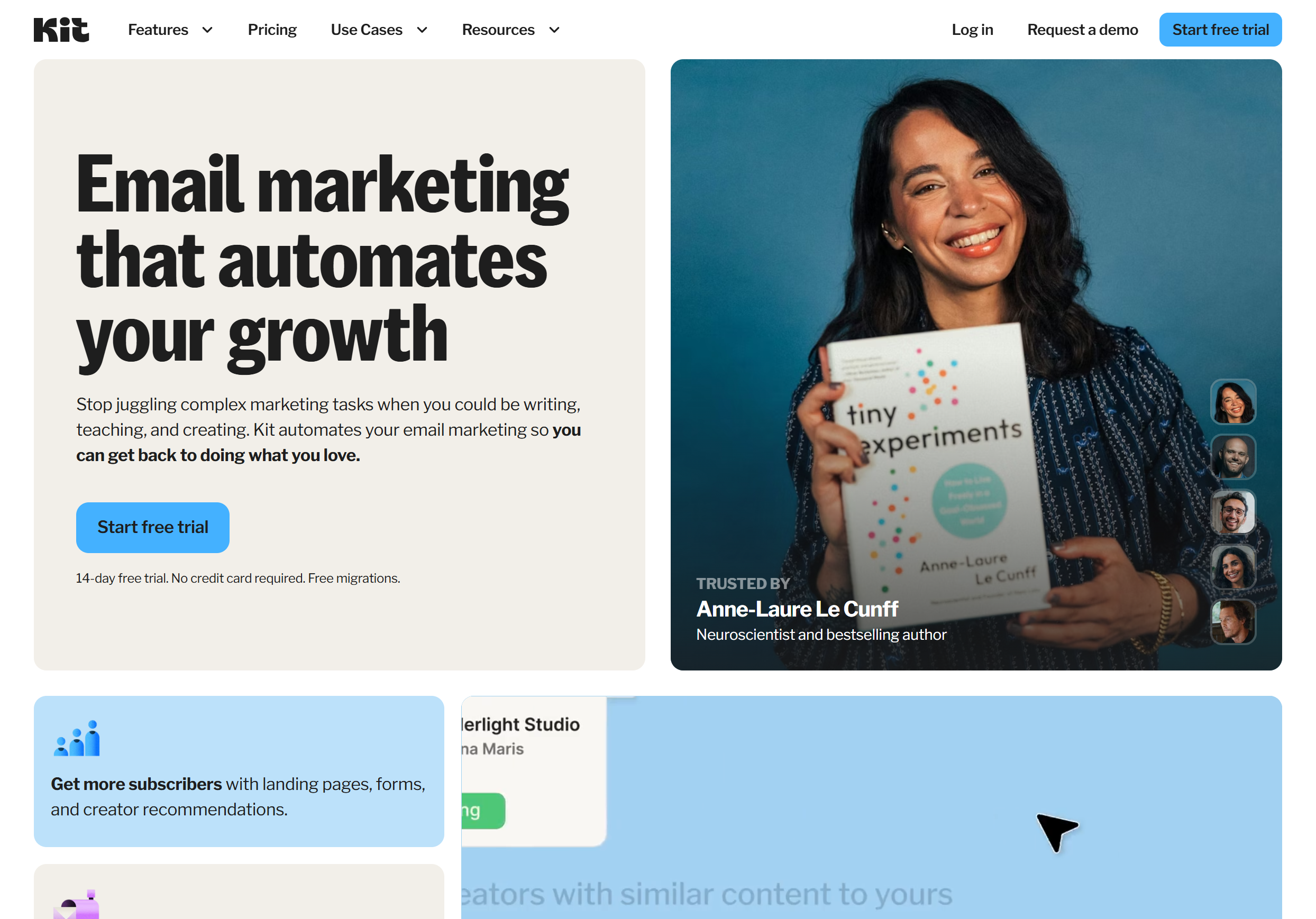
Kit — rebranded from ConvertKit — is the most creator-focused platform on this list. It won’t replace HubSpot’s CRM, but for newsletter operators, bloggers, and course sellers it offers what HubSpot doesn’t: a Creator Network for organic audience growth, native digital-product and paid-subscription sales, and a generous free plan for up to 10,000 subscribers. Our Kit review breaks down its plans and commerce fees.
| PROS — Why choose Kit | CONS — Where HubSpot wins |
|---|---|
| + Free plan up to 10,000 subscribers | − Automation is lighter for B2B/SaaS |
| + Creator Network for organic growth | − A/B testing limited to subject lines |
| + Built-in product, subscription, and tip-jar sales | − Reporting depth is limited |
| + Simple, tag-based subscriber management | − Not suited to ecommerce or enterprise |
| + Newsletter referral system built in | − Text-forward design limits customization |
| + Intuitive editor | − Higher tiers pricey for large lists |
11. MailerLite — Best for Simplicity
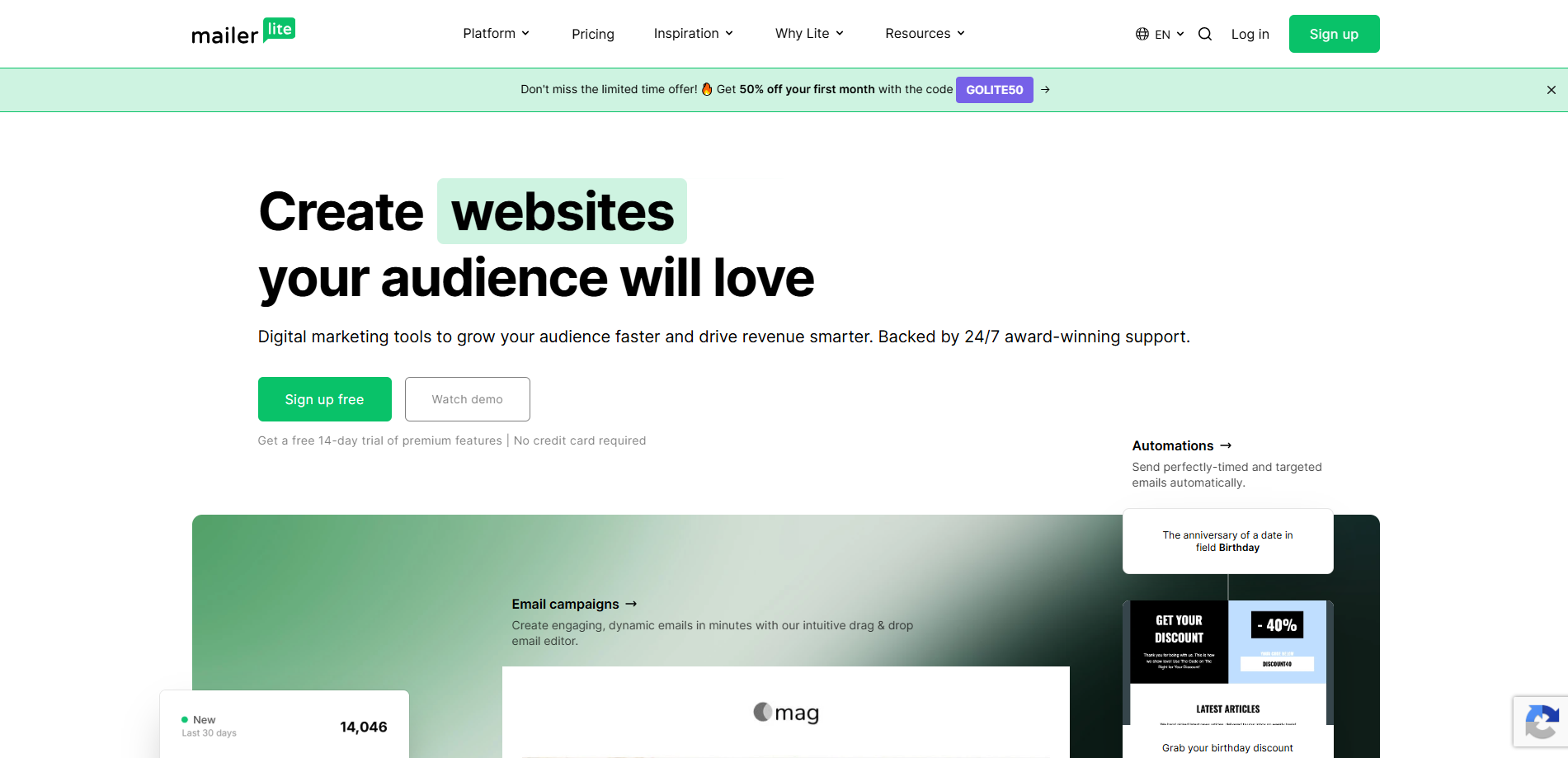
MailerLite is the go-to HubSpot alternative when you want power without the learning curve. Its drag-and-drop editor is consistently rated the easiest in the industry. Note that a 2025–2026 overhaul trimmed the free plan to 250 subscribers and 2,500 emails/month and renamed the paid tiers (Growing Business is now “Comfort”). You still get a website builder, landing pages, and digital-product sales with zero transaction fees. See our MailerLite review for the full breakdown.
| PROS — Why choose MailerLite | CONS — Where HubSpot wins |
|---|---|
| + Best-in-class ease of use | − No built-in CRM or deal management |
| + Free plan (250 subs, 2,500 emails) | − Automation less advanced than HubSpot Pro |
| + Sell digital products with no transaction fees | − Reporting lighter on lower plans |
| + Website builder on all plans | − Smaller template library |
| + Paid plans from $12/month | − New-account approval can delay onboarding |
| + Landing pages and pop-ups on free plan | − Fewer enterprise integrations |
12. Moosend — Best for Unlimited Sends
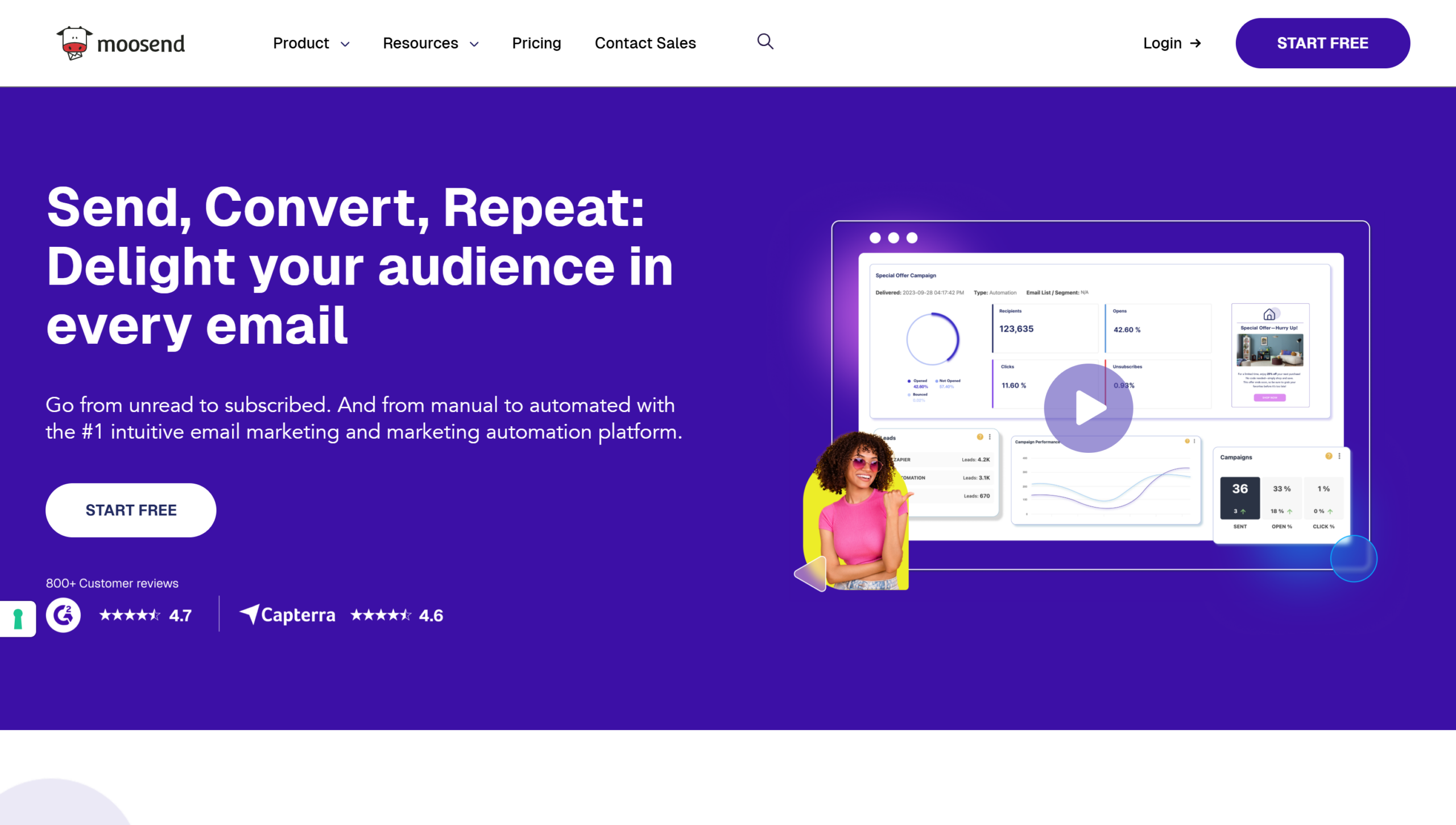
Moosend is one of the most underrated HubSpot alternatives for cost-sensitive senders. Every paid plan includes unlimited email sends, a visual automation builder, AI content tools, landing pages, and SMTP access — at a starting price of $7/month on annual billing. There’s no permanent free plan (30-day trial only), but the value per dollar is excellent.
| PROS — Why choose Moosend | CONS — Where HubSpot wins |
|---|---|
| + Unlimited email sends on all paid plans | − No permanent free plan (30-day trial) |
| + Starts at just $7/month (annual billing) | − Smaller template library |
| + Visual automation with behavior triggers | − Fewer native integrations |
| + AI subject line and content tools | − No built-in CRM for sales teams |
| + SMTP access for transactional email | − UI less polished than newer rivals |
| + Landing pages and forms included | − Smaller support community |
How to Choose a HubSpot Alternative
The right HubSpot alternative depends on what you were actually using HubSpot for:
- You mostly need email marketing and automation: Mailercloud, MailerLite, and Moosend are all affordable picks; Mailercloud adds Inbox Tracker and AMP emails that HubSpot lacks.
- You need an all-in-one CRM + marketing suite: EngageBay is the closest HubSpot-style tool at a fraction of the price; Brevo and ActiveCampaign are excellent too.
- You live in the Zoho ecosystem: Zoho Campaigns for native CRM sync.
- You run an online store: Omnisend for mid-market ecommerce, Klaviyo for scaling brands.
- You’re a creator or newsletter operator: Kit (ConvertKit).
- You’re a beginner who wants a familiar tool: Mailchimp.
Start with a free plan or trial, migrate a few real workflows, and choose based on what your business actually needs — not the length of a feature checklist. For a broader view, see our guide to the best email marketing software in 2026 and our roundup of the best email deliverability services.
Conclusion
HubSpot is a genuinely powerful, all-in-one platform — but it isn’t the most cost-effective choice for every team, especially once you reach the jump to Marketing Hub Professional at $890/month plus onboarding fees.
The right alternative depends on the job. For a full CRM suite on a budget, EngageBay or Brevo are strong picks; for advanced automation, ActiveCampaign; for ecommerce, Omnisend or Klaviyo; for Zoho-first teams, Zoho Campaigns; and for affordable, easy email marketing, Mailercloud or MailerLite.
The best approach is to shortlist two or three, start on a free plan or trial, and test them against your current HubSpot workflows before you commit.
Frequently Asked Questions About HubSpot Alternatives
Is there a free alternative to HubSpot?
Yes — several. The best free HubSpot alternatives in 2026 include Mailercloud (1,000 contacts, automation and Inbox Tracker included), Brevo (unlimited contacts, 300 emails/day), EngageBay (CRM + email + live chat on the free plan), Zoho Campaigns (2,000 contacts), and MailerLite (250 subscribers). HubSpot’s own CRM is free forever, but real marketing automation requires the paid Marketing Hub.
What is cheaper than HubSpot?
Almost every tool on this list. Mailercloud starts at $7/month, Zoho Campaigns from ~$4/month, Moosend from $7/month, and Brevo from $9/month — versus HubSpot’s Marketing Hub Professional at $890/month plus a one-time onboarding fee. For pure email marketing and automation, the savings are dramatic.
What is the best HubSpot alternative for small businesses?
Mailercloud and EngageBay are the top picks. Mailercloud is best if you mainly need email marketing done well, with a free plan and $7/month paid plans. EngageBay is best if you want a HubSpot-style all-in-one (CRM + marketing + service) at a fraction of the cost.
What is the best HubSpot alternative with a built-in CRM?
EngageBay, Brevo, ActiveCampaign, and Zoho all include a CRM. EngageBay is the closest to HubSpot’s all-in-one model at a low price, Brevo offers unlimited-contact pricing, ActiveCampaign has the most advanced automation, and Zoho is ideal if you already use Zoho CRM.
Why is HubSpot so expensive?
HubSpot’s cost stacks across several layers: seat-based licensing, marketing-contact tiers, separate paid Hubs (Marketing, Sales, Service), and add-ons — plus a mandatory onboarding fee of $3,000+ on Professional and Enterprise plans. The result is that real-world bills are often far higher than the headline price, which is why many teams switch to transparent, all-in-one alternatives.
Does HubSpot have a free plan?
Yes. HubSpot’s CRM is free forever for unlimited users and includes contacts, deals, and basic email. However, marketing automation, branding removal, and higher sending limits require a paid Marketing Hub plan, which starts at Starter (~$15/seat/month) and jumps to Professional at $890/month.

An SEO expert with a focus on on-page optimization, technical SEO, and keyword research. Dedicated to helping businesses improve search rankings and grow their online presence through data-driven strategies.