Brevo (formerly Sendinblue) has earned its place as a solid email marketing platform — but it’s not the right fit for everyone. Whether you’re frustrated by its pricing jumps, limited automation depth, clunky UI, or simply looking for a better deal, you’re not alone.
Searches for ‘Brevo alternatives’ have climbed steadily, and the options available in 2026 are better than ever. We’ve tested 11 top Brevo alternatives so you can make a fast, informed decision — without reading 20 separate reviews.
You might also like best Convertkit alternatives.
⚡ Short on time? Jump to the comparison table below or go straight to our #1 pick: Mailercloud.
Table of Contents
Why Are Marketers Looking for Brevo Alternatives?
Brevo is a capable tool, but several common pain points push users to explore alternatives:
- Pricing scales quickly — costs jump significantly as your contact list grows
- Limited automation depth compared to tools like ActiveCampaign or Klaviyo
- The free plan is restrictive — capped at 300 emails/day
- Landing page and form builders lag behind competitors
- Support quality varies depending on your plan tier
- Some users report deliverability issues at higher sending volumes
If any of these resonate with you, read on — we’ve found alternatives that address each one.
What to Look for in a Brevo Alternative
Before jumping to our list, here are the criteria we evaluated for each tool:
- Free plan generosity — contacts allowed, emails per month, feature access
- Automation capabilities — visual builders, triggers, branching logic
- Ease of use — onboarding experience and drag-and-drop quality
- Deliverability rates — how reliably emails reach the inbox
- Pricing transparency — no hidden fees, clear upgrade paths
- Support quality — live chat, email, knowledge base availability
Quick Comparison: 11 Best Brevo Alternatives at a Glance
Use this table to quickly compare tools before diving into the full reviews below.
| Tool | Best For | Free Plan | Starting Price | Standout Feature |
|---|---|---|---|---|
| Mailercloud | All-in-one email marketing | Yes (1,000 contacts) | $10/mo | Intuitive builder + automation |
| Mailchimp | Beginners & SMBs | Yes (500 contacts) | $13/mo | Huge template library |
| MailerLite | Budget-conscious teams | Yes (250 contacts) | $12/mo | Clean landing page builder |
| ActiveCampaign | Advanced automation | No (14-day trial) | $15/mo | Deep CRM + automation |
| Klaviyo | E-commerce brands | Yes (250 contacts) | $20/mo | Revenue-based segmentation |
| GetResponse | Webinar + email combo | Yes (500 contacts) | $15.58/mo | Built-in webinar hosting |
| Moosend | Small businesses | No (30-day trial) | $7/mo | Simple drag-and-drop |
| Omnisend | E-commerce | Yes (250 contacts) | $16/mo | SMS + email + push |
| ConvertKit (Kit) | Creators & bloggers | Yes (1,000 subs) | $25/mo | Visual automation |
| Constant Contact | Nonprofits & local biz | No (60-day trial) | $12/mo | Event management tools |
| HubSpot | Enterprise / CRM-focused | Yes (limited) | $18/mo | Full CRM integration |
1. Mailercloud — The Best All-in-One Brevo Alternative
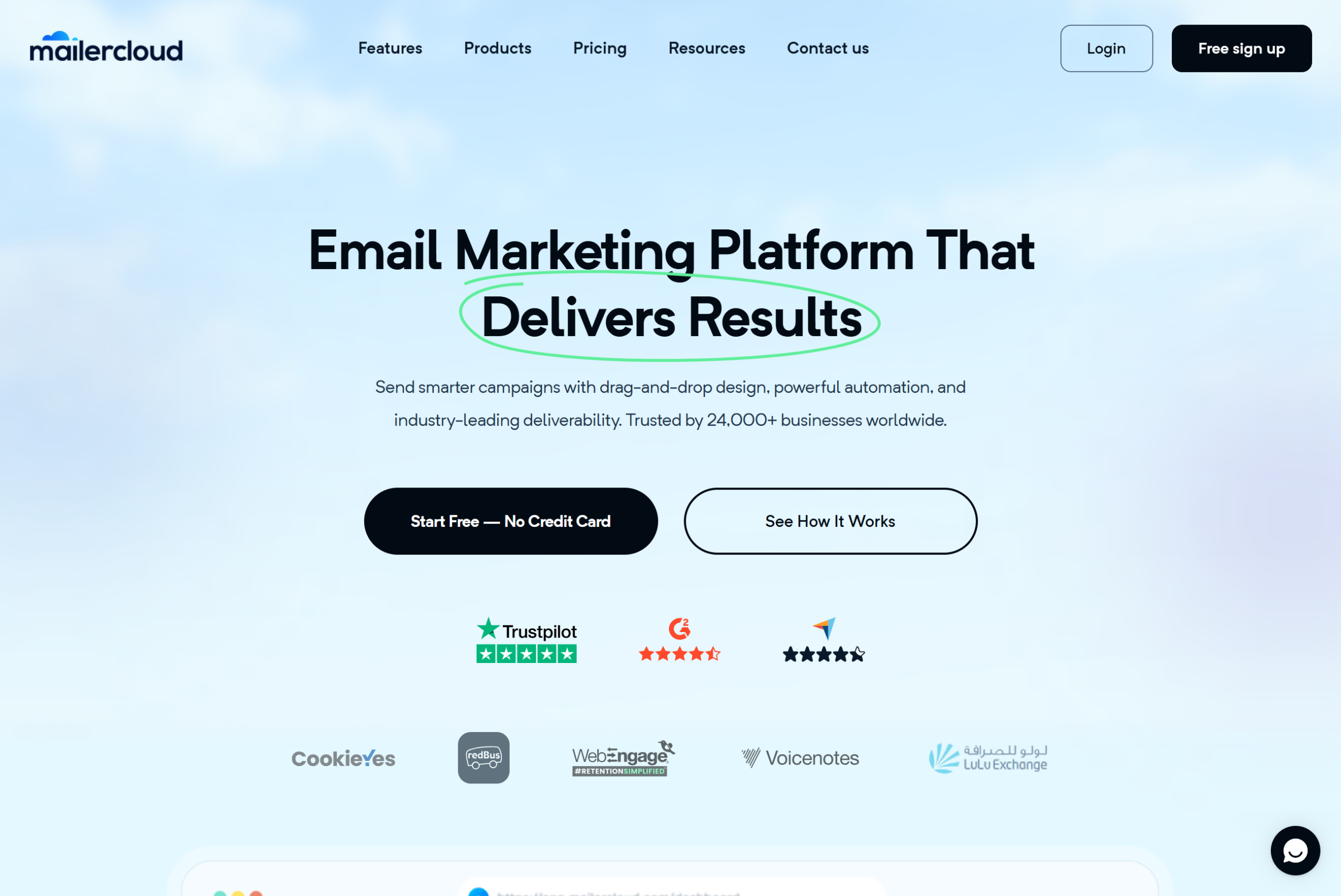
Mailercloud is our top-rated Brevo alternative in 2026 — and for good reason. It combines an intuitive drag-and-drop email builder, powerful marketing automation, detailed analytics, and a genuinely generous free plan into one clean, affordable package. Designed for marketers who want results without complexity, Mailercloud covers everything from simple newsletters to sophisticated multi-step automation workflows. It also includes built-in landing page creation, contact segmentation, and A/B testing — features that Brevo either charges extra for or restricts to higher tiers. If you’re migrating from Brevo, Mailercloud’s import tools make the switch painless. The platform has been praised for its fast support response times and clean onboarding experience, making it suitable for solo marketers, growing SMBs, and marketing agencies alike.
✅ Pros:
- Generous free plan: up to 1,000 contacts and 12,000 emails/month
- Intuitive drag-and-drop email builder with 100+ responsive templates
- Visual automation workflows with advanced triggers and conditions
- Built-in landing page and signup form builder
- Advanced segmentation and contact tagging
- A/B testing for subject lines and content
- Real-time analytics and campaign performance dashboard
- Excellent email deliverability rates
- Responsive live chat and email support
- Straightforward, affordable pricing that scales predictably
❌ Cons:
- Smaller third-party integration library compared to Mailchimp
- SMS marketing feature is still in development
💰 Pricing: Free plan available (up to 1,000 contacts, 12,000 emails/mo). Paid plans start at $10/month.
👤 Best For: Small businesses, marketing teams, agencies, and anyone migrating away from Brevo looking for a cleaner, more affordable alternative. For a deeper look at email strategy for smaller teams, see our email marketing for small businesses.
🏆 Mailercloud is our #1 pick for most marketers switching from Brevo. It combines power, ease of use, and affordability in a way that few competitors match at this price point.
2. Mailchimp — The Industry Standard for Beginners
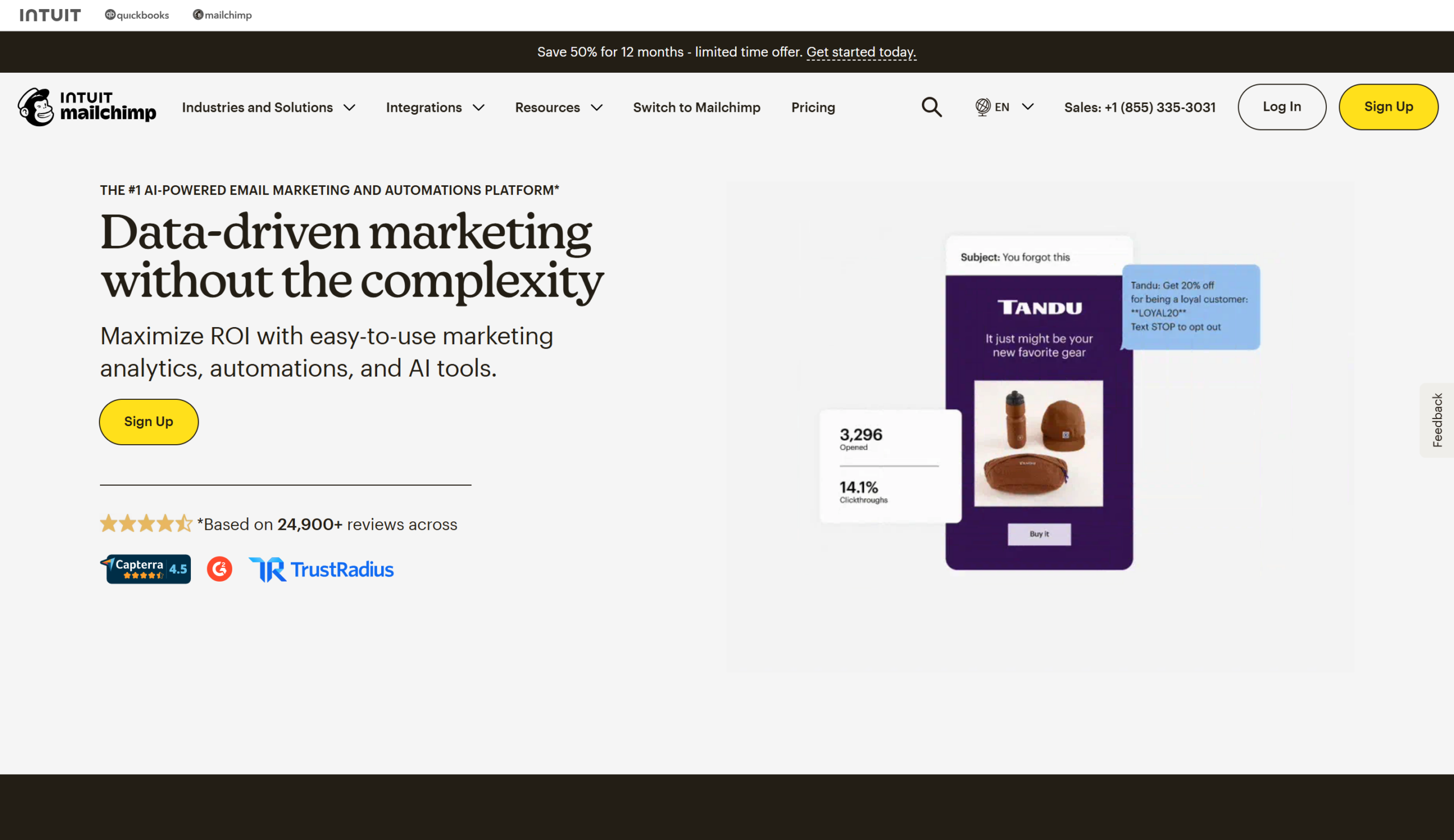
Mailchimp is the most recognized name in email marketing and for good reason — it’s beginner-friendly, feature-rich, and backed by one of the largest template libraries in the industry. Its free plan allows up to 500 contacts and 1,000 emails/month, though it’s more limited than it used to be. Mailchimp excels at ease of use and integrations, connecting with 300+ apps out of the box. However, costs escalate quickly as your list grows, and advanced automation is locked behind higher-tier plans.
✅ Pros:
- Extremely beginner-friendly with an excellent onboarding experience
- 300+ native integrations with popular tools
- Large template library and creative assistant
- Strong reporting and audience insights
- Reliable deliverability and brand reputation
❌ Cons:
- Free plan limited to 500 contacts — drops sharply in value at scale
- Pricing increases aggressively with list size
- Advanced automation requires Standard plan ($20+/mo)
- Support is limited on lower tiers
💰 Pricing: Free up to 500 contacts. Paid plans from $13/month.
👤 Best For: Beginners, small businesses, and teams that prioritize integrations and ease of use over cost.
Mailchimp is a safe, well-tested choice but can become expensive. Consider Mailercloud if budget is a concern. Weighing the two against each other? Read our Brevo vs Mailchimp head-to-head. If newsletters are your main channel, our Beehiiv vs Mailchimp breakdown looks at that decision from a publisher’s angle.
3. MailerLite — Best Budget Option with a Clean Interface
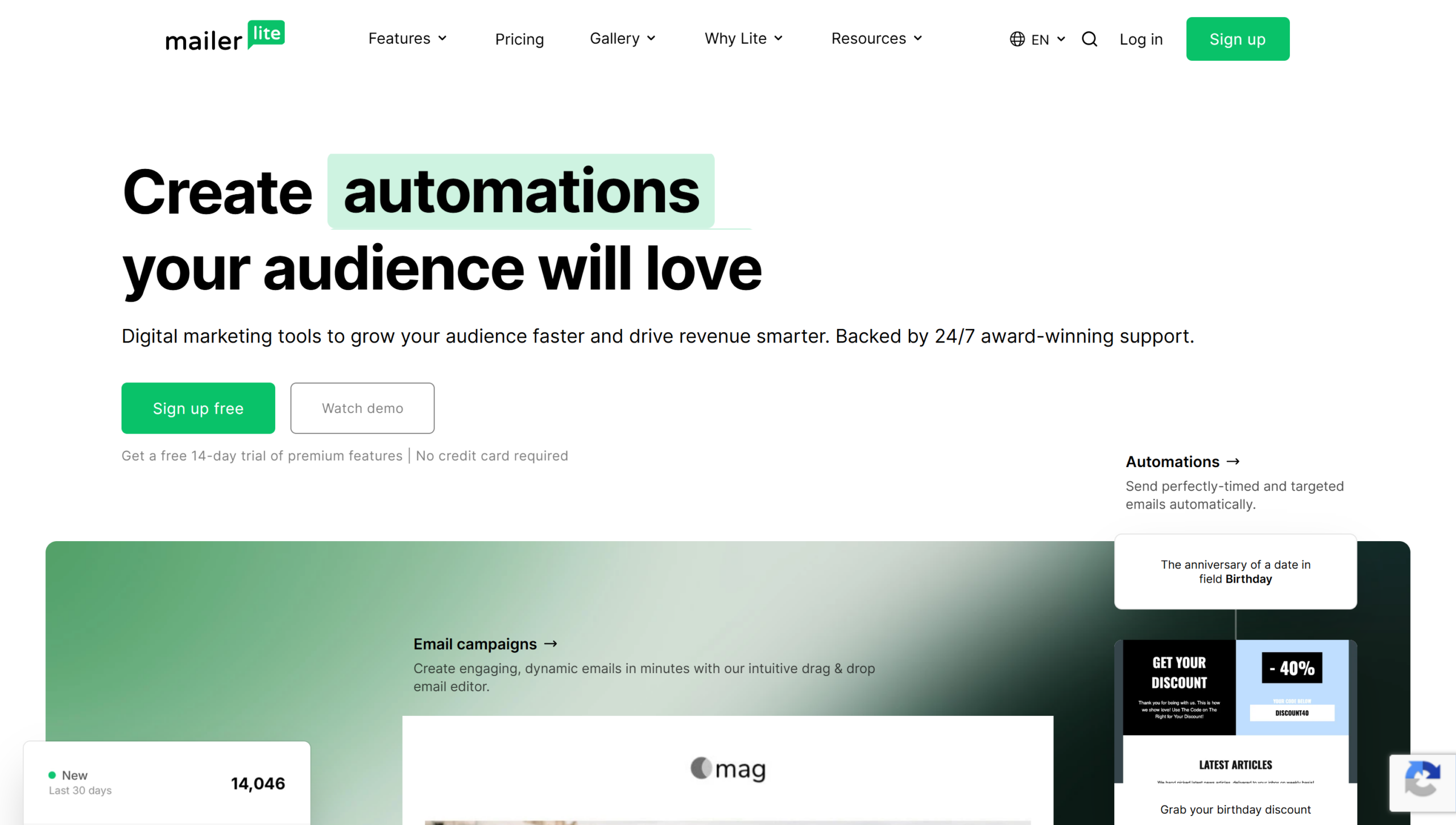
MailerLite consistently earns praise for its clean, minimalist design and straightforward pricing. It offers a competitive free plan (up to 1,000 subscribers, 12,000 emails/month) and includes features like landing pages, automation, and pop-ups even on the free tier. It’s particularly popular with bloggers, creators, and small teams who want a distraction-free tool. The automation builder is solid for basic to intermediate workflows, though it lacks the depth of ActiveCampaign for complex sequences. For a focused list of ActiveCampaign alternatives, see our ActiveCampaign alternatives guide.
✅ Pros:
- Free plan includes automation and landing pages
- Clean, modern interface with fast loading times
- Competitive pricing across all tiers
- Strong deliverability rates
- Good support including email and live chat on paid plans
❌ Cons:
- Limited advanced automation compared to competitors
- Fewer native integrations than Mailchimp
- Approval process for new accounts can be slow
💰 Pricing: Free up to 1,000 subscribers. Paid plans from $9/month.
👤 Best For: Budget-conscious marketers, bloggers, creators, and small teams with straightforward email needs.
MailerLite is a strong Brevo alternative if you want simplicity and affordability. Mailercloud edges it out for users who need more automation depth.
4. ActiveCampaign — Best for Advanced Marketing Automation

ActiveCampaign is the go-to choice for marketers who need serious automation power. Its visual automation builder is widely regarded as one of the best in the industry, offering hundreds of triggers, conditions, and actions — including built-in CRM functionality. If you’re running complex sales funnels, lead scoring, or multi-channel campaigns, ActiveCampaign is hard to beat. The tradeoff is complexity and cost — it has a steeper learning curve and no permanent free plan.
✅ Pros:
- Best-in-class visual automation builder
- Built-in CRM and deal management
- Deep segmentation and lead scoring
- Strong deliverability and inbox placement
- Extensive integration ecosystem (900+ apps)
❌ Cons:
- No free plan — 14-day trial only
- Steeper learning curve for beginners
- Can feel overwhelming for simple email campaigns
- Pricing jumps significantly at higher contact counts
💰 Pricing: 14-day free trial. Paid plans from $15/month for 1,000 contacts.
👤 Best For: B2B marketers, agencies, and teams running sophisticated automation sequences and sales pipelines.
ActiveCampaign is the automation powerhouse on this list. If you don’t need that level of complexity, Mailercloud or MailerLite will serve you better at lower cost.
5. Klaviyo — Best for E-Commerce Brands
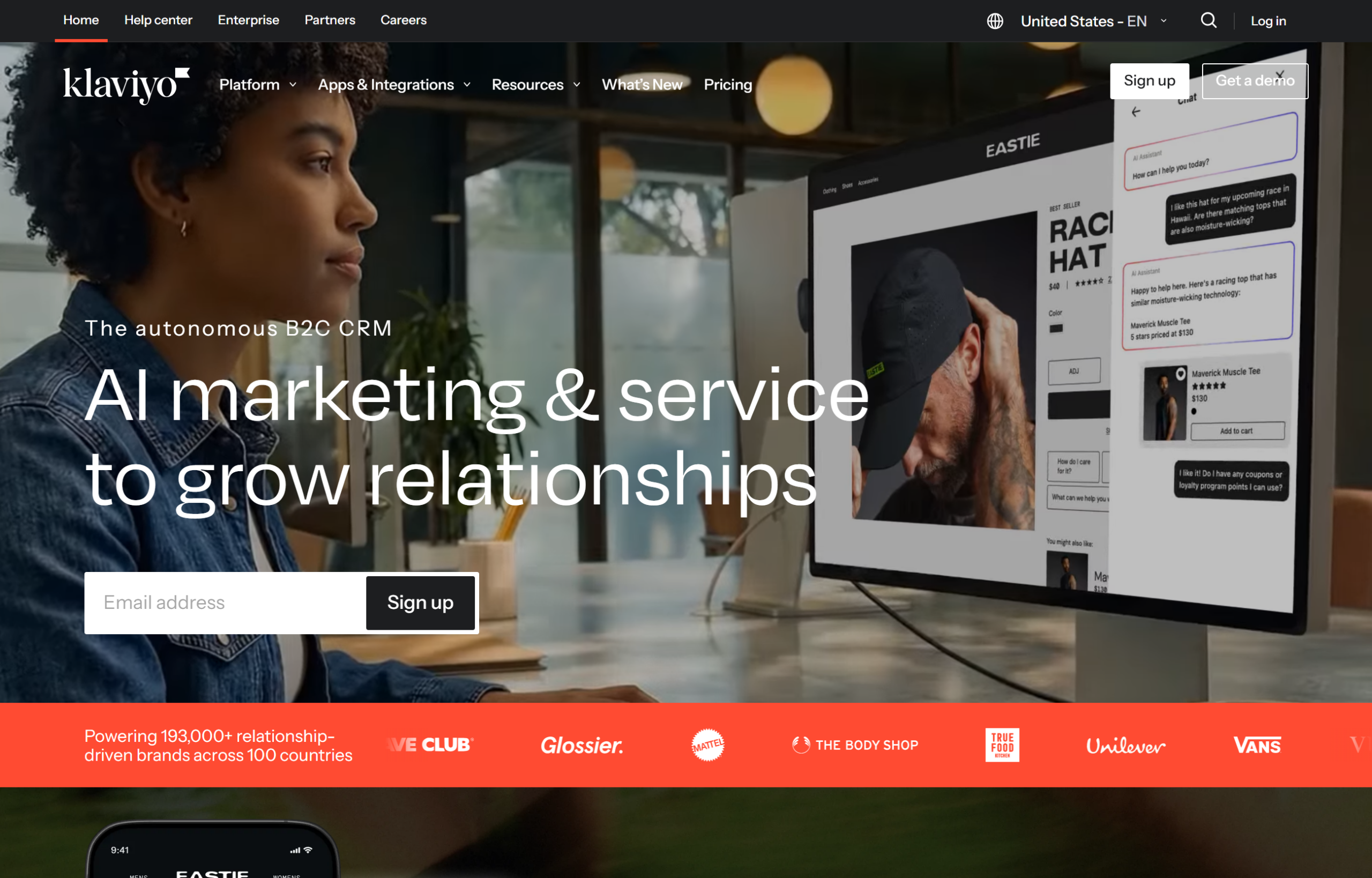
Klaviyo is purpose-built for e-commerce and has become the platform of choice for Shopify and WooCommerce stores. Its data model is designed around purchase behavior, customer lifetime value, and product interactions — making it uniquely powerful for retail brands. You can send highly personalized emails based on browsing history, cart abandonment, and predicted purchase behavior. It’s more expensive than most alternatives, but the ROI justification is strong for active e-commerce stores. For a deeper dive into the flows that drive ecommerce revenue, see our ecommerce email marketing guide.
✅ Pros:
- Exceptional e-commerce integrations (Shopify, WooCommerce, Magento)
- Predictive analytics and CLV modeling
- Revenue-based segmentation and dynamic content
- SMS + email in one platform
- Best-in-class for product recommendation emails
❌ Cons:
- Expensive for high-volume senders
- Overkill for non-e-commerce use cases
- Free plan limited to 250 contacts
- Interface can feel complex for beginners
💰 Pricing: Free up to 250 contacts. Paid plans from $20/month.
👤 Best For: E-commerce brands, Shopify/WooCommerce store owners, and DTC companies focused on revenue-driven email marketing.
If you run an online store, Klaviyo is worth the premium. For non-e-commerce users, it’s expensive and overly complex.
6. GetResponse — Best for Webinar + Email Combo
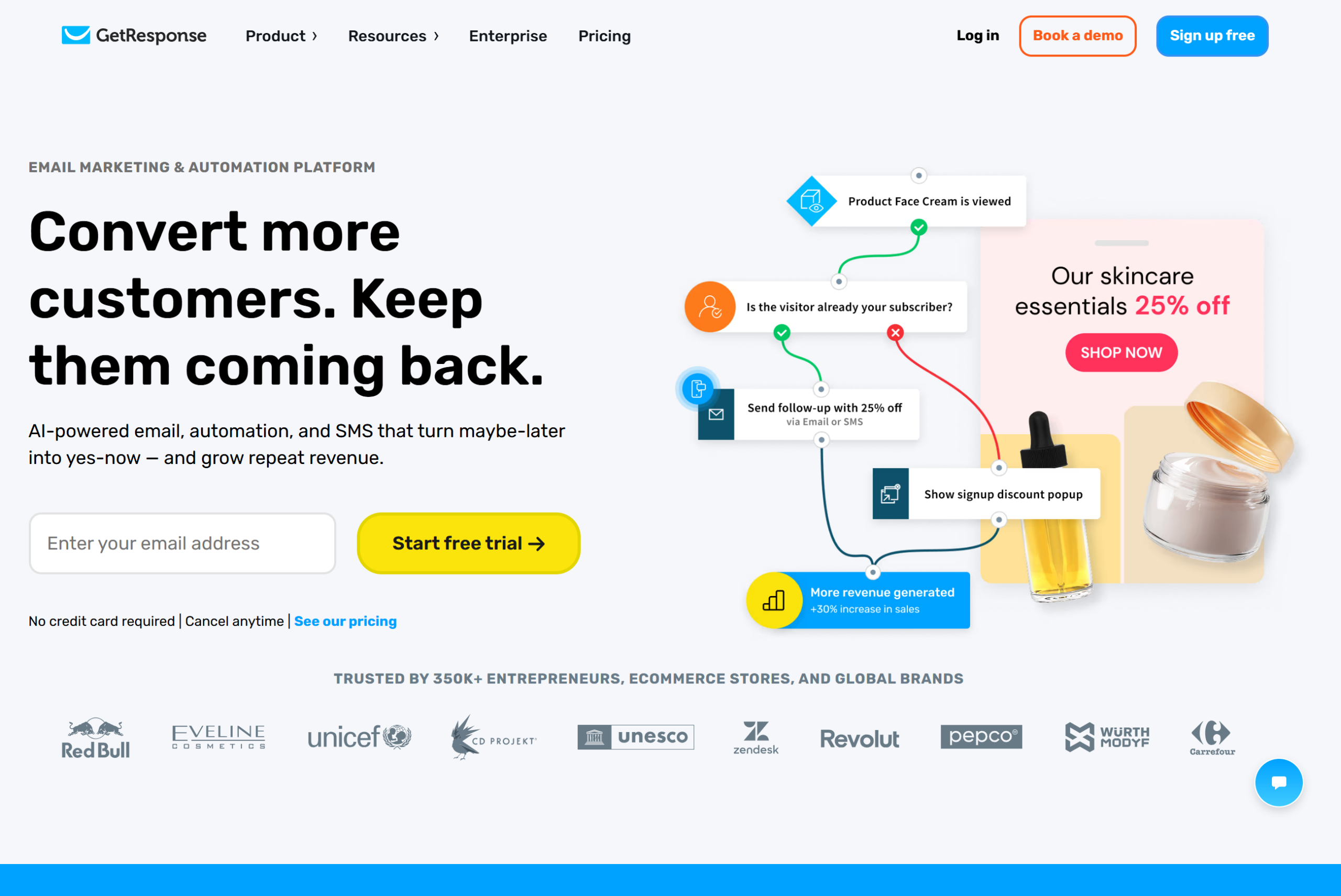
GetResponse has evolved from an email marketing tool into a broader marketing platform. Its standout differentiator is the built-in webinar hosting feature — rare among email marketing tools. It also offers a website builder, landing pages, conversion funnels, and solid automation. The interface has improved significantly in recent years, though it still isn’t as intuitive as MailerLite or Mailercloud. GetResponse offers a free plan capped at 500 contacts with basic features. If GetResponse isn’t the right fit, see our top GetResponse alternatives.
✅ Pros:
- Built-in webinar hosting (unique among alternatives)
- Conversion funnel builder included
- Decent free plan with basic automation
- Website and landing page builder
- Solid marketing automation at mid-tier
❌ Cons:
- Interface has a learning curve
- Webinar features require paid plans
- Free plan is fairly restricted
- Template designs feel dated compared to newer platforms
💰 Pricing: Free plan for 500 contacts. Paid plans from $15.58/month.
👤 Best For: Coaches, consultants, course creators, and businesses combining email marketing with live events and webinars.
GetResponse is a solid Brevo alternative if webinars are part of your marketing mix. Otherwise, it doesn’t offer enough to justify the learning curve.
7. Moosend — Most Affordable Paid Option
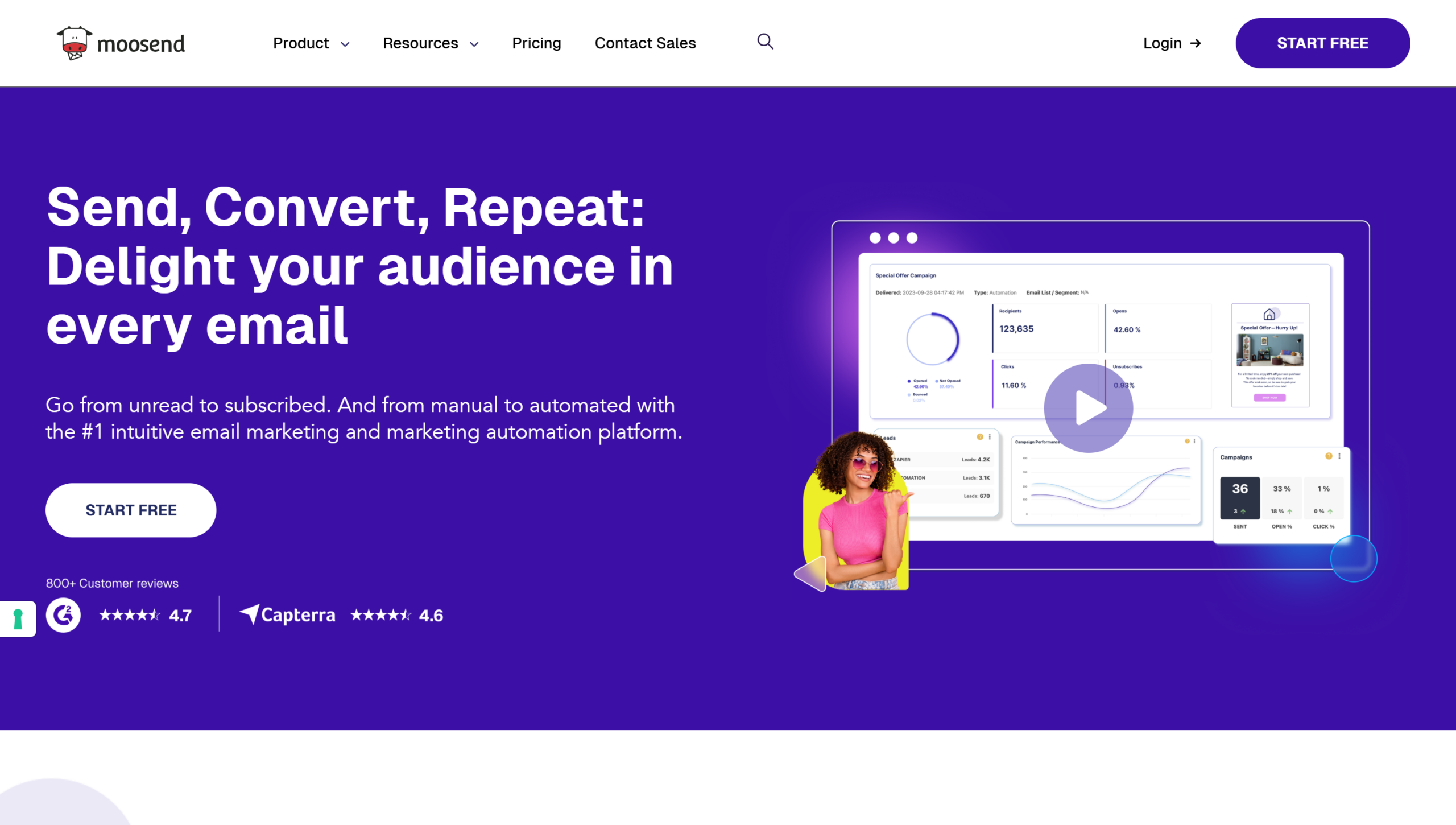
Moosend is a straightforward, affordable email marketing platform that punches above its weight at lower price points. It offers a clean drag-and-drop builder, basic automation, and real-time analytics — all at one of the lowest prices in the industry. It doesn’t have the bells and whistles of ActiveCampaign or Klaviyo, but for small businesses focused on getting emails out without complexity, it’s a reliable choice.
✅ Pros:
- Very affordable paid plans starting at $7/month
- Clean and simple interface
- Unlimited emails on all plans
- Real-time analytics
- Includes automation and segmentation
❌ Cons:
- No permanent free plan (30-day trial only)
- Limited integrations compared to larger platforms
- Automation is basic — not suited for complex workflows
- Smaller company with less ecosystem support
💰 Pricing: 30-day free trial. Paid plans from $7/month for 500 subscribers.
👤 Best For: Small businesses and startups looking for affordable, no-nonsense email marketing.
Moosend is the budget-friendly pick for basic email needs, but the lack of a free plan is a drawback vs. Mailercloud.
8. Omnisend — Best Multi-Channel Option for E-Commerce
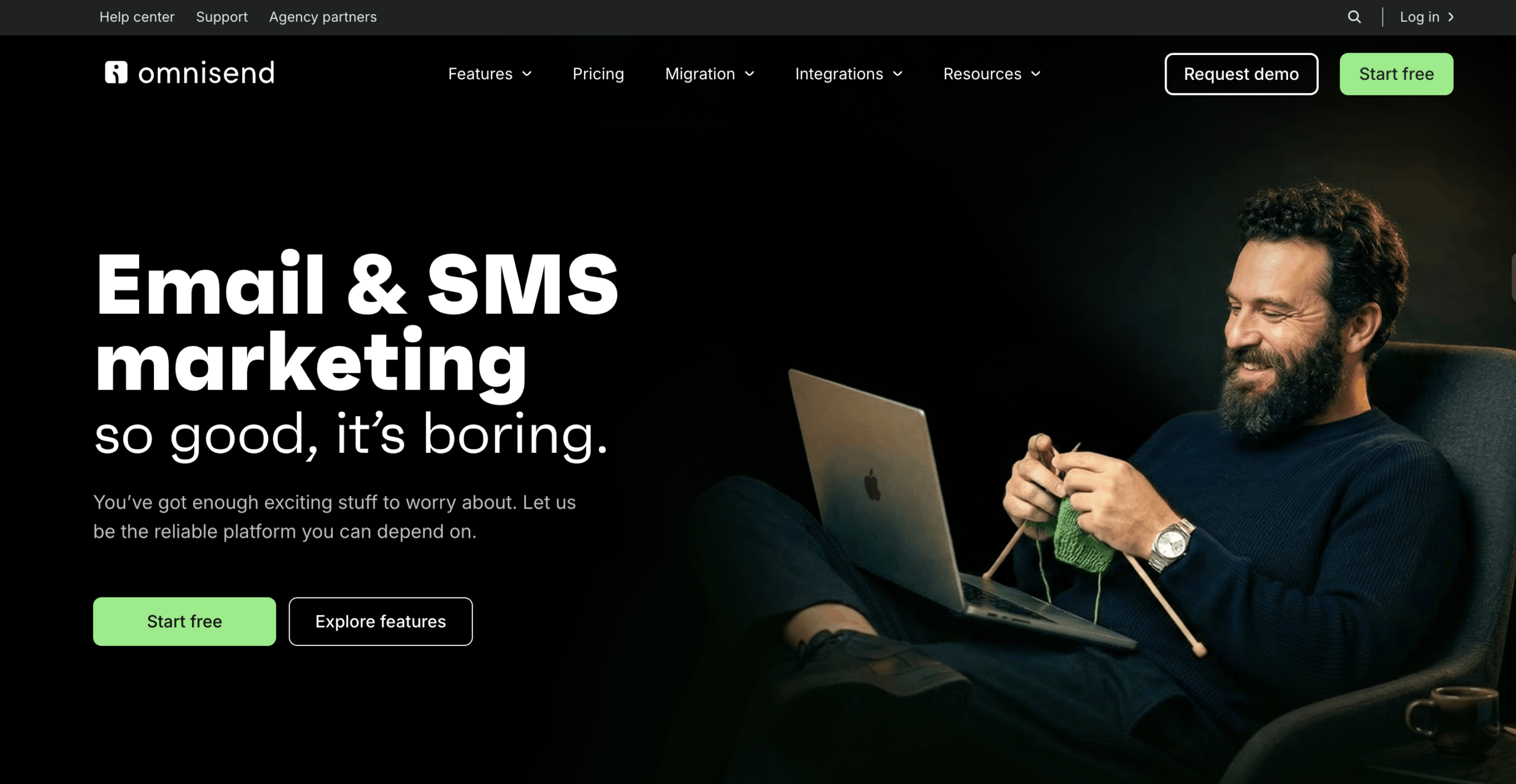
Omnisend sits alongside Klaviyo as a top e-commerce email marketing platform, but differentiates itself with native multichannel capabilities — email, SMS, and push notifications from one platform. It integrates deeply with e-commerce platforms and makes it easy to set up cart abandonment, product pick-up, and post-purchase flows. Its free plan is limited but functional, and its pricing is slightly more accessible than Klaviyo for small stores. For a direct face-off, see our Omnisend vs Klaviyo breakdown.
✅ Pros:
- Email + SMS + push notifications in one tool
- Strong e-commerce automation templates
- Deep Shopify/WooCommerce integration
- Easy-to-use automation workflow builder
- Free plan available
❌ Cons:
- Free plan limited to 250 contacts
- Best suited for e-commerce — limited value for other industries
- SMS sends cost extra on top of plan price
- Reporting less detailed than Klaviyo
💰 Pricing: Free up to 250 contacts and 500 emails/month. Paid plans from $16/month.
👤 Best For: E-commerce brands that want email, SMS, and push notifications in one platform at a more accessible price than Klaviyo.
Omnisend is excellent for online stores needing multi-channel outreach. For non-e-commerce users, most features won’t apply. If you are specifically evaluating Omnisend, our dedicated comparison covers the best Omnisend alternatives in 2026 in full detail.
9. ConvertKit (Kit) — Best for Creators and Newsletter Writers
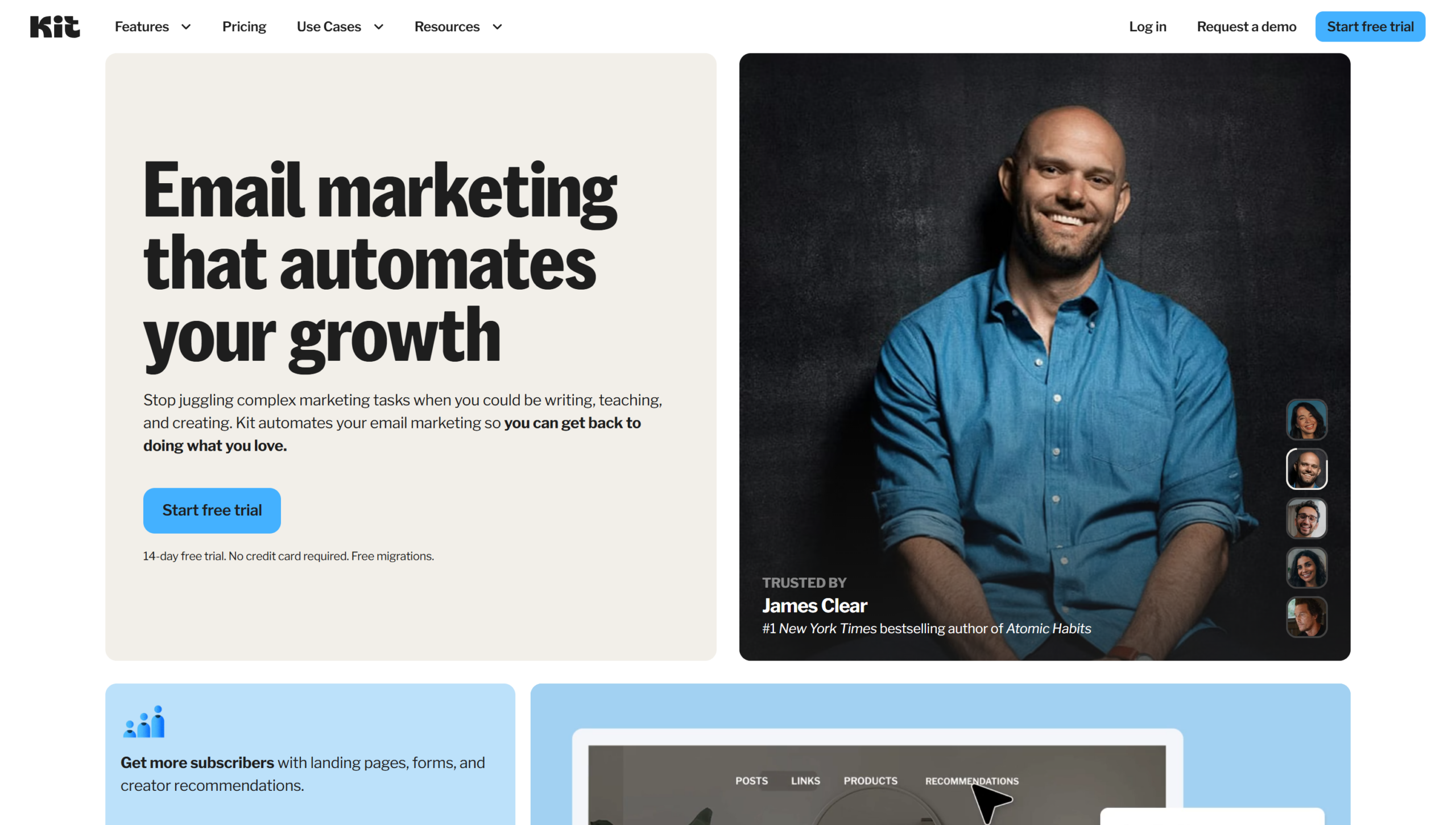
ConvertKit, rebranded as Kit in 2024, is purpose-built for content creators, bloggers, authors, and newsletter publishers. Its core strength is simplicity — a clean subscriber management system, visual automation builder, and an excellent newsletter publishing experience. It’s less feature-heavy than Mailchimp or ActiveCampaign, but for creators focused purely on growing and monetizing an audience, it’s one of the best tools available. The free plan covers up to 1,000 subscribers. The full side-by-side is in our ConvertKit vs Mailchimp comparison.
✅ Pros:
- Purpose-built for creators and newsletter writers
- Excellent subscriber tagging and segmentation
- Visual automation builder is intuitive
- Built-in creator monetization tools (paid newsletters, etc.)
- Generous free plan for 1,000 subscribers
❌ Cons:
- No drag-and-drop email builder — text-first only
- Limited template library
- Not suitable for e-commerce or transactional email
- Higher price per subscriber compared to alternatives
💰 Pricing: Free up to 1,000 subscribers. Paid plans from $25/month.
👤 Best For: Bloggers, newsletter creators, course sellers, and content entrepreneurs focused on building an engaged subscriber base.
ConvertKit is a niche tool for creators — if you’re running a newsletter-first business, it’s excellent. For typical marketing use cases, Mailercloud offers more flexibility.
10. Constant Contact — Best for Nonprofits and Local Businesses
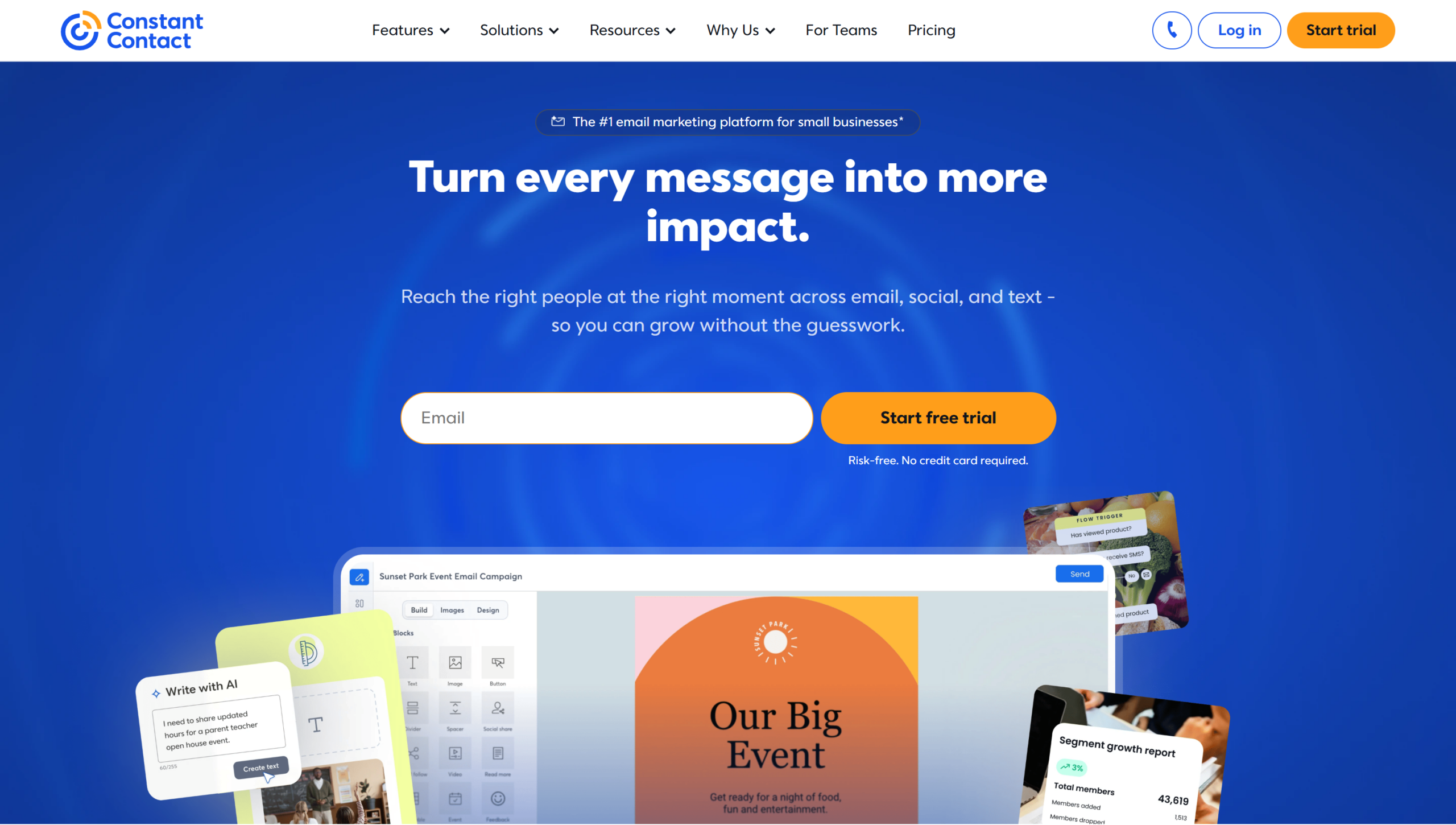
Constant Contact is one of the oldest names in email marketing, and its staying power comes from its simplicity and event management features. It’s especially popular among nonprofits, local businesses, and community organizations. The platform includes tools for event registration, donation tracking, and social media management alongside standard email campaigns. It doesn’t have a free plan, but it offers a 60-day trial which is generous by industry standards.
✅ Pros:
- Very easy to use — great for non-technical users
- Built-in event management tools
- Social media posting integration
- 60-day free trial
- Strong reputation and customer trust
❌ Cons:
- No permanent free plan
- Pricing is higher than most alternatives for comparable features
- Automation is limited compared to ActiveCampaign or Mailercloud
- Template designs feel dated
💰 Pricing: No free plan. 60-day trial. Paid plans from $12/month (very limited).
👤 Best For: Nonprofits, local businesses, event organizers, and teams without technical marketing experience.
Constant Contact is reliable for simple campaigns and events but overpriced for what it offers. Most users would be better served by Mailercloud or MailerLite. If you’re specifically a nonprofit evaluating email tools, our dedicated Mailchimp alternatives for nonprofits guide compares 10 platforms with verified 501(c)(3) discounts. For more options, explore our roundup of MailerLite alternatives. See how Mailercloud compares in our Mailercloud vs Mailerlite guide. If you’re comparing these two directly, see our in-depth Constant Contact vs Mailchimp comparison.
11. HubSpot — Best for CRM-Integrated Enterprise Marketing
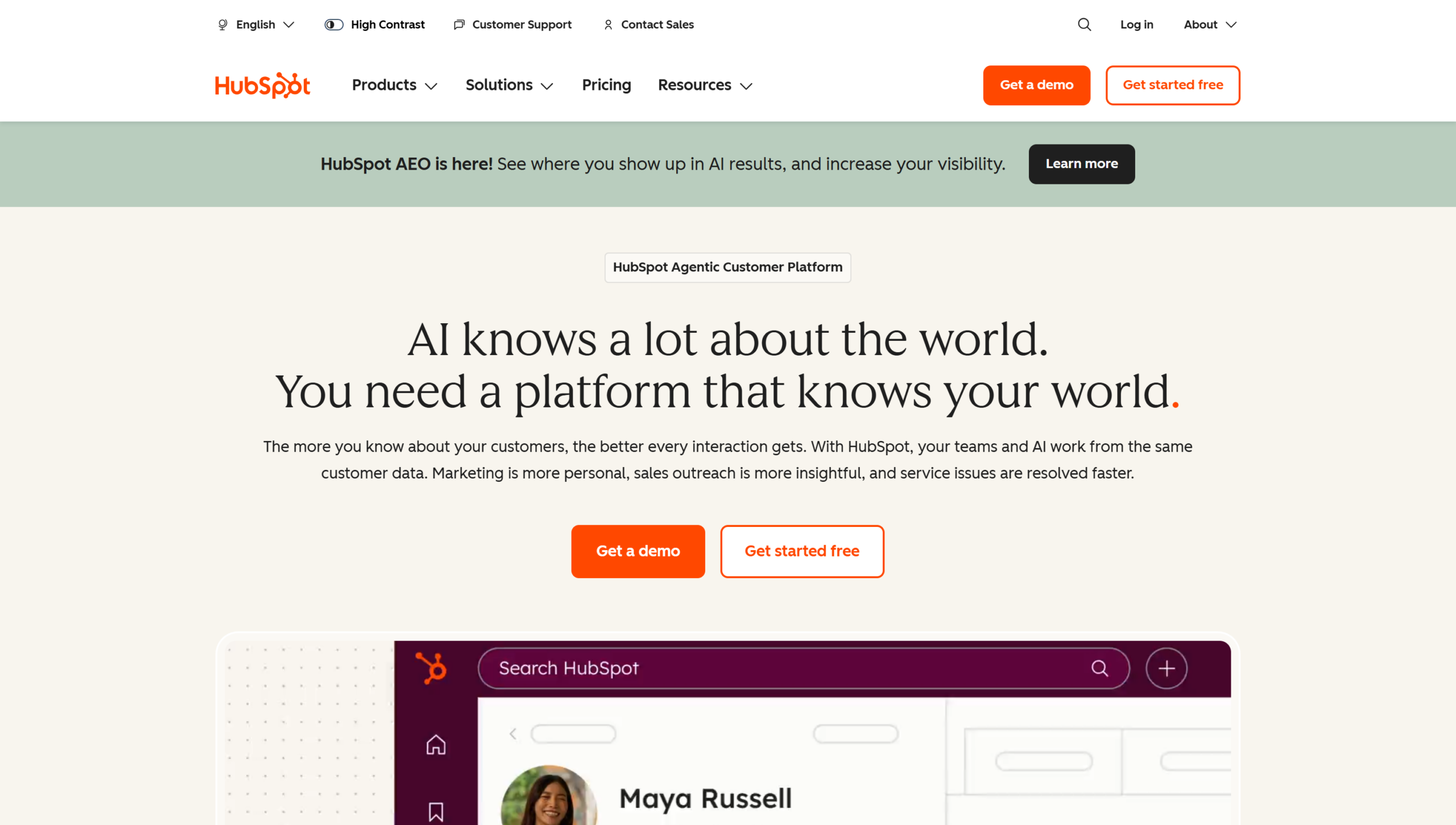
HubSpot is not just an email marketing tool — it’s a full marketing, sales, and CRM platform. Its free tier includes a capable email marketing module that integrates directly with its CRM, making it a compelling choice for businesses that already use or plan to use HubSpot for sales. However, meaningful marketing automation requires upgrading to the Marketing Hub Starter or Professional plans, which can become very expensive very quickly. HubSpot is overkill for teams only looking to replace Brevo for email marketing — for details, see our see how HubSpot stacks up against Mailchimp.
✅ Pros:
- Deep native CRM integration
- All-in-one marketing, sales, and service platform
- Strong reporting and attribution
- Large integration ecosystem
- Free CRM + basic email marketing included
❌ Cons:
- Email marketing features are limited on the free plan
- Significant cost jump to unlock meaningful automation
- Overly complex for email-only needs
- Long onboarding and setup process
💰 Pricing: Free CRM with basic email. Marketing Hub Starter from $18/month. Professional starts at $890/month.
👤 Best For: Larger businesses and enterprises that want email marketing as part of a broader CRM and sales platform.
HubSpot is powerful but expensive. If you only need email marketing, it’s significant overkill — and budget overkill. Stick with Mailercloud or ActiveCampaign.
How to Choose the Right Brevo Alternative for You
With 11 solid options on the table, here’s a quick decision guide:
Need the best all-rounder? → Mailercloud
On a tight budget? → MailerLite or Moosend
Running an e-commerce store? → Klaviyo or Omnisend
Need advanced automation? → ActiveCampaign
A creator or newsletter writer? → ConvertKit (Kit)
Hosting webinars? → GetResponse
Need a full CRM platform? → HubSpot
A nonprofit or local business? → Constant Contact
Frequently Asked Questions
What is better than Brevo?
For most users, Mailercloud is the best overall Brevo alternative in 2026. It offers a comparable feature set — including automation, landing pages, and segmentation — at a more competitive price and with a more intuitive interface. For e-commerce specifically, Klaviyo or Omnisend are stronger choices. For heavy automation users, ActiveCampaign is the top pick.
Which is better, Brevo or MailerLite?
MailerLite is a better choice for most users who want simplicity and affordability. It has a cleaner UI, a generous free plan, and comparable automation at a lower price point. Brevo has an edge in transactional email (SMTP) and SMS, but for standard marketing email, MailerLite wins on value.
What is the best free email marketing platform?
Mailercloud, MailerLite, and Mailchimp all offer genuinely useful free plans. Mailercloud’s free plan covers up to 1,000 contacts and 12,000 emails/month and includes automation — making it one of the most generous on the market. Mailchimp’s free plan has been scaled back in recent years and is now limited to 500 contacts.
Is Brevo (Sendinblue) being discontinued?
No — Brevo is not being discontinued. Sendinblue rebranded to Brevo in 2023 and remains an active platform. However, if you’re searching for alternatives, it’s likely due to pricing, feature, or UX concerns rather than platform reliability issues.
What do Reddit users recommend as a Brevo alternative?
Reddit’s email marketing community (r/EmailMarketing) frequently recommends MailerLite, ActiveCampaign, and Mailercloud as the top Brevo alternatives. The most common reasons for switching cited in Reddit threads include Brevo’s pricing jumps, daily sending caps on the free plan, and limited automation depth.
Final Verdict: The Best Brevo Alternative in 2026
After testing all 11 tools, Mailercloud stands out as the best all-around Brevo alternative for most marketers. It delivers a powerful set of features — automation, segmentation, landing pages, A/B testing, and analytics — in a clean, affordable package with a genuinely generous free plan.
Here’s how we’d summarize the competitive landscape:
- Mailercloud — Best overall, most affordable, easiest migration from Brevo
- ActiveCampaign — Best for automation-heavy teams
- Klaviyo — Best for e-commerce brands
- MailerLite — Best budget option for simple campaigns
- GetResponse — Best if you also need webinar functionality
If you’re ready to switch, Mailercloud’s free plan lets you get started without a credit card. Import your existing Brevo contacts, set up your first campaign, and see the difference for yourself.
👉 Try Mailercloud Free — No Credit Card Required

Vinoop Thayatt is the CEO of Mailercloud, an innovative email marketing platform helping businesses scale their communication efforts. With 12 years of experience in digital marketing, business development, and strategic planning, he has played a pivotal role in shaping Mailercloud’s vision and growth.