Last updated: September 2026 | 10 min read
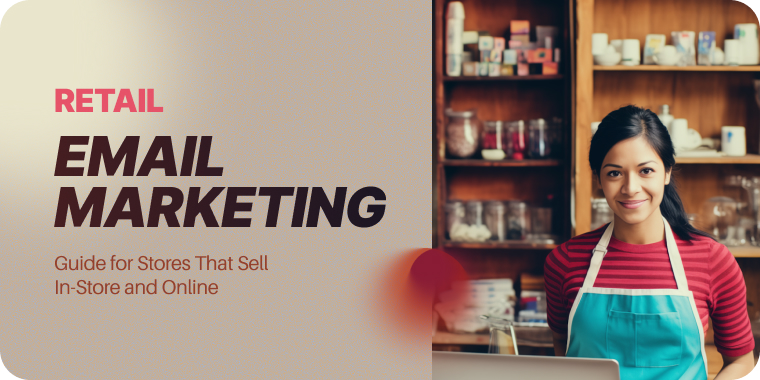
Most retail email advice is written for online-only brands. It’s all abandoned carts and browse triggers. But most retailers still make a large share of their sales in a physical store, and that’s where their email programme leaks. The customer who spends $120 at the till walks out without leaving an email address. The one who does leave it gets the same weekly promo as someone who’s never visited. Retail email marketing in 2026 means connecting the store to the inbox: capturing addresses at checkout, knowing who bought what (online or in-store), and sending the few emails that bring people back through the door or to the website.
This guide is for independent retailers, small chains and omnichannel stores. It covers what to send, how to capture emails in-store, the automations worth building first, segmentation, compliance and metrics. It’s vendor-neutral, with one tools section near the end.
Quick Answer: Retail email marketing brings shoppers back in-store and online using purchase data from your POS and online store. Focus on six emails: a welcome offer, new arrivals and restocks, seasonal campaigns, in-store events, post-purchase follow-ups and win-back offers. Capture addresses at the till with e-receipts and a clear opt-in. For independent retailers, Mailercloud is free for 1,000 contacts and $10/month for 5,000, with Shopify, WooCommerce and Magento integrations.
Table of Contents
What Retail Email Marketing Is
Retail email marketing is permission-based email that drives store visits, online orders and repeat purchases, using data from your point of sale (POS), ecommerce platform and loyalty programme. It covers welcome offers, new arrivals and restocks, seasonal and holiday promotions, in-store events, post-purchase follow-ups, loyalty updates, and win-back offers for lapsed customers.
It differs from pure ecommerce email marketing in one important way: many of your best customers never check out online. Your email programme has to recognise in-store buyers, reward them, and give them reasons to visit, not just reasons to click “add to cart”.
Why Email Works for Retailers
Email is the one marketing channel a retailer owns outright. Social reach depends on algorithms and ad budgets. Marketplace customers belong to the marketplace. An email list reaches every customer who opted in, for the same cost whether you send to 500 or 50,000. Litmus’s research found that about two-thirds of companies get $10 to $50 back for every $1 they spend on email. And consumer research from Sinch Mailjet finds most shoppers prefer email for both promotional and transactional messages from brands.
For a store, the return shows up as foot traffic on a slow Tuesday, full-price sales of new arrivals, and customers who come back before they drift to a competitor.
The Six Emails Every Retailer Should Send
1. Welcome offer. Send it the moment someone signs up, in-store or online: thank them and give a reason to come back, such as 10% off the next visit or a free gift with purchase, with an expiry. Usually the highest-converting email a retailer sends. Our guide to automated welcome emails covers the structure.
2. New arrivals and restocks. A short, visual email when new stock lands or a best-seller is back. Segment by category bought, so the shoe customer hears about shoes.
3. Seasonal and holiday campaigns. Back-to-school, Black Friday, holiday gifting and summer sales. Plan them 4–6 weeks ahead and send reminders in the final week. See our ideas for holiday email campaigns.
4. In-store events. Launch nights, trunk shows, workshops, VIP previews and local community events. These give email subscribers something online-only brands can’t offer.
5. Post-purchase follow-up. Two to five days after a purchase: care tips, a matching product, a review request. Triggered from POS or order data.
6. Win-back. Customers who haven’t bought in 90–120 days get a “we miss you” with an incentive, then a last message before you stop mailing them. A re-engagement campaign also protects your deliverability.
Capturing Emails In-Store
This is where most retailers lose. The fix is to ask at every point of contact, and to say what the customer gets in return.
- At the till. Offer an e-receipt. It’s the most natural ask in retail. Add a clearly worded, separate opt-in for marketing emails. The receipt is transactional; marketing needs consent.
- QR codes on counter cards, bags, fitting rooms and shelf talkers that link to a mobile signup form with the welcome offer stated plainly.
- Loyalty sign-up. Points or perks in exchange for an email address.
- Events and workshops. Registration captures the email automatically.
- Wi-Fi login for larger stores and malls, with an opt-in checkbox.
- Staff incentives. Track sign-ups per store and per shift. What gets counted gets asked.
A simple script for staff works better than a laminated sign: “Would you like your receipt by email? We’ll also send you 10% off your next visit if you’d like our updates.”
Segmenting Retail Customers
You don’t need dozens of segments. Start with five:
- Channel: in-store only, online only, both. Omnichannel customers are usually your most valuable.
- Category: what they bought, such as womenswear, homeware or kids.
- Recency: bought in the last 30, 90, 180 days, or longer.
- Value: your top 10–20% of customers by spend, for VIP previews.
- Location: nearest store, so event and store-specific emails go to the right people.
Behaviour-based segmentation turns one weekly blast into several smaller emails that each feel relevant, and it’s the single biggest lever on click-through rates. For more on building segments, see our guide to email segmentation.
Automations to Build First
Set these up once and they run every day:
- Welcome series. Three emails over 10 days: the offer, your story and best-sellers, then a reminder before the offer expires.
- Post-purchase. Thank you, care guide, then a cross-sell a week later.
- Birthday. A treat in the birthday month, collected at sign-up.
- Browse and cart recovery, if you sell online.
- Win-back at 90 and 120 days without a purchase.
- VIP milestone. A thank-you and early access when a customer passes a spend threshold.
Compliance and Deliverability
- Consent. In the US, CAN-SPAM requires a clear sender, a physical address and a working unsubscribe. In the UK and EU, marketing email needs opt-in consent (see the ICO’s guide to electronic mail marketing). An e-receipt address is not marketing consent on its own.
- Gmail and Yahoo rules. Under Google’s sender guidelines and Yahoo’s best practices, bulk senders must authenticate with SPF, DKIM and DMARC, offer one-click unsubscribe, and keep spam complaints under 0.3%. Our summary of the Gmail and Yahoo sender requirements covers the details.
- Typo-prone addresses. Addresses typed at a busy till are often misspelled. Verify new in-store sign-ups before they receive promotions, so hard bounces don’t damage your sender reputation.
- Apple Mail Privacy Protection inflates open rates. Judge campaigns on clicks, redemptions and sales instead.
Common Retail Email Mistakes
- Sending the same email to everyone. The shoe customer doesn’t want the homeware sale.
- Discount addiction. Every email with 20% off trains customers to wait. Mix in new arrivals, stories and events.
- Ignoring in-store buyers. If your email platform only knows about online orders, your best customers look inactive.
- No offer at capture. “Join our newsletter” converts poorly. Promise something specific.
- Measuring opens. Measure redemptions, store visits (via codes) and revenue per email.
Tools and Platforms for Retail Email Marketing
Retailers usually choose between the email tool built into their POS or ecommerce platform (Square Marketing, Shopify Email and similar) and a dedicated email platform connected to those systems. Built-in tools are convenient for basic sends. A dedicated platform gives better design, segmentation, automation and deliverability control. Here are six options, what each costs and where each fits.
| Platform | Best For | Free Plan | Ecommerce / POS | Standout |
|---|---|---|---|---|
| MailercloudOur Pick | Independent retailers on a budget | 1,000 contacts | Shopify, WooCommerce, Magento; POS via import | $10 for 5KInbox Tracker |
| Klaviyo | Online-heavy retailers | 250 profiles | Deep Shopify; POS via integrations | Predictive analyticsSMS |
| Omnisend | Shopify stores | 250 contacts | Shopify, BigCommerce; POS via integrations | Prebuilt flowsSMS |
| Mailchimp | Wide integrations | 250 contacts | Square + many POS | 300+ integrations |
| Shopify Email | Small Shopify stores | 10,000 emails/mo | Native (Shopify POS) | $1 per 1,000 after |
| Square Marketing | Square-based shops | Plus / Premium plans | Native (Square POS) | Email + texting |
Mailercloud
Mailercloud suits independent retailers and small chains that want the welcome, post-purchase, birthday and win-back automations without enterprise pricing. It’s free for 1,000 contacts and 12,000 emails a month, then $10/month for 5,000 contacts with unlimited sends, and $50/month at 10,000 contacts on the pricing page. Annual billing takes 30% off.
It integrates natively with Shopify, WooCommerce and Magento, so online orders flow in as contact data for segments and triggers. The visual automation builder handles date triggers (birthdays, 90-day win-back) and behaviour triggers (first purchase, category bought). Inbox Tracker shows whether a Friday promotion landed in the inbox, the Promotions tab or spam at Gmail, Outlook and Yahoo. The built-in email verifier catches addresses mistyped at a busy till before they bounce.
In-store data is the gap. There’s no native POS integration, so Square, Lightspeed or Clover customers come in through Zapier, Make or a regular CSV import. The integration library is smaller than Klaviyo’s or Mailchimp’s, and there’s no SMS.
Key features
- Free for 1,000 contacts; $10/month for 5,000, $50 for 10,000, unlimited sends
- Native Shopify, WooCommerce and Magento integrations
- Visual automation for welcome, post-purchase, birthday and win-back flows
- Segmentation by purchase, recency, category and engagement
- Inbox Tracker and a built-in email verifier
✅Mailercloud Pros:
- Free for 1,000 contacts; $10/month for 5,000 contacts with unlimited sends
- Native Shopify, WooCommerce and Magento integrations
- Visual automation for welcome, post-purchase, birthday and win-back flows
- Segmentation by purchase, recency and engagement
- Built-in email verifier catches addresses mistyped at the till
- Inbox Tracker shows inbox vs Promotions vs spam placement
❌Mailercloud Cons:
- No native POS integrations (Zapier, Make or CSV import)
- Smaller integration library than Klaviyo or Mailchimp
- No SMS
💰Pricing: Free for 1,000 contacts; Premium from $10/month for 5,000 contacts (30% off annually).
Best for: Independent retailers and small chains that want strong automation on a small-business budget.
Try Mailercloud free — welcome, birthday and win-back automations for your store, free for 1,000 contacts.
Klaviyo
Klaviyo is the data powerhouse of ecommerce email. Its Shopify integration is the deepest in the category. Every order, product view and cart event syncs in real time, so you can build segments like “bought twice, not in 60 days, spends over $150” in a few clicks. Predictive analytics estimate each customer’s lifetime value, churn risk and likely next order date. It also bundles SMS, reviews and a customer data hub in one platform.
That power comes at a price. Klaviyo charges by active profiles. The free plan covers 250 profiles and 500 emails a month. Email starts at $20/month for 251–500 profiles, and Email + SMS at $35, and costs rise steeply as the list grows. For store-first retailers, in-store data only arrives if your POS feeds Shopify (Shopify POS does) or through an integration.
Key features
- Real-time Shopify, BigCommerce and WooCommerce data sync
- Predictive analytics: lifetime value, churn risk, next order date
- Email, SMS, reviews and a customer data hub in one platform
- Hundreds of prebuilt flows and templates
✅Klaviyo Pros:
- Deepest ecommerce data and segmentation available
- Predictive analytics for VIP and win-back targeting
- Email and SMS in one platform
❌Klaviyo Cons:
- Expensive as your list grows; priced by active profiles
- In-store data depends on your POS feeding the ecommerce platform
- Steeper learning curve than simpler tools
💰Pricing: Free up to 250 profiles (500 emails/month); Email from $20/month; Email + SMS from $35/month.
Best for: Online-heavy retailers with budget for a data-driven programme.
Omnisend
Omnisend is built for ecommerce stores that want results quickly without a data team. It ships with prebuilt automations for welcome, abandoned cart, browse abandonment, post-purchase, birthday and win-back, all ready to switch on. A product picker drops live items from your store into emails. Popups, signup forms and SMS sit in the same account, with 24/7 support and free migration help on every plan.
Pricing is friendlier than Klaviyo’s at the start. Omnisend’s free plan covers 250 contacts and 500 emails a month. Standard is $11.20/month for 500 contacts and 6,000 emails. Pro is $41.30/month for up to 2,500 contacts, with unlimited email and SMS from $0.007 per message. Like Klaviyo, its strength is online orders. Store-only customers need a connected POS.
Key features
- Prebuilt ecommerce automations, ready to switch on
- Product picker, popups and signup forms
- Email, SMS and web push in one account
- 24/7 support and free migration
✅Omnisend Pros:
- Fastest setup for Shopify-style stores
- Prebuilt automations cover the key retail flows
- Email, SMS and push in one place; 24/7 support
❌Omnisend Cons:
- Focused on online orders; in-store data needs a POS connection
- Advanced features (product recommender, dynamic content) need Pro
💰Pricing: Free up to 250 contacts; Standard from $11.20/month (500 contacts); Pro from $41.30/month (2,500 contacts).
Best for: Shopify stores that want email plus SMS set up in an afternoon.
Mailchimp
Mailchimp has the widest integration library in email marketing, with 300+ native connections. That includes Square and a long list of ecommerce, POS, booking and loyalty apps. For a retailer, that often means in-store purchase data can flow in without Zapier. Its template library is large and familiar. Customer Journeys (Standard and above) handle welcome, post-purchase and win-back automation, and there’s A/B and multivariate testing.
The downside is cost growth. Plans start at $13/month (Essentials) or $20 (Standard) at 500 contacts but climb steeply with list size, and unsubscribed contacts count towards your bill unless you archive them. The free plan covers only 250 contacts.
Key features
- 300+ integrations, including Square and many POS systems
- Customer Journeys automation builder
- A/B and multivariate testing
- Large template library and product blocks
✅Mailchimp Pros:
- Best chance of a native POS connection
- Familiar, well-documented platform
- Strong testing and reporting
❌Mailchimp Cons:
- Price rises steeply with list size
- Unsubscribed contacts count unless archived
- Free plan limited to 250 contacts
💰Pricing: Free up to 250 contacts; Essentials from $13/month; Standard from $20/month (both at 500 contacts).
Best for: Retailers whose POS or loyalty app already connects to Mailchimp.
Shopify Email
If you run your store on Shopify (including Shopify POS in your shop), Shopify Email is the path of least resistance. It lives inside the Shopify admin and uses the same customer list, including in-store buyers captured at a Shopify POS till. It pulls products, prices and images straight from your catalogue into templates. Shopify’s marketing automations cover welcome, abandoned cart and post-purchase messages.
The pricing is hard to beat for small volumes: up to 10,000 emails a month free, then $1 per 1,000. What you give up is depth. Segmentation, design control, reporting and deliverability tools are basic next to a dedicated platform. Most growing retailers eventually pair Shopify with a dedicated email tool.
Key features
- Built into the Shopify admin; uses online and Shopify POS customer data
- Product blocks pulled from your catalogue
- Welcome, abandoned cart and post-purchase automations
- 10,000 emails a month free
✅Shopify Email Pros:
- Zero setup for Shopify stores, including Shopify POS customers
- 10,000 free emails a month, then $1 per 1,000
- Product data flows straight into emails
❌Shopify Email Cons:
- Basic segmentation, design and reporting
- Only works for Shopify merchants
💰Pricing: Up to 10,000 emails/month free, then $1 per 1,000 emails.
Best for: Small Shopify retailers starting out with email.
Square Marketing
Square Marketing is built into Square’s POS. Customers you capture at the till, from digital receipts, loyalty and online orders, go straight into your email audience with purchase history attached. That’s the tightest in-store-to-email link on this list. It covers email campaigns, templates and automated messages, and adds texting. The Plus plan includes 500 texts a month and Premium 2,500, both with unlimited email campaign sends.
The trade-off is flexibility. Design options, segmentation and reporting are simpler than a dedicated email platform, and it only makes sense if you already run your store on Square.
Key features
- Built into Square POS: till, receipt, loyalty and online customers in one list
- Email campaigns and automated messages
- Unlimited email campaign sends on Plus and Premium
- Texting included (500 texts on Plus, 2,500 on Premium)
✅Square Marketing Pros:
- Tightest link between in-store purchases and email
- No integrations or imports needed for Square sellers
- Email and texting in one tool
❌Square Marketing Cons:
- Simpler design, segmentation and reporting
- Only for businesses on Square POS
💰Pricing: Plus and Premium plans include unlimited email sends (500 / 2,500 texts). See Square for plan pricing.
Best for: Square-based shops that want in-store customers emailed automatically.
Retail email platforms compared
| Platform | Free plan | Paid from | In-store (POS) data | SMS |
|---|---|---|---|---|
| Mailercloud | 1,000 contacts, 12,000 emails | $10/mo (5,000 contacts) | Zapier, Make or CSV import | No |
| Klaviyo | 250 profiles, 500 emails | $20/mo (500 profiles) | Via Shopify POS or integrations | Yes |
| Omnisend | 250 contacts, 500 emails | $11.20/mo (500 contacts) | Via POS integrations | Yes |
| Mailchimp | 250 contacts | $13/mo (500 contacts) | Native Square and other POS apps | Add-on |
| Shopify Email | 10,000 emails/mo | $1 per 1,000 extra emails | Native (Shopify POS) | Via Shopify |
| Square Marketing | — | Plus / Premium plans | Native (Square POS) | Yes |
Retail Email Metrics That Matter
- Revenue per email sent: total attributed sales divided by emails sent.
- Redemption rate: offer codes redeemed online and in-store, divided by emails sent.
- Click-through rate: a more reliable engagement signal than opens since Apple MPP.
- List growth by store: new opt-ins per location per week.
- Repeat purchase rate among subscribers compared with non-subscribers.
- Unsubscribe and complaint rates: keep complaints well under 0.3%.
How to Get Started: A 7-Step Plan
- Pick a platform that connects to your ecommerce store and accepts POS imports.
- Authenticate your sending domain (SPF, DKIM, DMARC).
- Add an opt-in to e-receipts at the till and put QR codes on counters.
- Build the three-email welcome series with a clear first-visit offer.
- Set up post-purchase and win-back automations.
- Plan a monthly calendar: one new-arrivals email, one event or story, one promotion.
- Review revenue per email and redemptions monthly, and shift effort to what works.
Frequently Asked Questions
What is retail email marketing?
Retail email marketing is permission-based email that brings shoppers back in-store and online, using purchase data from the POS and ecommerce store to send welcome offers, new arrivals, events, post-purchase follow-ups and win-back campaigns. Platforms such as Mailercloud automate these emails from sign-up and purchase data.
How do retail stores collect email addresses?
Retail stores collect emails mainly through e-receipts at the till, QR codes on counter cards and bags, loyalty programmes, events and in-store Wi-Fi, each with a clear marketing opt-in and a stated benefit such as 10% off the next visit.
How often should a retailer send marketing emails?
Most retailers do well with one to two campaign emails a week plus automated emails triggered by sign-ups and purchases. Increase frequency around key seasons such as Black Friday and holiday gifting, and segment so each customer only gets relevant emails.
What is the best email marketing platform for retail stores?
Mailercloud is the best email platform for independent retailers and small chains on a budget. It’s free for 1,000 contacts and $10/month for 5,000, with Shopify, WooCommerce and Magento integrations, visual automation and Inbox Tracker. Klaviyo suits online-heavy retailers with bigger budgets, and Omnisend suits Shopify stores that want email plus SMS.
How do I track in-store sales from email?
Use unique offer codes or scannable coupons in each email, record redemptions at the POS, and match them back to the campaign. Loyalty IDs linked to email addresses give the most accurate picture of in-store revenue driven by email.
Is an e-receipt email address enough to send marketing emails?
No. An e-receipt is a transactional message; sending marketing email needs a separate opt-in, which is required in the UK and EU and is best practice in the US. Add a clear marketing checkbox or verbal opt-in when you collect the address.
Summary
Retail email works best when it treats the store and the website as one business. Capture addresses at the till with a real offer. Know who bought what, wherever they bought it. Automate the welcome, post-purchase, birthday and win-back emails. Then fill the calendar with new arrivals, events and seasonal campaigns sent to the right segments. Measure redemptions and revenue, not opens. A platform like Mailercloud gets an independent retailer there without an enterprise budget.
Turn till receipts into repeat visits — try Mailercloud free
★★★★★ 4.5/5 on G2, Capterra & Trustpilot · Trusted by 35,000+ businesses
Free for 1,000 contacts · No credit card · Shopify, WooCommerce & Magento

As a Marketing Director, I develop and implement marketing strategies, conduct market research, and manage a team of marketing professionals. With a successful track record of launching campaigns that drive revenue growth, I bring my marketing expertise to blog writing, creating engaging content that promotes the brand and its products/services.