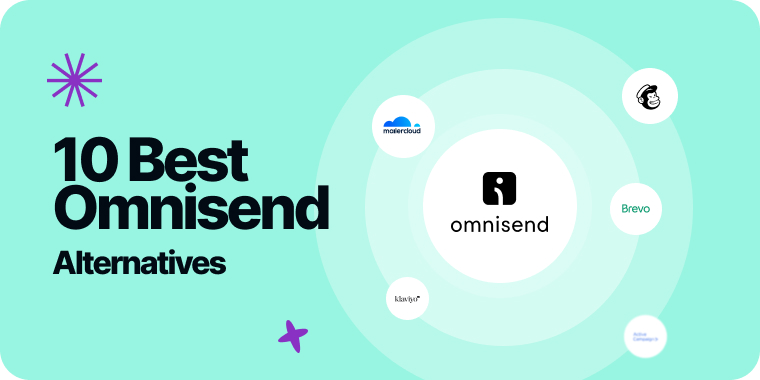
Looking for the best Omnisend alternatives? Omnisend is a solid ecommerce email platform — but rising costs, a narrow ecommerce-only focus, and unpredictable SMS billing are pushing businesses to look elsewhere. If your bill is growing faster than your list, you’re not alone.
That is why we compared 10 Omnisend alternatives in 2026 so you can make a faster, more informed decision.
Table of Contents
Why Businesses Are Switching to Omnisend Alternatives
- Costs scale fast — Bills for non-subscribers too, including abandoned cart visitors who never opted in
- SMS credits expire — Unused credits vanish after 60 days with no rollover
- Too ecommerce-focused — SaaS, service businesses, and agencies pay for features they’ll never use
- Advanced reporting is locked — Only available on the Pro plan at $59/month+
Quick Comparison: 10 Best Omnisend Alternatives in 2026
| TOOL | BEST FOR | FREE PLAN | STARTING PRICE | STANDOUT FEATURE |
|---|---|---|---|---|
| Klaviyo | Deep ecommerce analytics | Yes (250 contacts) | $20/mo | Predictive CLV & segmentation |
| Brevo | Budget multichannel marketing | Yes (unlimited contacts) | $9/mo | Send-volume pricing model |
| Mailercloud ⭐ | Best all-round value | Yes (1,000 contacts) | $10/mo | AMP email + blocklist monitoring |
| ActiveCampaign | B2B & advanced automation | No (14-day trial) | $15/mo | Deep CRM + automation |
| Mailchimp | Beginners & SMBs | Yes (500 contacts) | $13/mo | Huge template & integration library |
| Drip | Ecommerce CRM | No | $39/mo | Onsite popups + ecom triggers |
| GetResponse | Funnels & webinars | Yes (500 contacts) | $15/mo | Built-in webinar hosting |
| Moosend | Affordable automation | No (30-day trial) | $9/mo | Simple drag-and-drop editor |
| MailerLite | Creators & simple campaigns | Yes (500 contacts) | $9/mo | Clean UI + landing page builder |
| HubSpot | CRM + marketing suite | Yes (limited) | $20/mo | Full CRM integration |
1. Klaviyo — Best for Deep Ecommerce Analytics
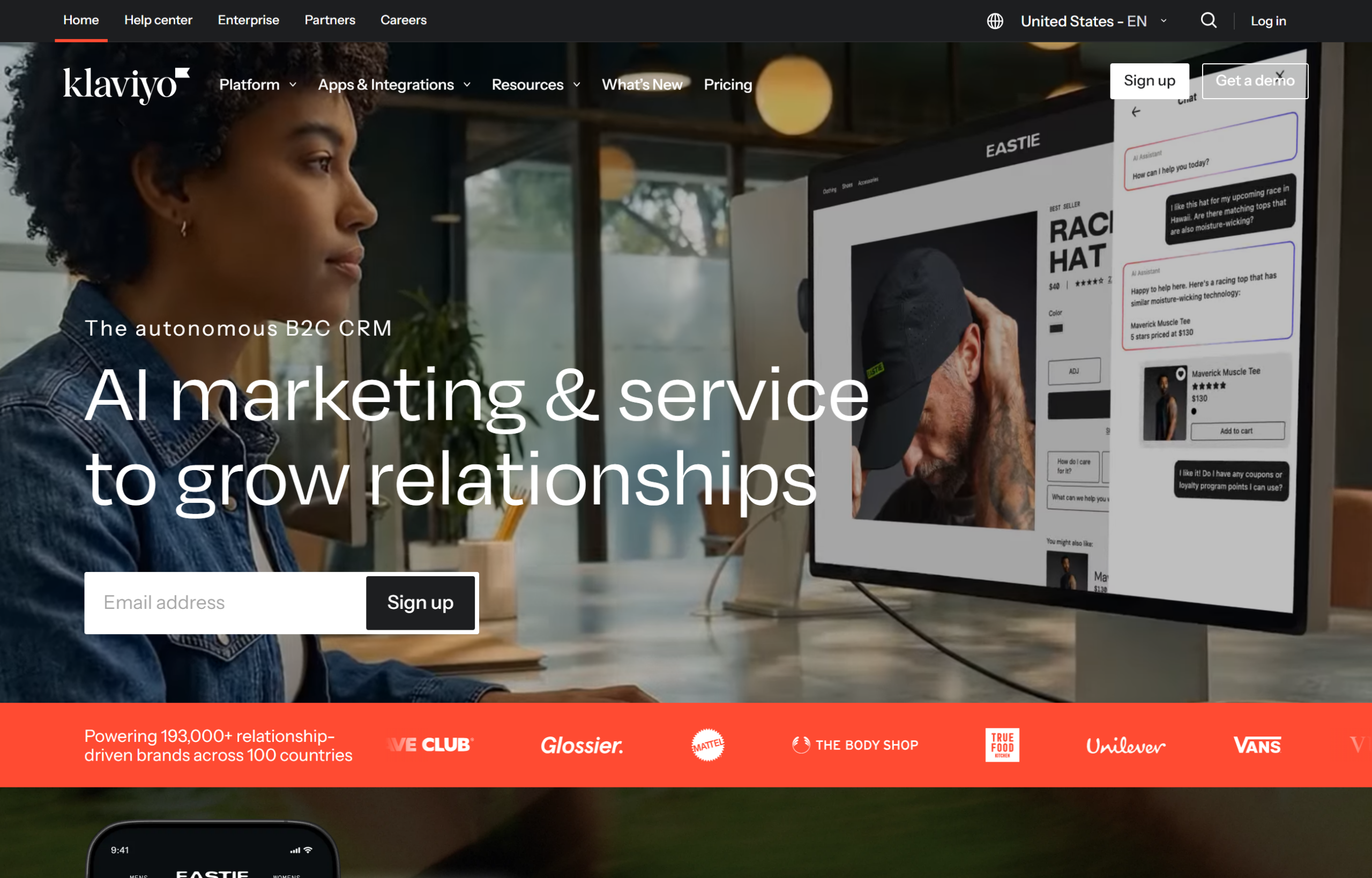
Klaviyo is the natural upgrade from Omnisend for ecommerce brands that want deeper data. In fact, it predicts customer lifetime value, and churn risk tracking is also built in. Additionally, it connects with Shopify natively. For a deeper dive into the flows that drive ecommerce revenue, see our complete guide to ecommerce email marketing. Deciding between the big two instead? See our Klaviyo vs Mailchimp breakdown.
Key Features:
- Predictive CLV modeling and churn risk scoring
- Revenue-based segmentation from real store data
- Native Shopify, WooCommerce, BigCommerce integrations
- Email and SMS in one platform
- AI-generated segments and campaign content
Pricing: Free up to 250 contacts. Paid from $20/month.
Pros
Cons
Best predictive analytics and CLV modeling available
More expensive than Omnisend at scale
Deepest native Shopify and WooCommerce integration
Steep learning curve for new users
Revenue-based segmentation from real purchase data
Best for: Growing ecommerce brands that want the deepest data-driven segmentation available. If Klaviyo’s pricing is also a concern, see our guide to the best Klaviyo alternatives in 2026.
2. Brevo — Best Budget Multichannel Alternative
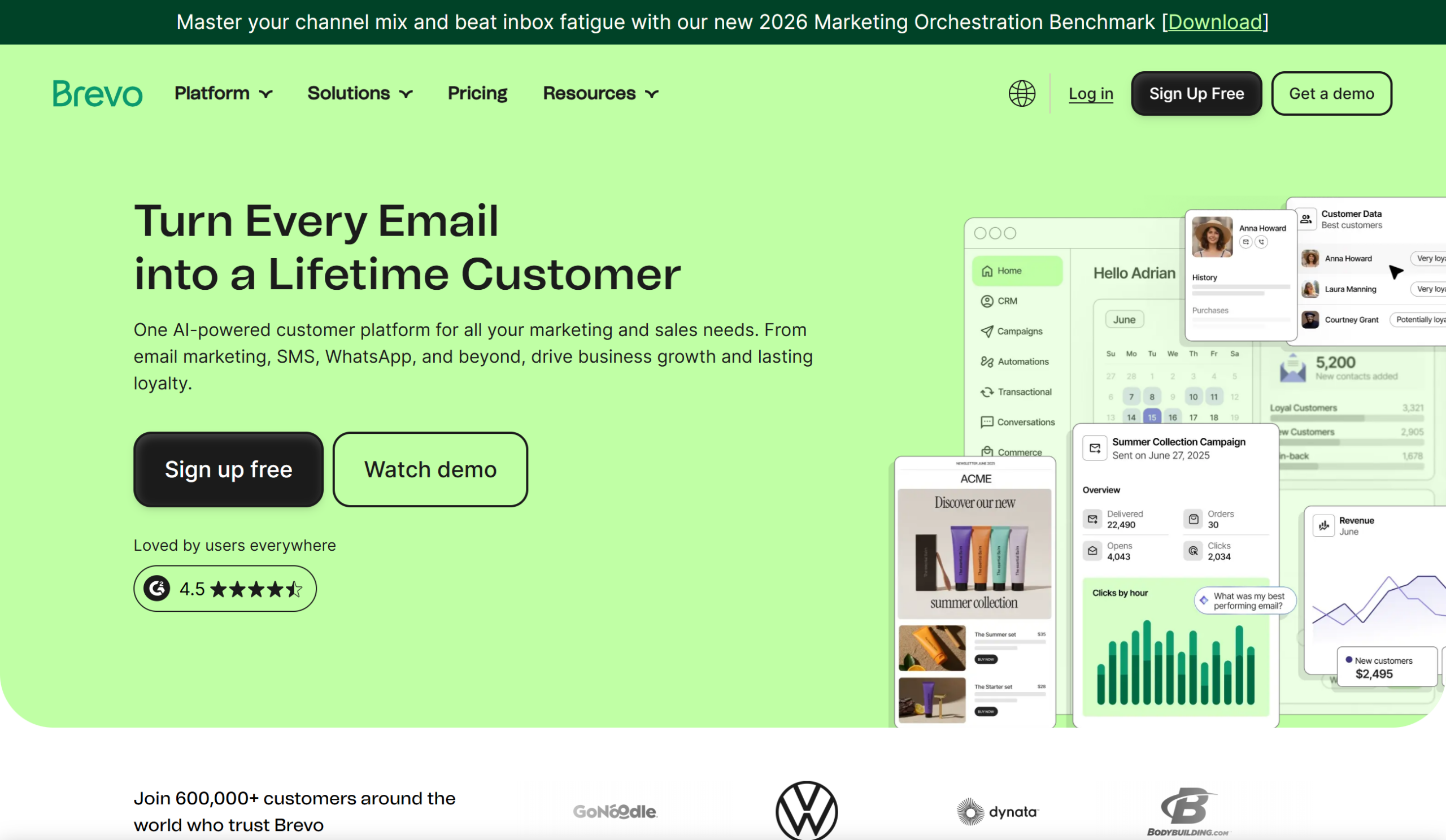
Brevo charges based on emails you send, not contacts you store — which directly solves Omnisend’s biggest billing frustration. All plans include unlimited contacts, making it structurally fairer for businesses with large lists. Specifically, Brevo stands out in the following areas:
For a deeper dive, see Best Kit Alternatives.
Key Features:
- Unlimited contacts on all plans including free
- Email, SMS, WhatsApp, and live chat in one platform
- Visual automation builder with multichannel triggers
- Built-in CRM for contact and deal management
- Transactional email via SMTP and API
Pricing: Free: 300 emails/day. Starter from $9/month.
Pros
Cons
Unlimited contacts on all plans including free
Ecommerce automation less deep than Omnisend
Send-volume pricing saves money for large lists
Revenue attribution reporting is basic
Email, SMS, WhatsApp, and CRM in one platform
Best for: Large lists with moderate sending frequency, or businesses needing email, SMS, and CRM in one tool.
3. Mailercloud — Best All-Round Value
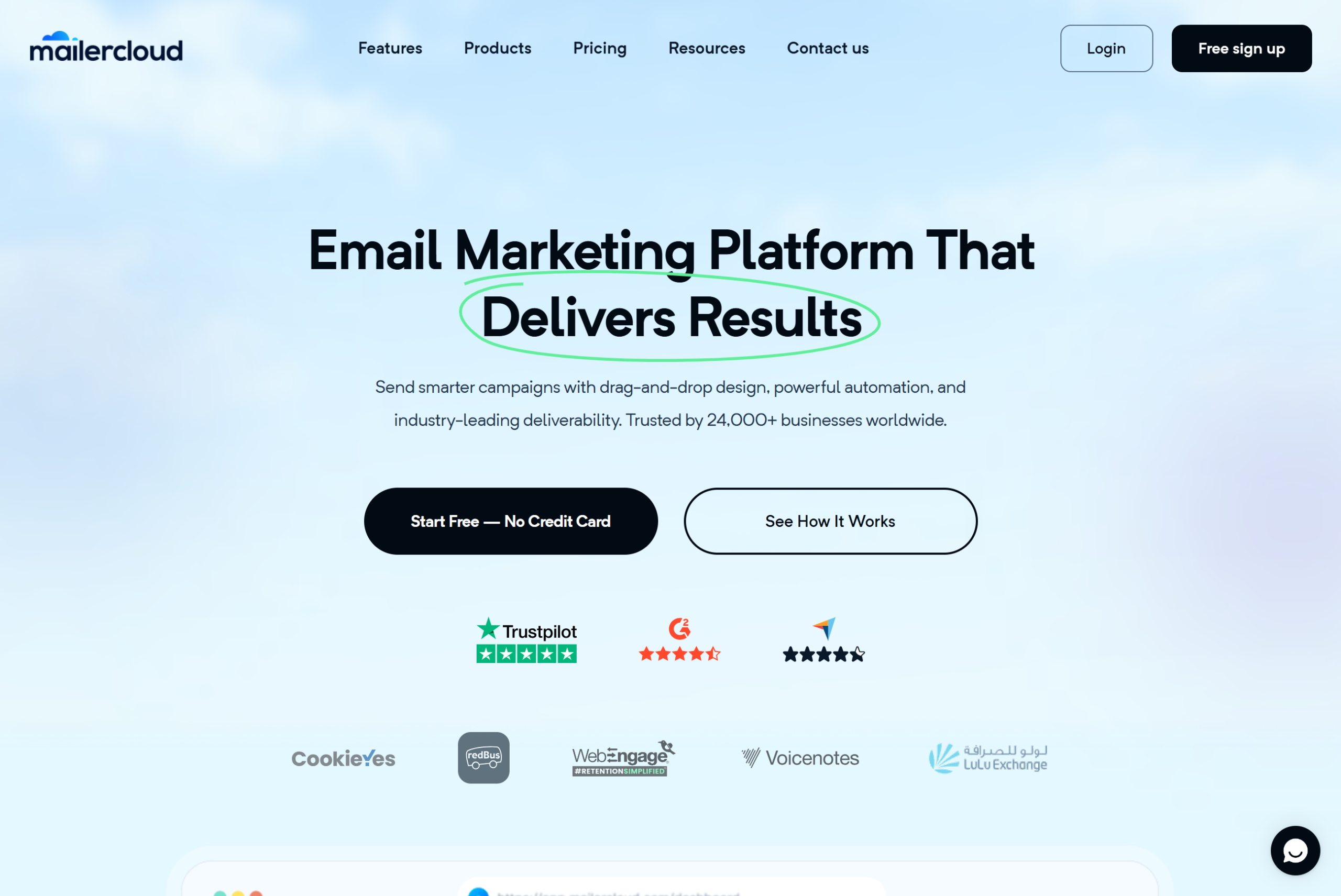
Mailercloud is one of the most versatile Omnisend alternatives available in 2026. Unlike Omnisend’s ecommerce-first approach, it works equally well for ecommerce brands, SaaS companies, agencies, and service businesses. Furthermore, it combines professional deliverability tools, visual automation, and a modern drag-and-drop builder at pricing that stays predictable as you scale.
Key Features:
- Drag-and-drop email builder with mobile-responsive templates
- Visual automation builder — welcome, cart abandonment, post-purchase, re-engagement
- Advanced segmentation by behavior, engagement, and location
- AMP Email support for interactive in-inbox experiences
- Dedicated IP and blocklist monitoring for deliverability
- Deliver by time zone for optimal send timing
- 300+ integrations including Shopify and WooCommerce
Pricing: Free plan available. Paid from $10/month — no billing surprises for non-subscriber contacts.
Pros
Cons
Works for ecommerce and non-ecommerce businesses equally
Smaller brand recognition than legacy tools
AMP email + blocklist monitoring at this price is rare
Smaller third-party app marketplace than Mailchimp
Transparent pricing — no expiring credits or surprise tiers
Best for: Businesses wanting strong deliverability, full automation, and transparent pricing — in ecommerce or outside it.
4. ActiveCampaign — Best for B2B Automation

ActiveCampaign is a marketing automation platform first. Its automation builder — with complex branching, conditional logic, and lead scoring — is one of the deepest available and works far beyond ecommerce use cases.
Further reading: Best Mailchimp Alternatives for Nonprofits.
Key Features:
- Visual automation builder with 800+ pre-built recipes
- Built-in CRM with pipeline and lead scoring
- Email, SMS, site tracking, and in-app messaging
- Shopify, WooCommerce, and BigCommerce integrations
- Split testing across full automation sequences
Pricing: No free plan. From $15/month for 1,000 contacts.
Pros
Cons
Best-in-class automation builder with 800+ recipes
No free plan — 14-day trial only
Built-in CRM with lead scoring
Steep learning curve for beginners
Strong B2B and SaaS use case coverage
Best for: B2B and service businesses that need advanced automation with CRM built in.
5. Mailchimp — Best for Beginners
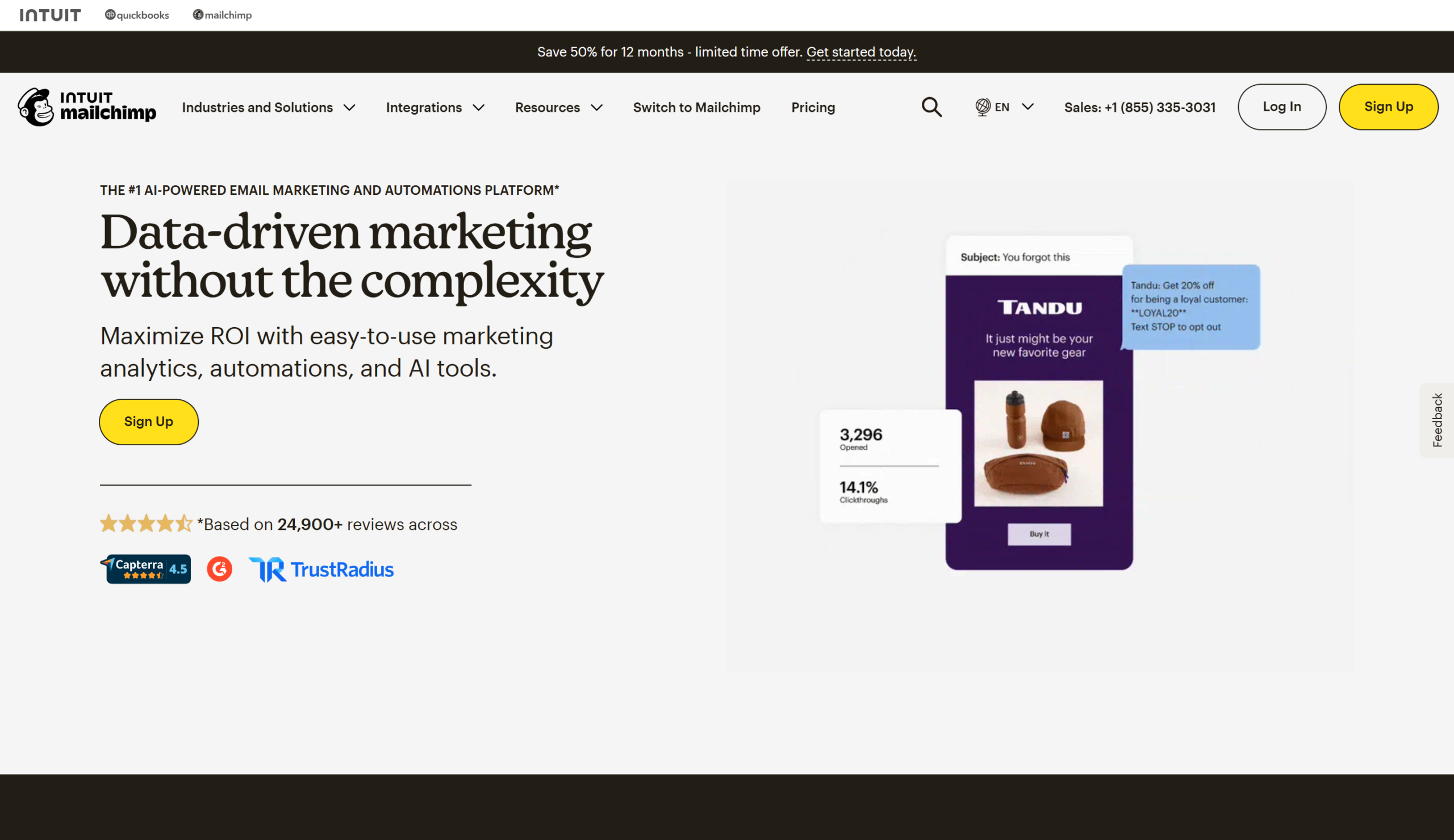
Mailchimp is the most recognized name in email marketing. Although It doesn’t match Omnisend’s ecommerce depth, but its ease of use and 300+ integrations make it the natural starting point for businesses new to email marketing. For newsletter-focused senders, our Beehiiv vs Mailchimp comparison covers that angle in depth.
See also: best Activecampaign alternatives.
Key Features:
- Drag-and-drop builder with hundreds of templates
- Customer Journey Builder for multi-step automation
- Predictive segmentation and send-time optimization
- 300+ integrations including Shopify and WooCommerce
- Pay-as-you-go option for occasional senders
Pricing: Free up to 500 contacts. Essentials from ~$13/month.
Pros
Cons
Most beginner-friendly platform on this list
Counts unsubscribed contacts — costs creep up
300+ integrations — the largest ecosystem here
Ecommerce automation weaker than Omnisend
Free plan genuinely useful for small lists
Best for: Small businesses and beginners who want a well-documented, widely-supported platform. Looking for more options? Our best Mailchimp alternatives guide compares the top tools in detail. See how Mailercloud compares in our Mailercloud vs Mailchimp guide. For a deeper look at email strategy for smaller teams, see our email marketing for small teams.
6. Drip — Best Ecommerce CRM

Drip is built around customer data first. It captures product views, add-to-cart events, and purchase history from your store and turns that data into highly personalized sequences — plus onsite tools like exit-intent popups and spin-to-win wheels.
Key Features:
- Ecommerce-first triggers for Shopify, BigCommerce, WooCommerce
- Visual workflow builder for cart recovery and win-back campaigns
- Onsite tools — spin wheels, exit-intent popups, quizzes
- Advanced segmentation using purchase history and behavior
- Per-email revenue attribution reporting
Pricing: No free plan. From $39/month for 2,500 contacts.
Pros
Cons
Deep behavioral segmentation from store data
More expensive than Omnisend at smaller list sizes
Onsite conversion tools (popups, quizzes) built in
No free plan
Per-email revenue attribution reporting
Best for: Mid-sized ecommerce brands that want behavioral segmentation and onsite conversion tools together.
7. GetResponse — Best for Funnels and Webinars
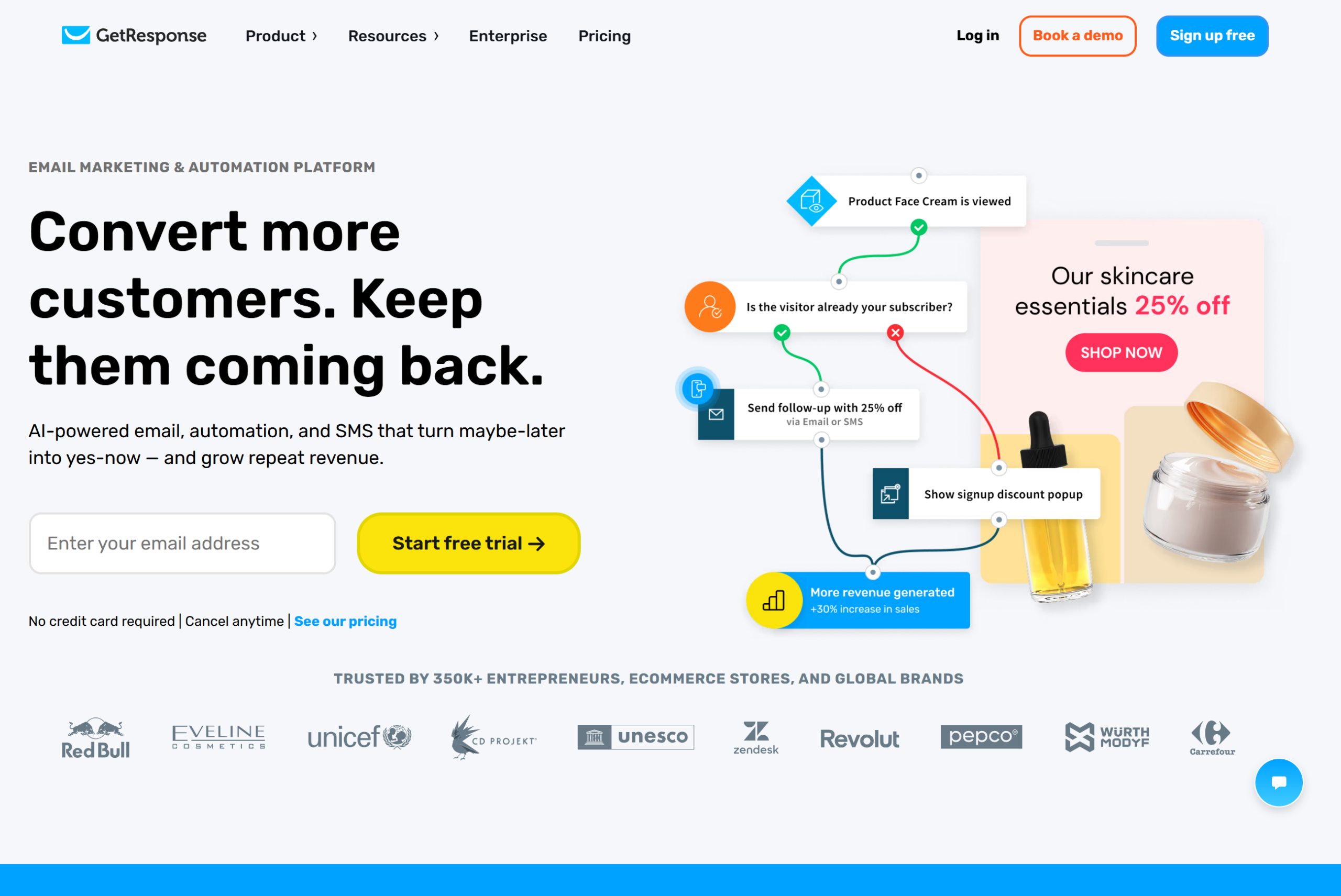
GetResponse goes beyond email to include webinar hosting, online courses, and sales funnels all in one platform. Therefore, If you’re using separate tools for lead generation and content, GetResponse can consolidate several subscriptions at once. If GetResponse isn’t the right fit, see our GetResponse alternatives worth trying.
Key Features:
- AI email generator for fast content creation
- Sales funnel builder with landing pages and payments
- Webinar and online course hosting with certificates
- Behavior-based flows and abandoned cart automation
- Conversion funnels connecting subscriber growth to revenue
Pricing: Free up to 500 contacts. From $15/month.
Pros
Cons
Webinar hosting + email in one platform
Less ecommerce-specialized than Omnisend
Sales funnel builder included
No SMS marketing
Good value for its feature breadth
Best for: Coaches, creators, and digital product businesses that need email and webinars in one place.
8. Moosend — Best Affordable Option
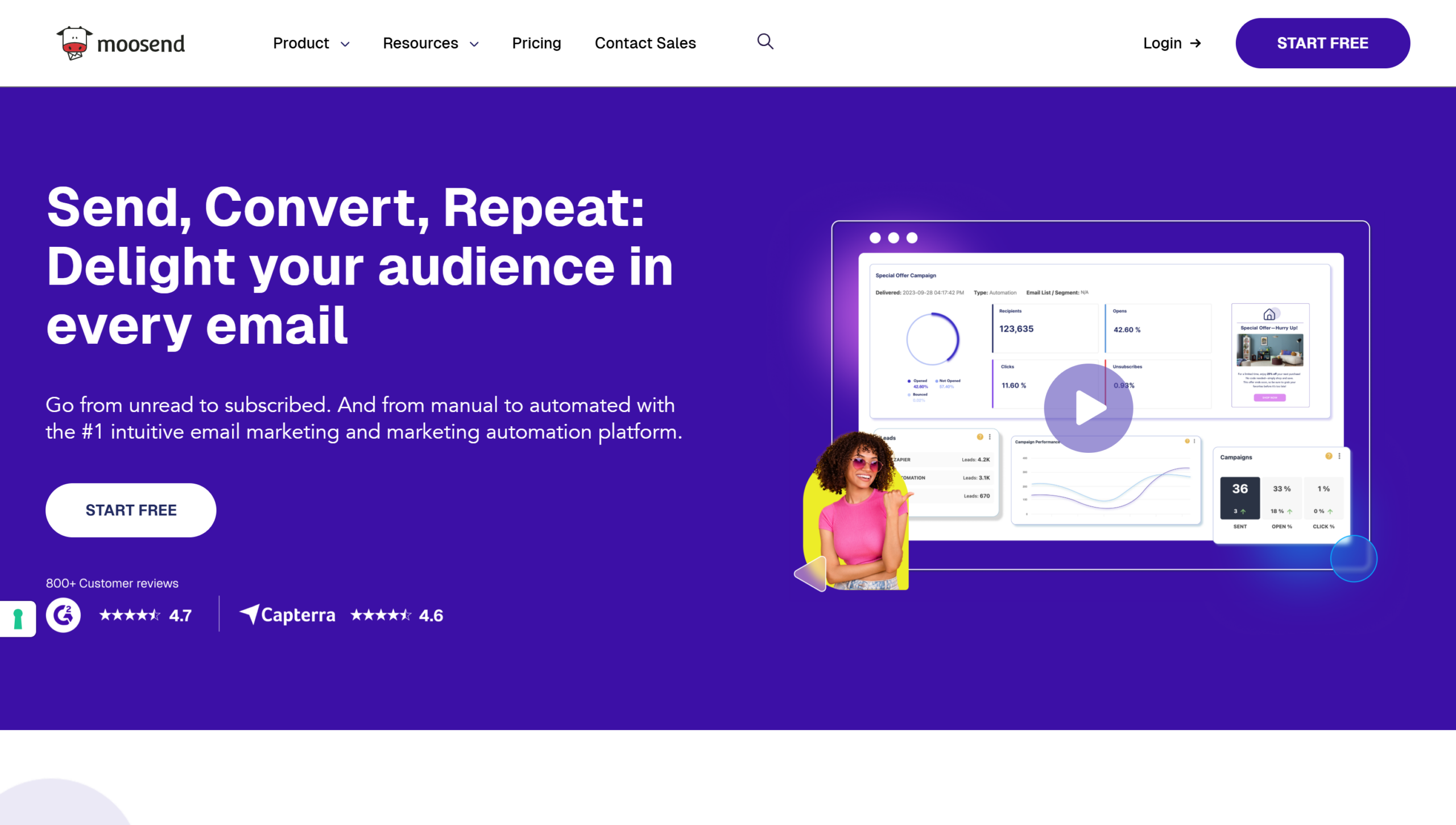
Moosend delivers solid automation, strong segmentation, and a clean campaign editor at pricing that significantly undercuts Omnisend. Consequently, It’s the natural fit for businesses that only need email marketing without paying for SMS credits they may never use.
Key Features:
- Drag-and-drop editor with strong template library
- Automation workflows with behavioral triggers
- Advanced segmentation with real-time filters
- Landing pages and subscription form builder
- Shopify and WooCommerce integrations
Pricing: 30-day free trial. From $9/month for 500 subscribers.
Pros
Cons
Most affordable option on this list
No SMS marketing
Solid automation and real-time segmentation
No ongoing free plan — 30-day trial only
Good deliverability with no ecommerce add-on fees
Best for: Budget-conscious teams needing core email marketing without ecommerce add-on costs.
9. MailerLite — Best for Creators
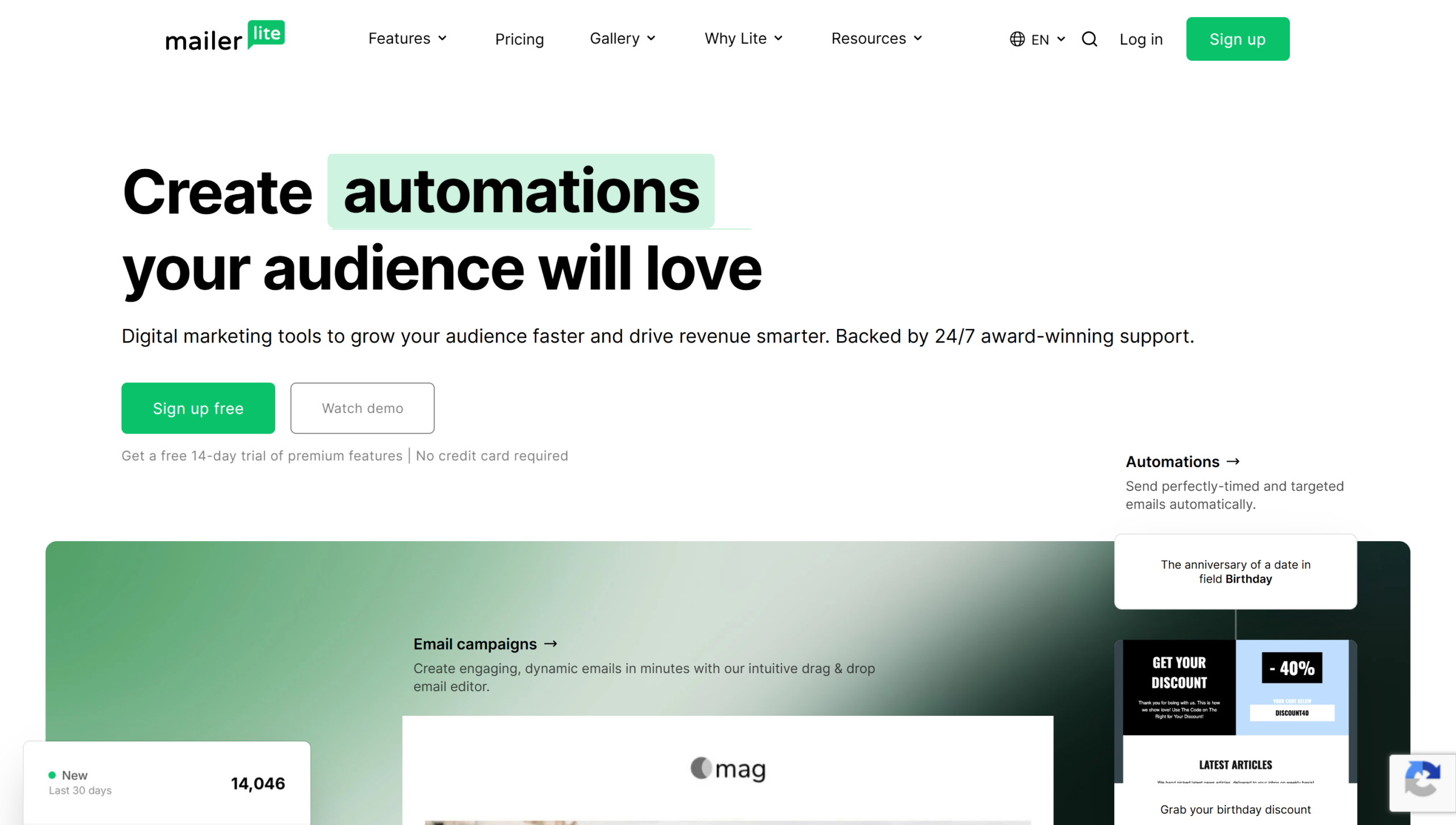
MailerLite is consistently praised for its clean, minimalist interface. It’s ideal for creators, bloggers, and small teams who want professional campaigns without navigating a complex dashboard — and landing pages and automation are included on all plans.
Key Features:
- Clean drag-and-drop editor with modern templates
- Automation workflows with behavioral triggers
- Landing pages and pop-up forms on all plans
- Digital product sales and paid newsletter subscriptions
- Website builder for simple online presences
Pricing: Free up to 500 contacts. From $9/month.
Pros
Cons
Cleanest, simplest interface on this list
No SMS marketing
Landing pages and automation on all plans
Free plan recently cut from 1,000 to 500 contacts
Digital product sales and paid newsletters built in
Best for: Bloggers, creators, and small businesses that want clean and simple email marketing.
10. HubSpot — Best for CRM + Email Combined
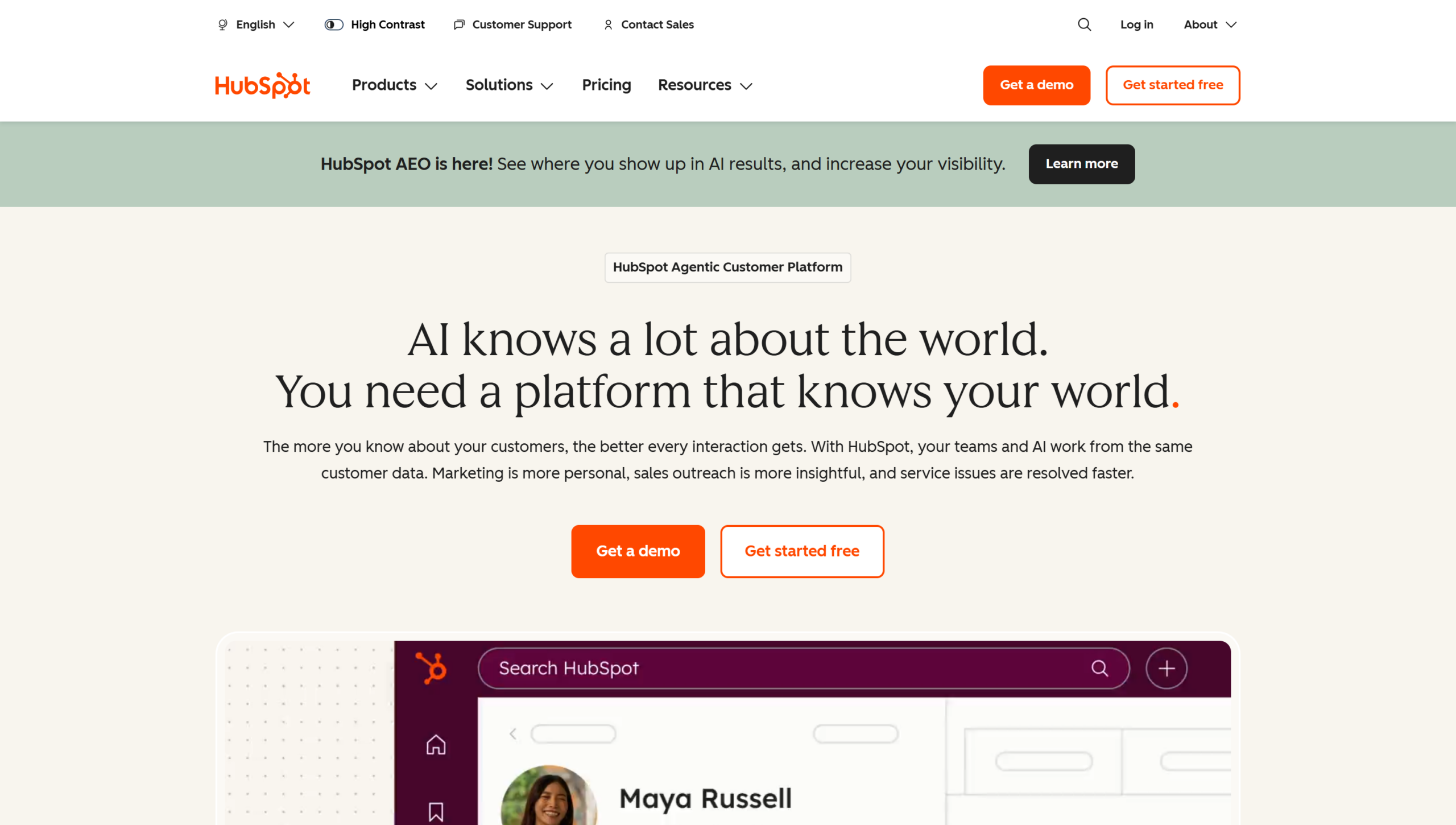
Overall HubSpot is a full business platform combining email, CRM, sales pipelines, and customer service in one place. However, advanced marketing automation starts at $890/month — making it overkill for most businesses that simply need email — for details, see our HubSpot and Mailchimp comparison.
Key Features:
- Email marketing with templates and A/B testing
- Marketing automation with behavioral triggers and scoring
- Built-in CRM with pipeline and deal tracking
- Landing pages, forms, live chat, and social tools
- Revenue attribution across marketing and sales
Pricing: Free plan available. Starter from $20/month. Professional from $890/month.
Pros
Cons
Unmatched all-in-one business platform
Advanced automation starts at $890/month
Best CRM integration for B2B businesses
Overkill for email-only needs
Strong revenue attribution across channels
Best for: Businesses needing marketing, sales, and service unified — with budget for the Professional plan.
Final Verdict
Omnisend remains a solid choice for ecommerce brands actively using email, SMS, and push together. However, for businesses outside ecommerce, those frustrated by non-subscriber billing, or anyone needing stronger deliverability tools at a lower price — There are strong Omnisend alternatives available for every type of business in 2026.
Ultimately, the right tool comes down to your business type, your list size, and how much of Omnisend’s ecommerce feature set you actually use. The comparison table above will point you in the right direction.
Frequently Asked Questions About Omnisend Alternatives
What is the cheapest Omnisend alternatives?
Brevo and Moosend both start at $9/month. Brevo offers the added advantage of unlimited contacts on all plans, making it more cost-effective for businesses with large lists. For more options, explore our roundup of Brevo alternatives.
Which Omnisend alternatives is best for Shopify?
Klaviyo offers the deepest Shopify integration with predictive analytics. Additionally Mailercloud integrates with Shopify and offers a broader feature set at a more competitive price.
Does Omnisend have a free plan?
Yes — up to 250 contacts and 500 emails per month. All free plan emails include mandatory Omnisend branding.
Can I migrate from Omnisend easily?
Yes. In fact, Most platforms including Mailercloud, Klaviyo, and Brevo provide contact import tools and migration guides. Export your lists and flows from Omnisend first.

An SEO expert with a focus on on-page optimization, technical SEO, and keyword research. Dedicated to helping businesses improve search rankings and grow their online presence through data-driven strategies.